
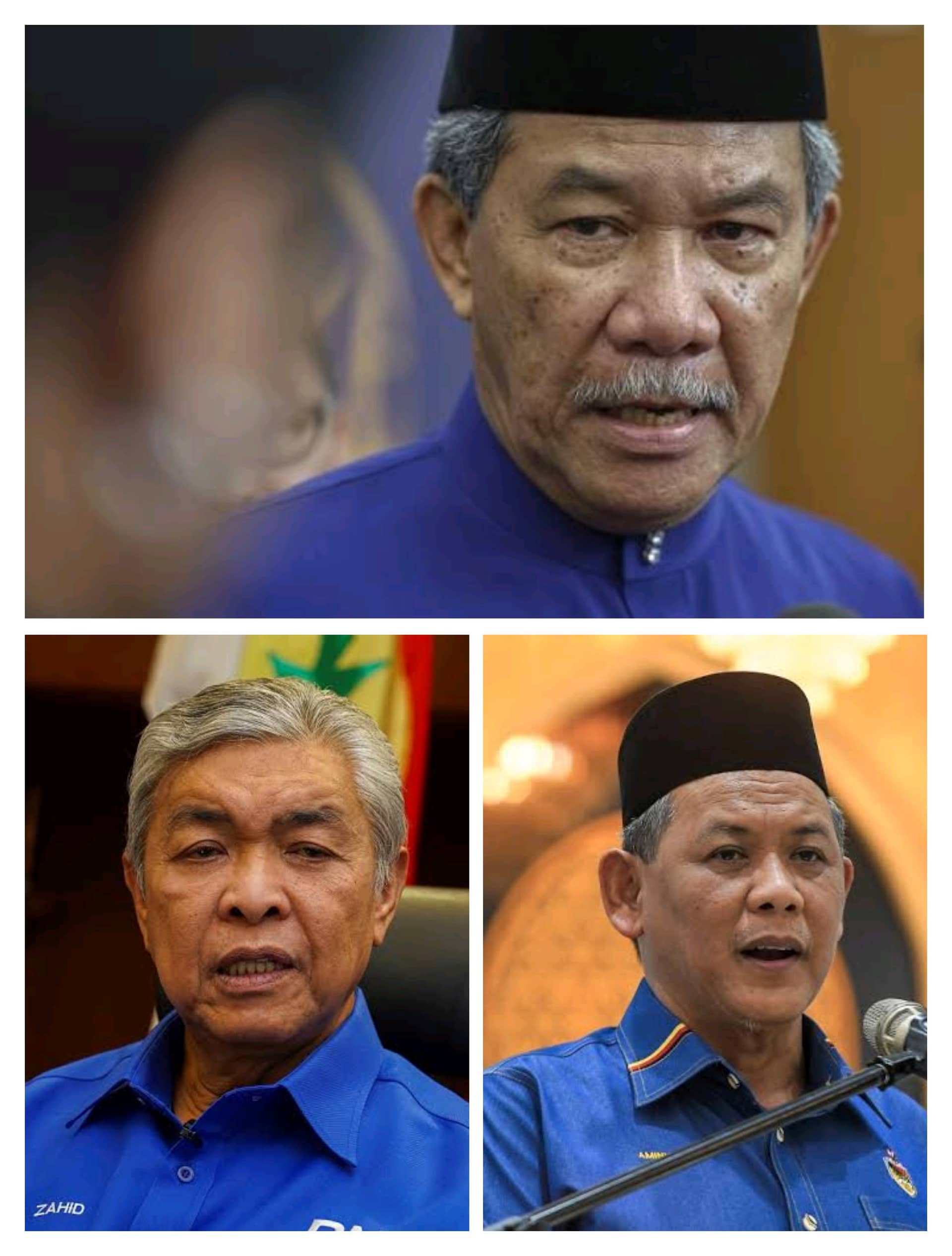
In retrospect, the rebellion by the 14 Umno ADUNs in Negeri Sembilan against the Aminuddin-led state government does seem like an absurd move, doesn’t it?
Consider the premise. The 14 ADUNs justified their rebellion by citing dissatisfaction with Aminuddin’s handling of the Negeri Sembilan royal crisis. Aminuddin had sided with Tuanku Muhriz against four Undangs who sought his removal.
Yet, to successfully topple Aminuddin, these same ADUNs would ultimately require the consent of Tuanku Muhriz—the very ruler Aminuddin had defended.
Isn’t that inherently contradictory? Why would Tuanku Muhriz endorse a move against a Menteri Besar who had just supported his position?
The logic does not quite hold.
So why make such a move at all?
One explanation is incompetence—but that is rarely convincing. Politics is a brutal arena. Those who survive in it are seldom foolish. Politicians tend to be calculating and cunning, but they are almost never foolish.
Which leads to a more plausible interpretation: the move was never meant to succeed.
If we accept that premise, then the rebellion begins to look less like a genuine attempt to topple Aminuddin, and more like a strategic manoeuvre designed to fail—deliberately.
But to what end?
The answer may lie in shifting our focus away from Aminuddin, and toward Zahid Hamidi.
What if the real objective of this rebellion is not the Negeri Sembilan state government, but Zahid himself?
The 14 Umno ADUNs likely understood from the outset that their effort or topple the Negeri Sembilan goverment would not succeed—not least because Zahid, as president of UMNO, would be compelled to intervene to stop them.
And that may have been precisely the point.
By forcing Zahid to step in to stop them, they might have placed him in a political trap.
Zahid’s supremacy within Umno rests on two key pillars. The first is the inability of party divisions and grassroots networks to organise a coordinated challenge against him. The second is his alliance with Anwar Ibrahim and Pakatan Harapan.
Despite his lack of popularity within the party, Zahid has managed to retain control through a mix of discipline and patronage.
In 2023, he moved decisively against internal dissent—sacking figures such as Khairy Jamaluddin and Noh Omar, while suspending Hishammuddin Hussein and Shahril Hamdan. In total, dozens were removed or sidelined, to consolidate Zahid's control within the party.
At the same time, his alignment with Anwar has allowed Umno to retain disproportionate influence in government—holding the deputy prime ministership along with multiple ministerial and deputy ministerial posts despite a relatively modest parliamentary showing.
But the Negeri Sembilan rebellion threatens both pillars simultaneously.
If Zahid intervenes and forces the 14 ADUNs to stand down—effectively preserving a Pakatan Harapan-led state government and Umno's alliance with PH—he risks triggering deep resentment within Umno’s grassroots. The perception that he is prioritising his alliance with Anwar over the party’s own political opportunities could galvanise long-suppressed opposition within the party.
But if he refrains from intervening, he risks alienating his allies in Pakatan Harapan, who may then withdraw the political and material support that has helped sustain his leadership.
Even now, DAP Youth has called for Mohamad Hasan, UMNO’s number two, to be removed from his position as Foreign Minister, as he is being perceived as the mastermind behind the political crisis in Negeri Sembilan.
In other words, Zahid is being forced into a classic "damned if you do, damned if you don’t" dilemma.
Adding another layer to this intrigue is the role of Mohamad Hasan, Umno’s deputy president. He is reportedly aligned with the Negeri Sembilan bloc—and, in Malaysian political tradition, it is often the number two who quietly enables the fall of the number one.
History offers precedent. During the era of Tunku Abdul Rahman, it was widely believed that Abdul Razak Hussein, his deputy, that played the decisive role in his eventual displacement.
More recently, within Bersatu, the pressure that made Muhyiddin Yassin fold was widely seen as unlikely without at least the tacit consent of his number two, Hamzah Zainudin.
If that pattern holds, then the Negeri Sembilan episode may represent the opening move in a broader internal contest within Umno.
Even seemingly unrelated developments begin to take on new meaning. The readmission of Khairy Jamaluddin—once a vocal critic of Zahid—just prior to the rebellion raises questions. His earlier, somewhat unexpected remark that Zahid could become the next prime minister of Malaysia after Anwar, may, in hindsight, read less like praise and more like positioning.
In Malaysian politics, overt admiration from a rival often means the opposite of what is expressed —like the kiss of death, it signifies that the daggers are out, although it is camouflaged as an act of loyalty and love.
If this interpretation is correct, then what appears on the surface as a poorly conceived state-level rebellion may in fact be a carefully calibrated strategy—one designed to weaken Zahid incrementally, by forcing him into decisions that erode his authority regardless of the path he chooses.
If so, it is a remarkably sophisticated play: patient, indirect, and difficult to detect until well underway.
And if Zahid does eventually fall as a result of this chain of events, then the individual behind it—whoever that may be—would have demonstrated a level of strategic thinking rare by the standards of Malaysian politics.
If Ahmad Zahid Hamidi were to eventually fall as a result of this calculated and cunning plan, then the mastermind behind it—whoever that may be—clearly possesses a level of strategic thinking far superior to that of most other politicians in the country.
Given the sharpness and sophistication of such strategy, it may not be unreasonable to suggest that this individual is better suited to occupy the highest leadership position in UMNO, replacing Zahid, whose strategic approach often appears overly predictable—such that many if not all of his moves and manoeuvres can be anticipated well in advance.
TheRealNehruism (nehru.sathiamoorthy@gmail.com) is a content creator under the Newswav Creator programme, where you get to express yourself, be a citizen journalist, and at the same time monetize your content & reach millions of users on Newswav. Log in to creator.newswav.com and become a Newswav Creator now!
The User Content (as defined on Newswav Terms of Use) above including the views expressed and media (pictures, videos, citations etc) were submitted & posted by the author. Newswav is solely an aggregation platform that hosts the User Content. If you have any questions about the content, copyright or other issues of the work, please contact creator@newswav.com.