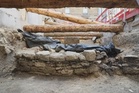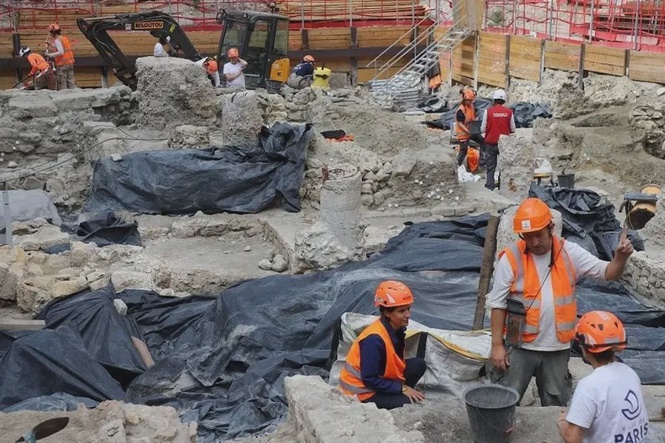
- Archaeologists have unearthed the charred remains of a 20-metre-long ancient Gallic wall near Notre-Dame in Paris.
- The discovery could provide the first physical evidence of Lutèce, an ancient Gallic town cited by Julius Caesar upon whose ruins Paris was built.
- Historical sources record that the Parisii tribe set fire to their fortified settlement in 52 BC to stop an invading Roman army from capturing it.
- Further excavations revealed signs of the remains of a wooden building destroyed by fire in front of the wall structure, with early results dating the wooden elements of the wall to between 200BC and 10BC.
- "We are perhaps facing one of the most important vestiges ever discovered to understand the Gallic Lutèce,” said Catherine Pégard, the French minister of culture.
IN FULL