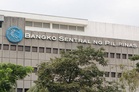
ELEVATED inflation could prompt the Bangko Sentral ng Pilipinas (BSP) to deliver another rate increase this Thursday despite a slowing economy, analysts said.
Six out of nine economists polled by The Manila Times said the benchmark rate could be raised by another 25 basis points to 5.0 percent.
The BSP’s policymaking Monetary Board, which has raised key interest rates two times so far this year due to above-target inflation, is scheduled to meet on Aug. 27.
BSP Governor Eli Remolona Jr. has said that weaker-than-expected economic growth — 2.3 percent in the second quarter and well below the government’s downwardly-revised 3.5- to 4.5-percent goal for 2026 — could prompt the central bank to take a less aggressive approach to raising interest rates.
At the same time, he also said that monetary authorities remained cautious of inflation, particularly persistent upside risks.
Consumer price growth fell for a third straight month to 6.2 percent in July after hitting a three-year high of 7.2 percent in April. However, it remained above the BSP’s 2.0- to 4.0-percent target.
Inflation to outweigh growth
Moody’s Analytics economist Sarah Tan said the odds were tilted towards another rate hike, with the possibility of a pause, due to subdued economic growth.
She noted that “inflation remains sticky and well above the BSP’s target range.”
“Renewed peso weakness adds to imported inflation pressures and complicates the path back to price stability,” she added.
Security Bank Corp. economist Angelo Taningco also said that a hike would still be “consistent with the need to have a less aggressive monetary tightening stance”
He added that this would “help bring down inflation back at BSP’s three-percent target over time while not constraining GDP (gross domestic product) growth, which has been sluggish.”
Bank of the Philippine Islands lead economist Emilio Neri Jr. said inflation risks remained tilted toward the upside despite the recent moderation in headline inflation, providing sufficient ground for a rate hike.
“Monetary policy can manage cyclical demand but cannot address constraints on potential output, leaving limited scope for lower rates to offset a predominantly supply-driven shock,” he added.
“Pausing to support growth could risk allowing inflation expectations to become less anchored without addressing the underlying supply constraints.”
Union Bank of the Philippines chief economist Ruben Carlo Asuncion said the central bank was likely to weigh elevated inflation against the recent loss of economic momentum.
“Key considerations include inflation expectations, oil prices, exchange rate movements, food supply risks, and the extent of the growth slowdown,” he added.
“Following the weak 2Q GDP outturn, the BSP may opt for greater policy flexibility while maintaining its anti-inflation stance.”
Raising interest rates further, HSBC Global Research senior economist Aris Dacanay said, could “build a buffer for inflation and FX (foreign exchange) risks amid dwindling reserves.”
“If the BSP does increase its policy rate next week, we expect its tone to be less hawkish than before, as it adheres to the principle of being data-dependent going forward.”
Sun Life Investment Management and Trust Corp. economist Patrick Ella, meanwhile, said the rate of deceleration in headline and core inflation was “still not enough change in momentum to let the BSP take a pause in the rate cycle.”
“However, I think October and December meetings for the BSP are now more likely to be a pause.”
Room to hold
Three economists, meanwhile, believe that the central bank could keep interest rates unchanged to help the economy recover.
Philippine National Bank economist Alvin Arogo said a “pause is necessary” due to weaker growth and easing inflation, but added that since consumer prices are still rising above target, the BSP will make it very clear that it is prepared to resume raising the policy rate if necessary.
Pantheon Macroeconomics economist Miguel Chanco said there was “real scope” for a central bank “surprise” this Thursday.
“Clearly, the worst of the inflation spike from the war is over, and the economy is still battling with an ongoing slowdown in headline growth,” he said.
“I think there’s real scope for the Board to surprise ... and press pause on its tightening, keeping the policy rate unchanged.”
Chinabank Research, meanwhile, said there was “limited room to raise rates” given the largely supply-driven nature of the inflation shock, weak domestic demand, and the risk that tighter policy could further weigh on economic growth.
“The case for a hold is getting stronger because the economy is already operating below potential, leaving little evidence of demand-driven inflation that would warrant another immediate hike,” Chinabank said.
“At most, we see room for one more hike, which the BSP can reserve for Q4 if inflation risks intensify.”