
Malaysia’s land borders with Singapore and Thailand process millions of foreign vehicles each year. The government has strengthened enforcement through the Vehicle Entry Permit (VEP) system, which allows authorities to track foreign vehicles and ensure payment of fines.
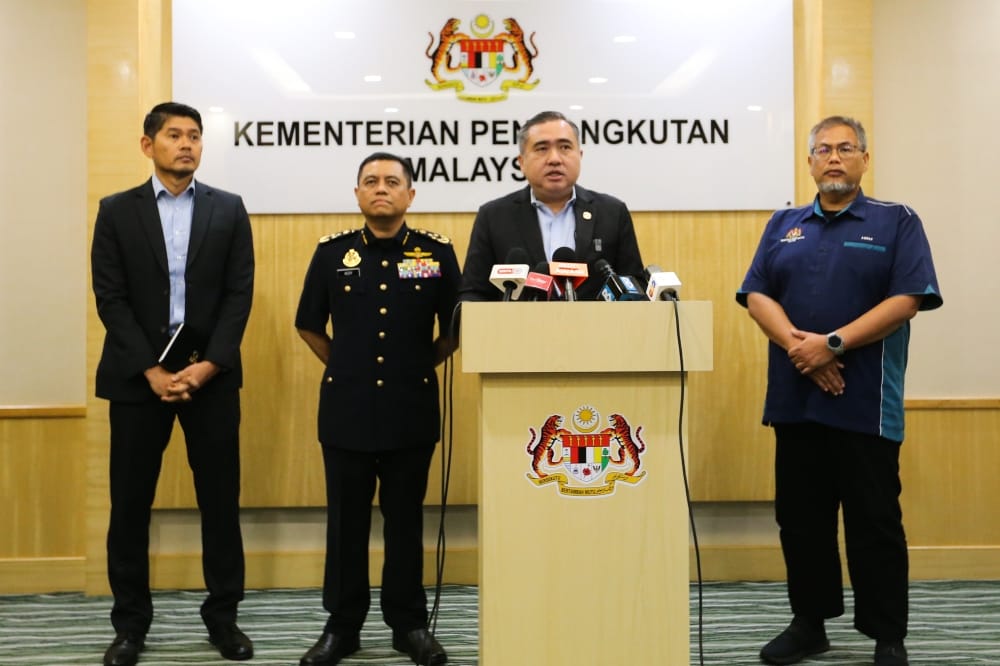
Transport Minister Anthony Loke has defended the VEP system as a major reform in road enforcement. However, criticism has grown over one missing component. Mandatory insurance verification for foreign vehicles is still not fully enforced at entry points.
Public discussion has intensified as enforcement focuses on registration and summons collection, while insurance compliance remains inconsistent according to transport policy observers and stakeholders cited in local discussions and reports.
What Is Happening at the Border
Malaysia currently requires foreign-registered vehicles entering by land to register for the VEP system. The system uses RFID tags linked to enforcement databases.
According to the Ministry of Transport, enforcement actions have been taken against vehicles without VEP registration.
- 2,916 foreign vehicles were issued summonses for VEP non-compliance since enforcement began in July, according to parliamentary replies and transport ministry statements (Paul Tan's Automotive News)
- Enforcement is carried out at major checkpoints such as Johor Bahru’s Sultan Iskandar Building and Sultan Abu Bakar Complex (Paul Tan's Automotive News)
The system allows authorities to check unpaid fines and traffic offences at the border before vehicles exit Malaysia.
However, the enforcement focus remains on registration compliance and unpaid summonses, not a unified mandatory insurance verification system for all incoming foreign vehicles.
Role of Anthony Loke and Policy Direction
Anthony Loke has repeatedly promoted the VEP system as a long-term solution to cross-border enforcement issues.
Key policy points under his ministry include:
- Mandatory VEP registration for foreign vehicles entering Malaysia by land (Malay Mail)
- Ability to track unpaid fines linked to foreign vehicles in real time (Paul Tan's Automotive News)
- Gradual enforcement approach with phased implementation and public announcements (The Star)
The Transport Ministry has also emphasized enforcement efficiency, especially at the Malaysia-Singapore border.
Despite this, critics argue that insurance enforcement has not been integrated into the same level of automation and border checks as VEP registration.
Where the Insurance Issue Appears
Foreign vehicle insurance is a key requirement in principle for road safety and accident liability. In practice, enforcement depends on documentation checks rather than real-time verification systems at all entry points.
Available reporting and official disclosures show:
- VEP registration requires vehicle documentation and insurance details during application stages (The Star)
- Insurance documents are part of the approval process, but verification at border entry is not fully automated or consistently enforced across all checkpoints (The Star)
This creates a gap between policy design and operational enforcement.
Stakeholders have raised concerns that:
- Insurance verification is not consistently linked to border scanning systems
- Enforcement officers rely on VEP compliance rather than direct insurance validation
- Some foreign vehicles may enter Malaysia with outdated or insufficient insurance coverage if not properly checked
These concerns form the basis of criticism directed at the Transport Ministry’s enforcement approach.
Public and Industry Criticism
Criticism has emerged mainly from road safety analysts, logistics stakeholders, and public commentary in media discussions.
Key points raised include:
- Insurance enforcement is less visible compared to VEP summons enforcement
- Cross-border risk exposure remains if insurance verification is not centralized
- Border efficiency improves, but risk management is incomplete without insurance integration
Some industry voices argue that Malaysia has advanced in tracking vehicle entry but still relies on fragmented systems for financial and insurance compliance.
Impact on Malaysia
The debate is not only administrative. It affects daily life and national systems.
1. Road safety risk
- In accidents involving foreign vehicles, insurance gaps can delay compensation
- Local victims may face longer claims processes if insurance coverage is unclear at entry
2. Government enforcement credibility
- Strong VEP enforcement improves perception of control
- Weak insurance integration raises questions about system completeness
3. Economic implications
- Johor and border economies depend on high cross-border traffic
- If enforcement becomes stricter without seamless insurance systems, administrative delays may increase congestion
4. Public trust
- Citizens expect equal enforcement of registration, fines, and insurance rules
- Uneven enforcement reduces confidence in transport governance systems
Border System in Global Context
Many countries use integrated border vehicle systems combining registration, insurance, and road tax verification.
Examples include:
- European Union cross-border vehicle insurance recognition systems
- Singapore’s strict enforcement requiring valid insurance and road tax compliance for foreign vehicles
- Australia’s electronic vehicle entry systems that integrate multiple compliance checks
Malaysia’s VEP system is closer to a registration and enforcement database. Insurance integration remains partially manual in comparison.
Data and Official Figures
Available official data highlights the scale of enforcement activity:
- 58,791 VEP applications were received within two months of expansion efforts (The Star)
- Around 100,000 Singapore-registered vehicles are expected to be covered under VEP requirements (The Star)
- Thousands of summonses have been issued for non-compliance at border checkpoints (Paul Tan's Automotive News)
These numbers show strong focus on vehicle identification and legal compliance tracking.
However, no comparable public enforcement data has been published specifically on insurance compliance checks at entry points.
Policy Gap Analysis
Based on available reports and ministry statements, the main gap is clear:
- Strong system: Vehicle identification through VEP and RFID
- Moderate system: Traffic summons enforcement
- Weak system: Automated insurance verification at border entry
This gap is the center of criticism directed at the Transport Ministry and Anthony Loke’s enforcement strategy.
What Do You Think? I’d Love to Hear Your Opinion in the Comments Section
Malaysia has strengthened border vehicle enforcement through the VEP system. The system improves tracking of foreign vehicles and unpaid fines. Enforcement numbers show active implementation and expanded coverage.
The criticism focuses on one missing layer. Insurance enforcement is not fully integrated into the same automated border system. This creates operational gaps in risk coverage and accident liability management.
Policy design has moved faster than system integration. Enforcement strength is visible in registration compliance. Insurance verification remains partially procedural rather than fully digital at entry points.
The issue now sits between enforcement efficiency and system completeness.
AM World (tameer.work88@gmail.com) is a content creator under the Newswav Creator programme, where you get to express yourself, be a citizen journalist, and at the same time monetize your content & reach millions of users on Newswav. Log in to creator.newswav.com and become a Newswav Creator now!
The User Content (as defined on Newswav Terms of Use) above including the views expressed and media (pictures, videos, citations etc) were submitted & posted by the author. Newswav is solely an aggregation platform that hosts the User Content. If you have any questions about the content, copyright or other issues of the work, please contact creator@newswav.com.