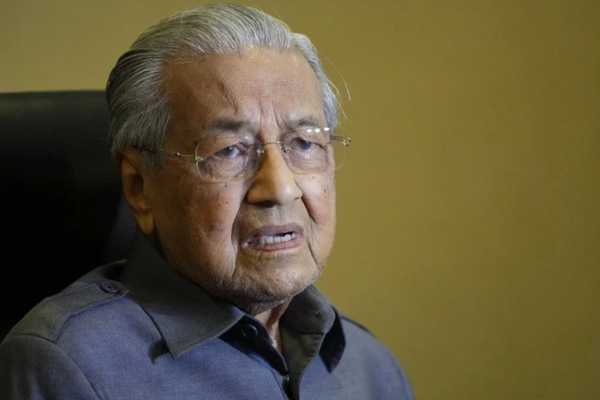
In a recent controversy surrounding former Prime Minister Dato' Seri Najib Razak's apology for the 1MDB scandal, Malaysian leaders Prime Minister Dato' Seri Anwar Ibrahim and Transport Minister Anthony Loke have taken sharply contrasting positions.
While Anwar embraced the apology as a gesture of politeness, Loke dismissed it outright, raising significant questions about accountability, justice, and the role of political leaders in confronting past corruption.
Anwar’s Good Faith Approach: A Gesture of Leadership or Misstep?
Addressing the Perak PKR Convention, Prime Minister Anwar Ibrahim elaborated on his welcoming of Najib’s apology, describing it as a move in “good faith” and as a reflection of leadership. "I am the Prime Minister, the father of the nation,” Anwar remarked, emphasizing his responsibility to engage with the country’s leaders and address issues with empathy and an open mind.
However, his "welcome" response has sparked intense public debate, with critics questioning his discretion in this matter and suggesting that it undermines accountability for one of Malaysia's largest corruption cases.
Anwar responded to the backlash by calling critics “slow-witted,” arguing that Najib’s apology is a welcome move of his good intentions rather than an erasure of responsibility. He defended his position, stating that it’s critical for the government to maintain a balanced approach, targeting corruption across the board and not focusing solely on Najib. “It’s unfair to single out just one individual,” he said, implying that other figures involved in corruption have yet to face the same scrutiny.
Loke’s Clear-Cut Rejection: “A Crime is a Crime”
On the other side of the political spectrum, DAP Secretary General and Transport Minister Anthony Loke dismissed Najib’s apology outright. Loke's stance was unequivocal: "With or without an apology, a crime is a crime." Loke’s statement reflected a belief that public apologies cannot negate the damage caused by such massive corruption. Speaking at an event, he reminded reporters that Najib has been convicted by Malaysia’s apex court, and the apology is therefore irrelevant.
Loke’s response resonates with many who see Najib’s 1MDB scandal as a wound that cannot simply be healed through words. Loke also dismissed any discussions about house arrest for Najib, reinforcing that the law provides no grounds for leniency in cases of severe financial misconduct.
Najib’s Apology: Sincere or Strategically Timed?
Najib's apology, delivered through a statement by his son Datuk Mohamad Nizar, expressed regret over the 1MDB scandal but maintained Najib’s claim of being misled by fugitive businessman Jho Low. This “apology” has sparked mixed reactions, with some viewing it as a calculated attempt to curry favor for potential leniency, while others see it as a reflection of genuine remorse.
For many Malaysians, the contrasting reactions from Anwar and Loke underscore the tension within the ruling coalition on how to handle past corruption cases. While Anwar's position reflects a reconciliatory, statesman-like approach, Loke’s response represents an unwavering commitment to justice and the rule of law, especially given Najib’s conviction on multiple charges of power abuse and misappropriation linked to 1MDB and SRC International Sdn Bhd.
The Broader Implications for Malaysia’s Political Future
As Najib continues to serve a reduced sentence, the contrasting stances of Anwar and Loke highlight a critical debate within Malaysia’s leadership. Anwar’s welcoming of Najib’s apology may foster unity, but it risks alienating those who demand accountability. Conversely, Loke’s firm stance appeals to the public’s frustration over corruption but may hinder efforts at broader political reconciliation.
This divergence raises the question: Can Malaysia move forward on the path of reform if its leaders disagree on how to address past wrongs and lack the political will to enforce accountability? The answer could shape the nation’s political landscape for years to come.
By: Kpost
Information Source: TheMalayMail , TheEdge
Kpost is a content creator under the Newswav Creator programme, where you get to express yourself, be a citizen journalist, and at the same time monetize your content & reach millions of users on Newswav. Log in to creator.newswav.com and become a Newswav Creator now!
The User Content (as defined on Newswav Terms of Use) above including the views expressed and media (pictures, videos, citations etc) were submitted & posted by the author. Newswav is solely an aggregation platform that hosts the User Content. If you have any questions about the content, copyright or other issues of the work, please contact Newswav.