

In the late 1990s, the Malaysian Reform movement and Indonesia's parallel rise against the Soeharto dictatorship symbolized the rise of reform in the Southeast Asian region. In our country, Anwar Ibrahim in 1998, as soon as he was fired from UMNO, started the Reform movement in Malaysia.
Both promised to dismantle Corruption (bribery), Collusion (secret alliance) and Nepotism - CCN - the toxic trio - 3 elements that poison and destroy the governance of a country.
Several decades have passed, the irony is bitter; the parties born of the struggle against this toxic trio, now risk reflecting the system they once cursed and condemned, instead haunting their parties.
When the People's Justice Party (PKR) led by Anwar Ibrahim struggled to maintain its reformist credibility, it was at a crossroads because several incidents were taking place and shrouded the party.
Will it break the cycle of hypocrisy like the collapse of the previous Reformation movement in several countries - the Reformation of the University of Indonesia Students, the Brazilian Workers' Party (PT), and the Italian Five Star Movement (M5S)?
Or will the survival of PKR, which is now entering its third year after the 15th GE in a loose coalition of "marriage of convenience" and being at the peak of power, be trounced on the principle of its establishment to curb CCN?
It is far more dangerous that PKR will be trapped in the shadow of the party's own struggle and subsequently wither, suffer the same fate and be buried like other 21st century parties and Reformation movements.
Hypocrisy Trap: Lessons from the Failed Reformation Movement
1. Indonesia, post-Soeharto
After 1998, through the triumph of the Student Reform Movement and the masses who overthrew the Soeharto regime, the Movement vowed to bury the chronism of his New Order regime. Orde Baru or New Order (is the term for the 32-year reign of President Soeharto from 1966-1998, which replaced the Old Order, the previous reign, Soekarno 1945-1965).
The New Order era was authoritarian in nature, where the system was built around a rather narrow terrace, consisting of the military and a group of civilian allies.
And when Soeharto was overthrown by the university student and people's reform movement in 1998, the New Order which was Authoritarian was successfully replaced. And the student movement at that time demanded and urged the elimination of Corruption, Collusion and Nepotism (CCN) in the state government.
But today, dynastic politics is advancing. President Joko Widodo, once praised as "a man of the people” witnessed his son, Gibran Rakabuming Raka, appointed as Mayor of Solo criticized for his involvement in the controversial decision of the Constitutional Court in the case of the nomination of the 2024 Presidential Election Vice President.
The Constitutional Court, chaired by Jokowi's brother-in-law, agreed on the age requirement for running for Vice President and added a new requirement to hold the position of Mayor to allow Gibran's legitimate rise to run - a move critics dubbed "legalized nepotism."
Meanwhile, anti-corruption bodies such as the KPK (Corruption Eradication Commission) are systematically weakened and interfered with by President Jokowi.
Lesson for PKR
A system that has been rooted for a long time will be difficult to resist change unless the institution is protected and there is no political interference.
Anwar, who is also Prime Minister, recently won the PKR 2025-2028 presidency unopposed for the last term in charge of PKR, must begin drafting structural protection laws, such as PM term limits and anti-nepotism laws, to prevent Malaysia's democracy from becoming a family heirloom. The drafting of laws for this purpose had its merits in the context of the practice of nepotism, before it is too late as an idiom says- don't cry over spilt milk.
Do we want to have a Chief Executive of State (such as a President or Prime Minister) who uses his position, power and influence to appoint his own wife or family member as Deputy? As is currently happening in a transcontinental country in the South Caucasus region, which is located at the crossroads of Eastern Europe and Western Asia.
The tendency of Nepotism does exist when the party culture changes and is surrounded by "Yes-Men" and the culture of "Mengampu dan Membodek" supports a political organization, even though at the beginning of its establishment this culture did not exist.
Anwar should be more knowledgeable and digest the DNA of "Yes-Men", "Mengampu dan Membodek" because he was in UMNO for 16 years (1982-1998) and climbed to the No. 2 position in the party and should be able to prevent toxics menace creeping into PKR.
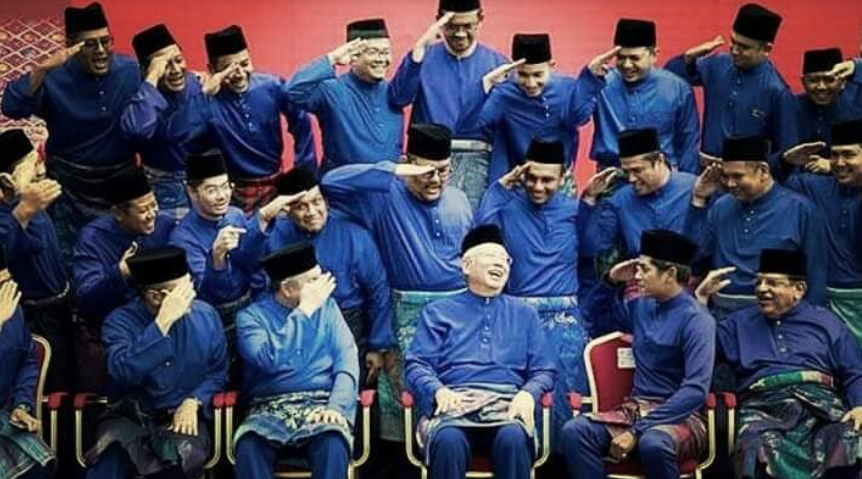
This bad practice is actually what is rotting UMNO when its leaders who are forgiven, forgiving fail to be checked using the intellectuality of those around them and end up languishing in prison after being sentenced to 12 years in prison for the crime of breach of trust and corruption.
Some of the top PKR leaders have already practiced Nepotism by placing their own children as candidates in the 15th election and appointed to serve in the parliamentary institution. All of this is observed by the public, who see the party that opposes KKN as if it has lost its compass of struggle.
There are among the past leaders who created political corridors related to Nepotism for their children and close relatives-Mahathir-Mukhriz, Abdullah Badawi-Khairi Jamaluddin, Najib Razak-Mohd Nizar, Anwar-Nurul Izzah, Lim Kit Siang-Lim Guan Eng among the examples.
In the remaining 2 years, before entering the 16th GE, for this party to remain relevant to the struggle, PKR should not compromise on party ideals—associating with tainted parties, dynastic appointments (for example, Nurul Izzah), and prioritizing power over principle consequently eroding public confidence in anti-corruption, anti-collusion and anti-Nepotism pledges.
2. Brazilian Workers' Party (PT): Power Prevails Over Principle
The early success of the Brazilian Workers' Party, established in 1980, and became very popular due to the pro-worker struggle and democratization against military dictatorship, made it important in Brazilian politics, especially in the 2000s under the leadership of Luiz Inácio Lula da Silva and Dilma Rousseff.
PT under Lula da Silva, who later became President of Brazil - lifted millions of Brazilians out of poverty but was overshadowed by the scandal of the Car Wash Operation company in Brasilia.
This scandal exposed systemic corruption involving the PT party elite with money laundering.
In March 2014, an investigation into a car wash company in Brasília serving as a “shell company” for money laundering, the proceedings revealed a massive corruption scheme in the Brazilian federal government, especially in state-owned enterprises.
The PT party prioritizes dominance and election victory, hand in hand with corruption to maintain the coalition. By the time President Dilma Rousseff was fired in 2016, PT's moral authority had collapsed.
Lesson for PKR
Compromising with corrupt perpetrators for the sake of power erodes credibility.
Anwar must cleanse PKR of tainted figures and reject alliances with parties such as UMNO, whose leaders face corruption charges.
Populist and rhetorical gestures such as opposing Corruption, Collusion and Nepotism as in the 90s cannot replace the integrity of institutions and government apparatus.
3. The Italian Five Star Movement (M5S): The Danger of Pragmatism
The Five Star Movement (M5S) or “Movimento 5 Stelle”, is an Italian political party, emerging as a force in the country's politics with an “anti-establishment” and “anti-populist rhetoric” platform and focusing on direct democracy.

Founded in 2009 by comedian Beppe Grillo, it gained significant popularity by criticizing corruption and the traditional political system.
M5S has become a major player in the Italian political landscape, forming coalition governments and supporting issues such as anti-corruption measures, environmental protection, and direct democracy.
Coming into power in 2018 as a new political party with an "anti-establishment" image pledged to fight public corruption by introducing "spazzacorotti" - a corruption-destroying law linked to the "clientelist politics" list of clients in Italy.
But in a few years, it collaborated with the center-left Democratic Party and faced a scandal over the mismanagement of EU funds. Voters felt betrayed, and support plummeted.
Lessons for PKR:
Grassroots movements die when they become "elite" or "establishment-lite." They forget the foundation of the struggle and there is a transformation of leadership style when in power.
PKR must avoid transactional alliance relationships (if partners in an alliance have an implicit agenda and must address the core issues before reaching an agreement on the existence of the alliance).
In the era of information technology, leverage communication through digital tools for "crowd source" policies, ensuring accountability and priority to its member base, not the elite, so that emerging issues are immediately addressed and resolved.
Conclusion: The Ghost of Reformation Continues to Haunt PKR
History shows that movements that denounce CCN(Corruption, Collusion and Nepotism) end up in rhetoric because they often imitate its practices when its institutions and apparatus remain unreformed and public awareness wanes.
Indonesia’s Student Reform collapsed under the temptation of dynasticism; Brazil’s PT chose power over purity; Italy’s M5S traded ambition for influence.
For PKR, Anwar’s legacy and the future struggle for Malaysian democracy depend on whether the party sees CCN as an “existential” threat rather than a slogan or campaign rhetoric.
The choice is crystal clear; lead a structural revolution or join the ranks of reformists who have turned hypocrites. The clock is ticking and the time bomb is about to explode!
Tahanazar al-Qadree is a content creator under the Newswav Creator programme, where you get to express yourself, be a citizen journalist, and at the same time monetize your content & reach millions of users on Newswav. Log in to creator.newswav.com and become a Newswav Creator now!
The User Content (as defined on Newswav Terms of Use) above including the views expressed and media (pictures, videos, citations etc) were submitted & posted by the author. Newswav is solely an aggregation platform that hosts the User Content. If you have any questions about the content, copyright or other issues of the work, please contact creator@newswav.com.
