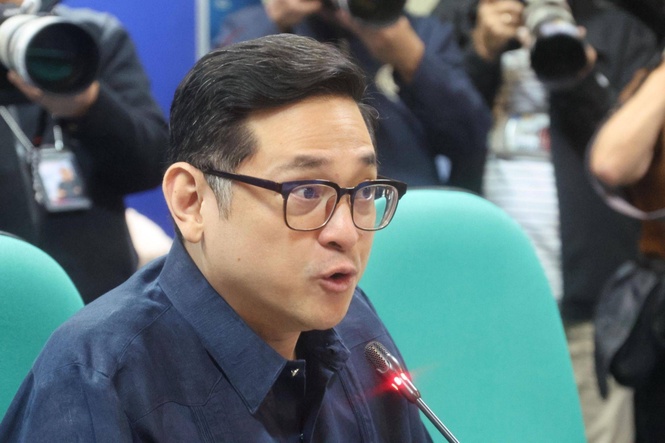
SEN. Bam Aquino on Tuesday urged government lending institutions to suspend loan interest charges for small businesses, online sellers and workers for three months starting January 2027 to cushion the economic impact of the looming super El Niño.
Aquino said the proposed interest holiday would help micro, small and medium enterprises (MSMEs) sustain operations and protect jobs while giving workers and middle-class borrowers extra money for household expenses amid rising commodity prices.
He called on the Small Business Corp. (SB Corp.), Social Security System (SSS), Government Service Insurance System (GSIS) and Pag-IBIG Fund to consider implementing the relief from January to March 2027.
As chairman of the Senate Committee on Trade, Commerce and Entrepreneurship, Aquino said SB Corp. could lead the initiative by temporarily waiving interest charges on loans to small business owners and online sellers facing higher operating costs.
“Our small businesses will have the necessary space to sustain their operations and protect their workers’ livelihoods amid the expected rise in the prices of goods,” he said.
Aquino also urged the SSS, GSIS, and Pag-IBIG Fund to extend similar relief to borrowers struggling with loan payments as living costs rise.
The country is bracing for below-normal rainfall, dry spells and possible drought in several areas, with El Niño’s effects expected to intensify toward the end of 2026 and continue into the first quarter of 2027.
The weather phenomenon threatens agricultural production, food security and livelihoods, with potential repercussions for commodity prices and small businesses.
Aquino earlier asked Senate President Sherwin Gatchalian to reconvene the Senate’s Proactive Response and Oversight for Timely and Effective Crisis Strategy Committee to coordinate preparations for the anticipated climate event.
Established in March 2026 to address the economic and energy implications of conflicts in the Middle East, the committee is being urged to help mount a whole-of-government response covering agriculture, health, education, MSMEs, and other essential services.
The proposed interest waiver remains a call for action, with implementation details and eligibility requirements yet to be announced.