Artificial intelligence (AI) is quickly permeating every aspect of our lives, from voice assistants like Alexa and Siri to tailored suggestions on YouTube and Netflix.
Large corporations and tech specialists no longer use it exclusively. These days, AI is incorporated into some classrooms as well as the toys and apps that kids use. This begs the intriguing question: Are children too young for AI?
The short answer is no, but with guidance. It is normal for parents and educators to be cautious. Children can be exposed to AI at any age, but in order to fully benefit from it, they require adult supervision, appropriate education and experiences that are age-appropriate. Let us investigate the significance of this subject and appropriate approaches.
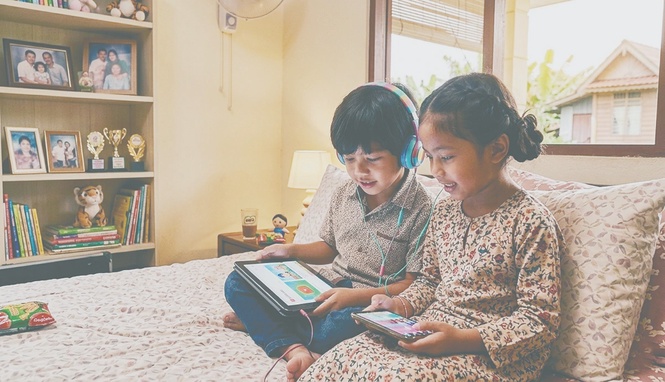
Children are already interacting with AI on a daily basis even though many people are unaware of it. Children interact with AI when they converse with a smart speaker, view a video that is suggested by an algorithm or use a learning app that adjusts to their level of proficiency.
Although these interactions frequently seem smooth and magical, they are actually driven by intricate data-driven systems.
Since children are already using AI, the true question is not whether they are too young for it. The more crucial question is whether they comprehend what they are using and whether the adults in their lives are knowledgeable enough to provide them with guidance.
The natural advantage of curiosity
Inquisitiveness is innate in children. They enjoy experimenting with their surroundings, posing queries and investigating novel concepts. They are ideal candidates to learn about AI because of these characteristics.
Early exposure to AI fundamentals like patterns, decision-making and example-based learning can aid in children’s understanding of the technology’s operation. Naturally, this does not entail introducing deep learning algorithms to five-year-olds. It entails generating interest through the use of interactive tools and straightforward language.
Children can make their own AI models in an enjoyable and approachable manner – for instance, by using coding games like Scratch or apps like Googles Teachable Machine. These encounters foster the development of fundamental abilities in digital literacy reasoning and problem-solving.
Critical thinking is developed through teaching AI
The promotion of critical thinking is one of the main advantages of teaching children about AI. AI systems are not flawless; they may present inaccurate information, reinforce prejudices or make mistakes. We enable kids to challenge what they see and hear online by educating them about AI as a tool that has both potential benefits and drawbacks.
In a time of deepfakes, disinformation and algorithm-driven content, this is particularly crucial. Children who comprehend AI are better equipped to behave responsibly and safely in the digital world. They are more likely to inquire, “How did this game know what I like?” or “Why am I seeing this video?” This awareness is a significant step towards becoming digitally independent.
The dangers and worries are real
Despite the advantages, exposing kids to AI without the right protections raises serious concerns. Data privacy is one of the main concerns. Personal information is sometimes collected by numerous AI-powered apps and platforms in an opaque manner. Parents might not be aware of the extent of data collection, and children might not understand what it means to share their data.
Concerns have also been raised about screen time dependence and the replacement of interpersonal communication. While talking-back AI toys may seem entertaining, they should never take the place of in-person discussions with parents or other caregivers. The same is true for learning applications that adjust to a child’s speed; they should be used to enhance, not to replace, in-person instruction.
These hazards emphasise how crucial adult participation is. Parents and educators need to read the fine print, choose age-appropriate, ethical AI platforms and be aware of the tools their kids are using.
There is a role for schools
Schools have an obligation to introduce students to AI in a methodical and considerate manner as the technology becomes more incorporated into the classroom. AI should be taught and discussed, not just used in the background.
As they introduce ideas like algorithmic bias, data ethics and machine learning, some educational institutions are starting to integrate AI literacy into their curricula. Preparing the next generation for a future in which AI will significantly impact employment, society and daily life requires these efforts.
When AI education is delivered well it can stimulate students’ creativity, increase their interest in STEM subjects and give them the tools they need for future employment. Additionally, it can level the playing field by allowing children from diverse backgrounds to learn about and influence the technology that will influence their future.
The right age is about approach not a number
Therefore, is it too early for children to use AI? The answer is not universally applicable. It is about the introduction of AI, not about a particular age.
Teenagers can delve into more complex ideas like AI ethics and design, while younger children can start with play-based learning and older kids can try their hand at simple coding. Making the content interesting, intelligible and applicable to their daily lives is the most important strategy.
With the correct instruction, children can develop into knowledgeable thinkers, producers and even future pioneers in the field of AI, rather than merely passive consumers.
AI is a permanent fixture. Actually, with each year that goes by, it becomes more prevalent in our kids’ lives.
As with traffic laws, a healthy diet and internet safety, we should educate children about it rather than protect them from it.
Young children can learn AI properly; they are not too young for it. Informed adults, age-appropriate resources and an emphasis on creativity and ethics can help kids develop a positive, healthy relationship with the technology that will shape their future. And that is the most important thing of all.
Dr Manjit Singh Sidhu is a professor at the College of Computing and Informatics, Universiti Tenaga Nasional, fellow of the British Computer Society, Chartered IT professional, fellow of the Malaysian Scientific Association, senior IEEE member and professional technologist MBOT Malaysia. Comments: letters@thesundaily.com