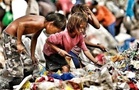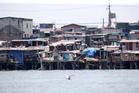
THE Philippine Statistics Authority (PSA) announced on Aug. 21 that poverty incidence across the population declined significantly to 9.7 percent in 2025, or 11.08 million Filipinos, from 15.5 percent in 2023, or 17.54 million Filipinos. This is a significant drop of 5.8 percentage points. Poor families were also reduced to 6.4 percent last year, or 1.90 million families, from 10.9 percent, or about 2.99 million families, in 2023 — a drop of 4.5 percentage points.
The government computes who among us are classified as “poor” based on its predetermined poverty threshold. For a family of five, PSA estimated it at P14,634 per month in 2025, from P13,873 in 2023. This means that, on average, a family of five needs at least P14,634 a month to meet its minimum basic food and nonfood items.
The proportion of poor people in our population is measured by whether an individual’s or family’s per capita income is sufficient to buy the minimum basic food and nonfood requirements. Basic food items include rice, meat, fish, vegetables, fruits, eggs and sugar, among others. Basic nonfood needs, on the other hand, cover clothing and footwear, housing, fuel, light and water, medical care, education, transportation and communication, among others.
Let’s say that a carpenter earns a gross income of P15,000 per month, with a spouse and three children, working for a contractor of a residential house. This might be how his monthly expenses would look like:
This does not include rent for housing, debt payments, sudden medical expenses, school projects, clothing allowance, recreation/entertainment, and mandatory deductions such as SSS, PhilHealth and Pag-IBIG.
The government’s latest poverty statistics truly showed that millions of Filipinos have moved above the poverty threshold of P14,634 per month. In absolute terms, roughly 6.46 million Filipinos have been reclassified as nonpoor between 2023 and 2025. But it does not necessarily mean that all of them are now economically secure or living comfortable as one would imagine. The government did not say that surpassing the poverty threshold is the same as achieving a decent standard of living. The government was not being dishonest.
The PSA also asserted that annual per capita incomes of families in the poorest 10 percent and second-poorest 10 percent increased by 23.8 percent and 22.7 percent, respectively, while the annual per capita poverty threshold only increased by 5.5 percent (from P13,873 to P14,634). In simple words, the incomes of the poorest of the poor rose four times faster than the cost of money required to afford food and nonfood needs not to be classified as “poor.”
But the begging issue remains — could a Filipino family of five survive and cope with a monthly income of P15,000 per month at today's prices? Many will disagree that it is realistic to live humanely on such a meager income. It might therefore be appropriate for the national government to clarify that when it says that 6.46 million Filipinos were lifted from poverty, this means they surpassed the mandatory poverty threshold — not necessarily that they have achieved financial security or substantially improved their living standards. The government has to be forthright on this.
The PSA must also continue to disclose those who are "near poverty" or "just above the poverty line" to truly assess the socioeconomic conditions of poor families. Although it must be acknowledged that poverty incidence significantly declined from 2023 to 2025 at 5.8 percentage points, these statistics are not accurate to translate whether there was meaningful and sustainable transformation in the lives of the poor.
Perhaps it’s time to recalibrate how we measure poverty so that the threshold for basic needs accurately reflects the real standard of living sufficient for Filipino families today. After all, if we continue to underestimate their real conditions, we will be complacent in our worldview that millions of Filipinos are doing better than before. When in truth they are merely stuck in their previous day-to-day survival.
This miscalculation is not only an illusion but catastrophic for the nation in the long run.