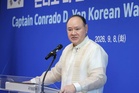
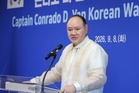
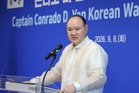
THE storm over the South China Sea has yet to settle, but anti-China drums are already beating again in Manila. While there is nothing wrong in expressing one’s sentiments, the sad thing here is that leading these anti-China attacks is no less than the Defense Secretary Gilberto Teodoro Jr., whose citizenship has been put into question.
Last June 18, 2026, a complaint against Teodoro was filed by lawyer Russell Miraflor with the Pasay City Prosecutor’s Office over questions regarding his past Maltese citizenship and passport timeline.
The Defense secretary reportedly obtained a Maltese passport in 2016 through an investment-for-citizenship program, valid until Dec. 22, 2026. His wife Monica Prieto-Teodoro and son Jamie allegedly acquired Maltese passports through the same scheme around the same time. Monica reportedly even used her Maltese passport to travel to San Francisco, USA, in June 2026.
In March 2017, Teodoro renewed his Philippine passport, creating a complete overlap in validity between his two passports. His wife Monica, appointed by the president as the country’s special envoy to Unicef — is said to hold both Philippine and Maltese passports during her two terms (2017–2018 and July 2022 to present). Yet the 1987 Philippine Constitution is crystal clear: Anyone holding public office, especially at the Cabinet level, is absolutely prohibited from holding dual citizenship.
Malta’s investment-for-citizenship program itself requires applicants to swear an oath of allegiance to Malta.
When challenged, Teodoro simply denied it with a false, unverified “passport cancellation statement.” A Maltese passport valid until December 2026 — supposedly made to “disappear” through a mere verbal promise?
If the reports are true, this is not just a violation of the Constitution, but a desecration of national security. And if indeed this is true, then when orders are issued from the Department of National Defense in Manila, which country is he actually serving? When his wife performs her duties at the United Nations, whose interests is she protecting?
Another issue in question is the raid on the Sanjia Steel Plant.
On May 15, 2026, Teodoro personally directed the Sanjia Steel Plant raid, a spectacle that laid bare the absurdity of the Philippine defense secretary: deploying military forces to arrest unarmed Chinese workers, transporting them by military aircraft, forcing them to wear hazmat suits for staged photos, and turning a 5-square-meter prison cell into a political prop.
The question: What is Teodoro’s business in leading or participating in a police operation?
A Defense secretary, instead of attending to the serious business of national defense, personally rushes to a steel plant to direct a shoddy “hazmat suit photo op” and uses the Armed Forces as extras on a film set on a clear police operation.
Public officials like Teodoro are entrusted with national security and therefore face a higher standard of scrutiny. Decisions made by a secretary of national defense affect not merely the operations of government but the country’s sovereignty, diplomatic relationships and strategic direction.
The recent allegations concerning him therefore deserve examination — not through personal attacks or inflammatory rhetoric, but through facts, law and transparent public explanation.
As the Defense secretary unquestionably has a duty to defend the country’s sovereign rights and territorial interests. At the same time, national security policy must recognize that China is a major regional power and an important economic partner. Protecting Philippine interests therefore requires both firmness and diplomacy.
But the choice should not be reduced to being “pro-China” or “anti-China.” The real question is whether every government action advances the long-term interests of the Filipino people.
If government agencies acted properly under Philippine immigration, labor, national security or criminal laws, they should make the legal basis and circumstances of the operation clear. Conversely, if irregularities occurred, those, too, deserve investigation.
But for every case, there is a corresponding agency designated to handle it. And police operations are best simply left to the Philippine National Police, which is civilian in nature.
By leading the raid as Defense secretary and deploying personnel of the Armed Forces, Teodoro in essence has treated the operation as some sort of international conflict.
And he has aggravated this further by mouthing anti-China pronouncements. I have said this before, and I have to reiterate this again. Everything pertaining to foreign policy and relations is exclusively under the turf of the president. And he has his alter ego, the Foreign Affairs secretary.
And any statement and action emanating from the Defense secretary could be misconstrued as a military position and action. I am a Filipino, and just like any Filipino out there, I am willing and ready to defend the flag. But if the president whom we have elected is open to the negotiating table, then no one should preempt him.
We don’t want to be pushed to war when the negotiating table is very much open.