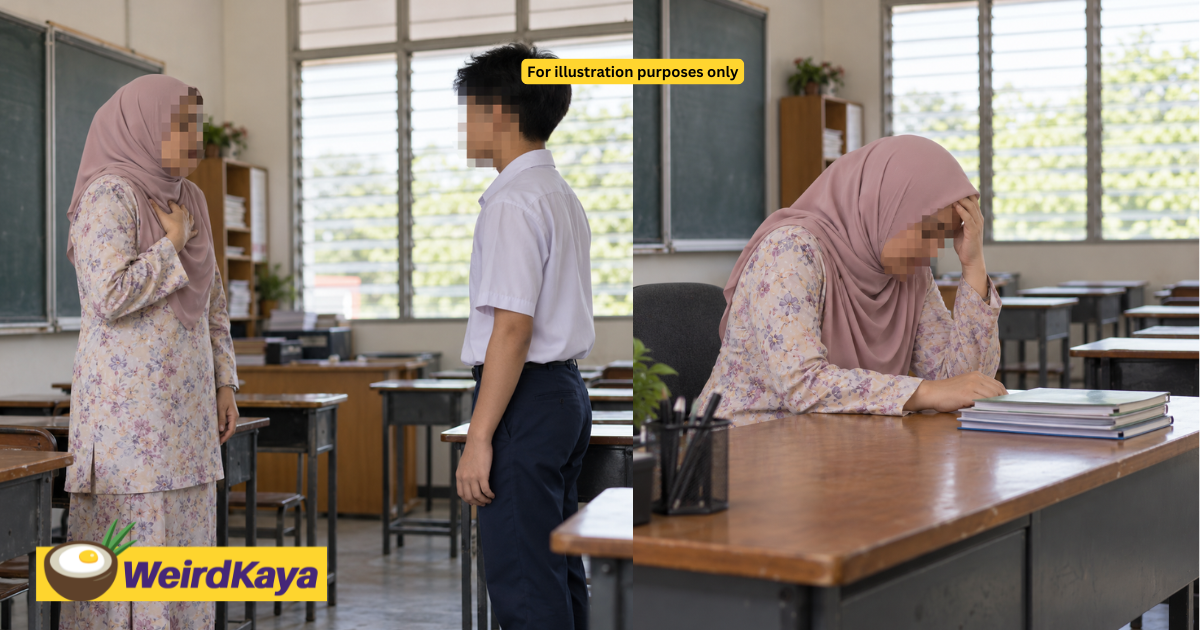
A Texas school district has cancelled a high school production of Little Shop of Horrors after a female student was cast as the male lead. The student had won the role following several days of auditions and callbacks. A week into rehearsals, she was told that the district would not allow a female student to play a male character. When she declined an alternative role, the school cancelled the entire musical.
Now, before we dismiss this as another American controversy that has little to do with us, perhaps we should ask ourselves, “Would we be comfortable casting a woman to play a man, or a man to play a woman, in a Malaysian theatre production?”
As a theatre practitioner, I find the question worth exploring. Not because I believe every role should automatically be open to everyone, but because I am curious about the principles we use when deciding who gets to play whom.
When did gender become a casting requirement?
Theatre has never been particularly faithful to the idea that an actor must share the identity of the character they portray.
Think of Dustin Hoffman in Tootsie and Robin Williams in Mrs Doubtfire. Both actors played men who disguised themselves as women. These are not quite examples of gender-blind casting, because the characters themselves were men pretending to be women.
But the examples do raise an interesting point: audiences have long accepted actors playing characters whose outward appearance, behaviour or assumed identity differs from their own.
Go further back to Shakespeare's time, and women were generally barred from performing on the professional English stage. Female characters in Shakespeare's plays were therefore played by young men.
Theatre has always found ways to play with gender. The question is whether we are willing to allow that freedom when the actor's casting challenges our own expectations.
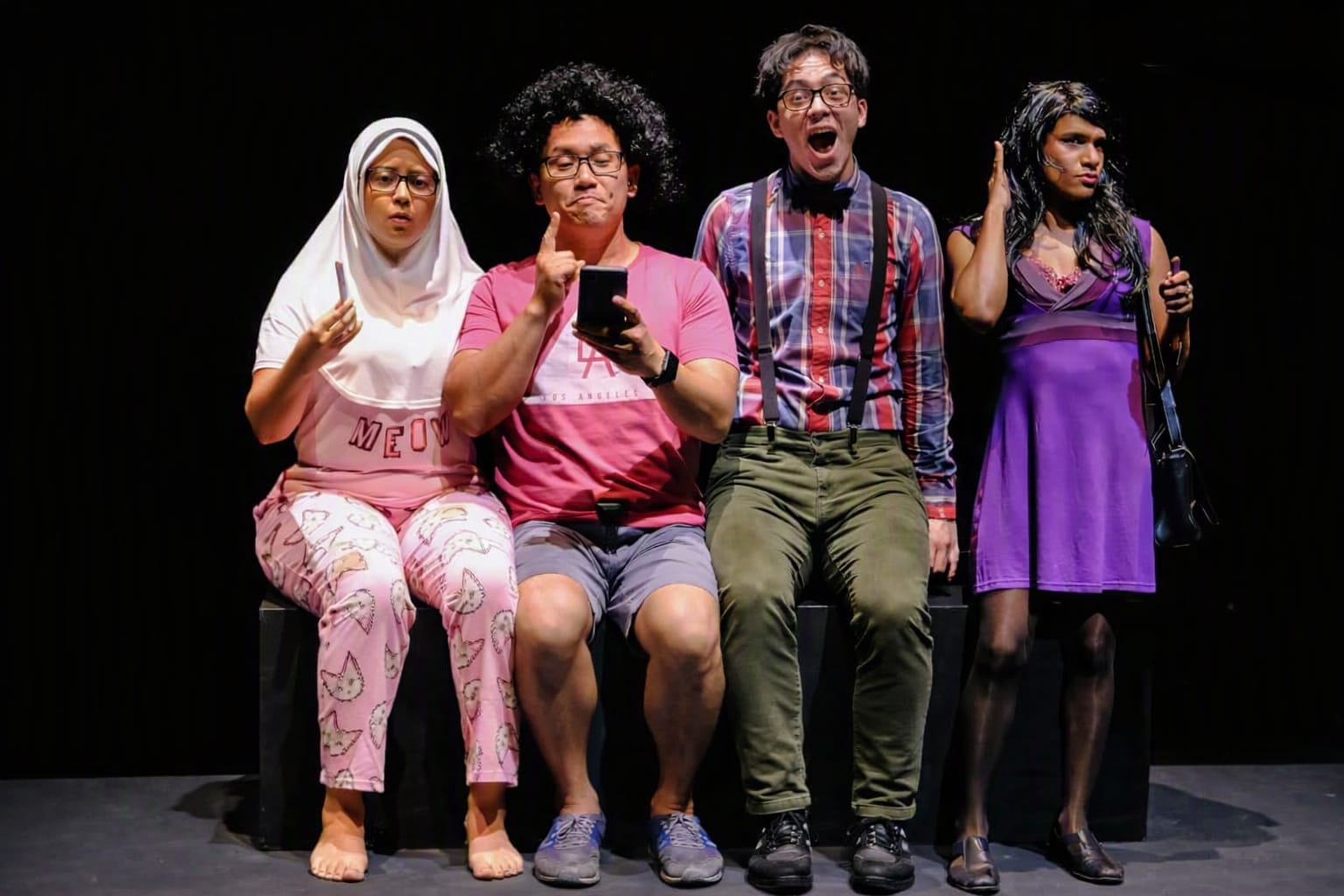
Imagine a Malaysian production in which a woman is cast as Hang Tuah. Or a man is cast as Nenek Kebayan. Would we judge the performance on the actor's ability to inhabit the character, or would we spend the evening wondering why the director couldn't find someone of the appropriate sex?
There are practical considerations, of course. A production might require a particular physical presence, vocal quality, movement or chemistry between characters. The director may have a specific artistic vision. An actor might simply be unsuitable for a particular role, regardless of gender.
But those are questions of suitability, not necessarily sex.
If a woman can convincingly portray the struggle and ambition of Hang Tuah, must we reject her simply because Hang Tuah is a man? If a man can bring something compelling to Nenek Kebayan, must we insist that the character be played by a woman?
And what if the director's intention is to challenge conventional ideas of gender in the first place?
Gender-blind casting does not mean that gender must never matter. It means that gender is not automatically used as a barrier before the actor has even been considered.
Perhaps the more useful question is this: should we be casting the best person for the role, or the person who most closely resembles our mental picture of the character?
If we can cross gender, can we cross race?
This is where the conversation becomes particularly interesting in multicultural Malaysia.
We often see festive advertisements and videos featuring actors of one race portraying characters of another. A Malay actor might play an Indian character in a Deepavali advertisement, for instance. Some Indians have questioned this practice, especially when Indian actors are available but do not get the opportunity to represent their own community.
The concern is understandable. In an industry where opportunities and visibility are not always equally distributed, casting choices can reinforce existing imbalances.
But let's apply the same principle consistently.
If we argue that a woman should be allowed to play a male character, why should we automatically reject a Malay actor playing an Indian character? Conversely, if we believe Indian characters should be played by Indian actors to ensure authentic representation and fair opportunities, should we also insist that male characters be played exclusively by men?
Are these the same issue? Not entirely.
Gender, race and lived experience come with different histories, power dynamics and considerations. Casting a woman as Hang Tuah is not automatically equivalent to casting a member of a majority community as a character from a minority community.
Nevertheless, both questions force us to confront the tension between artistic freedom and representation.
An actor should not necessarily be disqualified from a role because they are different from the character. But neither should the language of artistic freedom become an excuse for repeatedly overlooking performers who have historically struggled to get cast.
The answer cannot simply be that anyone can play anyone, regardless of the circumstances. Nor can it be that every character must be played by someone who shares every aspect of their identity.
Context matters. So does the reason behind the casting decision.
Must a gay character be played by a gay actor?
And while we are at it, let's take the argument a little further.
Should straight actors only play straight characters? Must a gay character be played by a gay actor? Should we insist that every character's race, gender, sexuality and personal experience match those of the performer?
If so, where do we stop?
Acting is about empathy, imagination and the ability to inhabit another person's world. We ask actors to portray murderers without being murderers, doctors without necessarily having medical degrees, and historical figures whose lives are nothing like their own.
We ask them to understand people they might never meet and experiences they might never personally have.
Surely, that is part of the magic of theatre.
At the same time, we should recognise that the opportunity to tell a story is not distributed equally. Authentic representation matters, particularly when a production draws on the specific experiences of a community whose voices have long been marginalised.
Perhaps the sensible approach is not to establish rigid rules about who can play whom, but to ask more thoughtful questions about artistic purpose, representation, opportunity and the people affected by our decisions.
And what about casting a vegan as a meat eater?
Here is a little incident from my own experience as a director.
I once cast an actor in a role, only to discover later that she was vegan and uncomfortable holding a KFC box on stage – even though she did not have to eat anything from it.
The process became a struggle because having her hold the KFC box was an important scene in the play. It got me thinking, perhaps I made a mistake - vegans should never take up roles as a meat eater!
I understand that people have personal convictions, and I am not suggesting that an actor should be forced to compromise their beliefs for a performance. But as a director, I also have a production to put together. I have a script, a character, a story to tell and an artistic vision. If a character is supposed to walk into a scene carrying a box of fried chicken, do I rewrite the scene, replace the chicken with a salad, or find another actor?
And if I accommodate one actor's personal convictions, what happens when another actor has a different objection?
What if an actor refuses to wear certain clothes due to religious beliefs; perform a romantic scene because she is married; or portray a character they find objectionable?
These are not necessarily unreasonable requests. Some concern genuine ethical, religious or personal boundaries, and others may involve questions of safety, dignity or consent. They deserve to be discussed rather than dismissed.
But they also require communication, preferably before rehearsals begin. Actors should be able to raise their boundaries, and directors should be able to explain the artistic requirements of a role. Both sides need to know what they are agreeing to.
And yes, sometimes a director may have to make a difficult casting decision. Not every actor is right for every production, and not every production can accommodate every preference.
The question is whether we can have these conversations honestly, without immediately turning them into a battle between artistic freedom and personal rights.
So, who gets to play whom?
I don't think there is a single answer that will satisfy everyone.
There will be productions in which casting according to gender, race or lived experience is artistically important. There will be others in which those characteristics should have little bearing on the decision. And there will be productions that deliberately challenge the conventions audiences have come to expect.
What matters is that we understand why we are making those choices.
In Malaysia, we may not face precisely the same circumstances as the Texas school production, but we have our own anxieties about what theatre should look like, what actors should portray and what audiences ought to accept.
Perhaps we need to trust directors to make thoughtful artistic decisions, trust actors to stretch their abilities, and trust audiences to engage with a performance rather than judge it solely by who appears on stage.
After all, if we want theatre to challenge us, we must allow it to challenge some of our assumptions, too.
If actors can only play people who are exactly like them, are we protecting representation, or limiting the very imagination that makes theatre possible?
About the writer:
Tau Foo Fah is a creature of impulse and odd rituals who claims her best writing happens in her car—where profound ideas and questionable decisions collide. Equal parts observer and instigator, her work blends sharp wit with truths that linger longer than they should. Offstage, she collects stories, eavesdrops with intent, and turns everyday absurdities into something dangerously close to art.
Seni:Kita (pentaspena.pg@gmail.com) is a content creator under the Newswav Creator programme, where you get to express yourself, be a citizen journalist, and at the same time monetize your content & reach millions of users on Newswav. Log in to creator.newswav.com and become a Newswav Creator now!
The User Content (as defined on Newswav Terms of Use) above including the views expressed and media (pictures, videos, citations etc) were submitted & posted by the author. Newswav is solely an aggregation platform that hosts the User Content. If you have any questions about the content, copyright or other issues of the work, please contact creator@newswav.com.