

Mental health has become one of the most discussed issues in recent years. We see awareness campaigns everywhere, hear public figures speaking openly about their struggles, and are constantly reminded to check in on our emotional wellbeing.
But despite the increased conversation, theatre productions tackling mental health remain surprisingly rare.
This makes I'm Just a Little Unwell, produced by Still Thinking Production, a particularly brave undertaking.
Directed by Arunen and written by Monica Mohan, both making their debut in their respective roles, the production consists of two short plays running approximately 35 minutes each. Built around the themes of depression and bipolar disorder, the production offered audiences a glimpse into the struggles faced by those living with these conditions.
It is an ambitious goal.
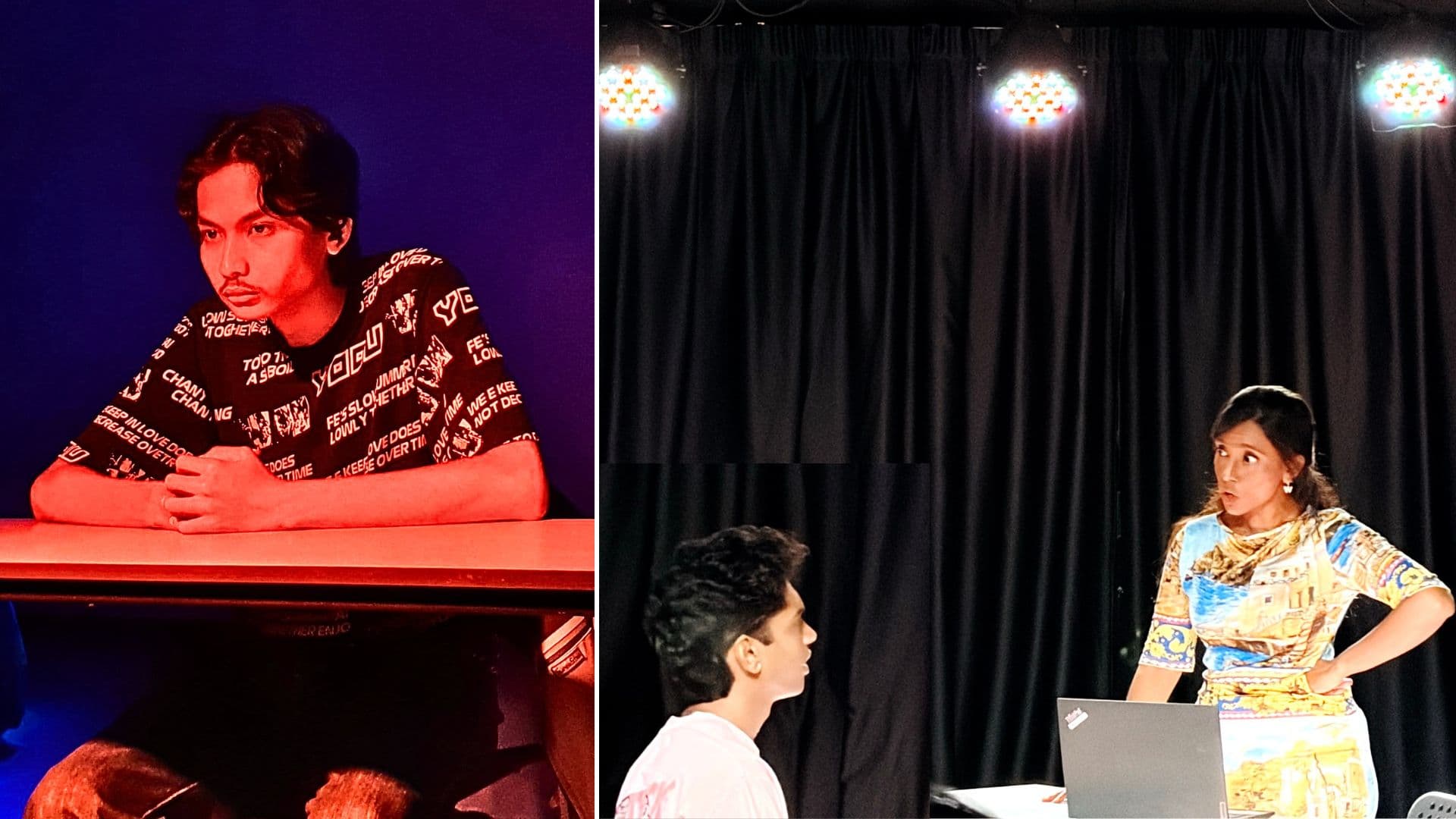
The first play follows Victor (played by Athif), a college student who spirals into depression after a breakup. Concerned by his prolonged absence from classes, two friends (played by Amyrul Fadhlan and Aki) visit his home and discover the state he has fallen into. Their attempts to convince his mother (played by Sheryl Lee) that he needs professional help are initially dismissed, as she insists he is not sick. With the support of his friends, Victor gradually improves and eventually returns to college.
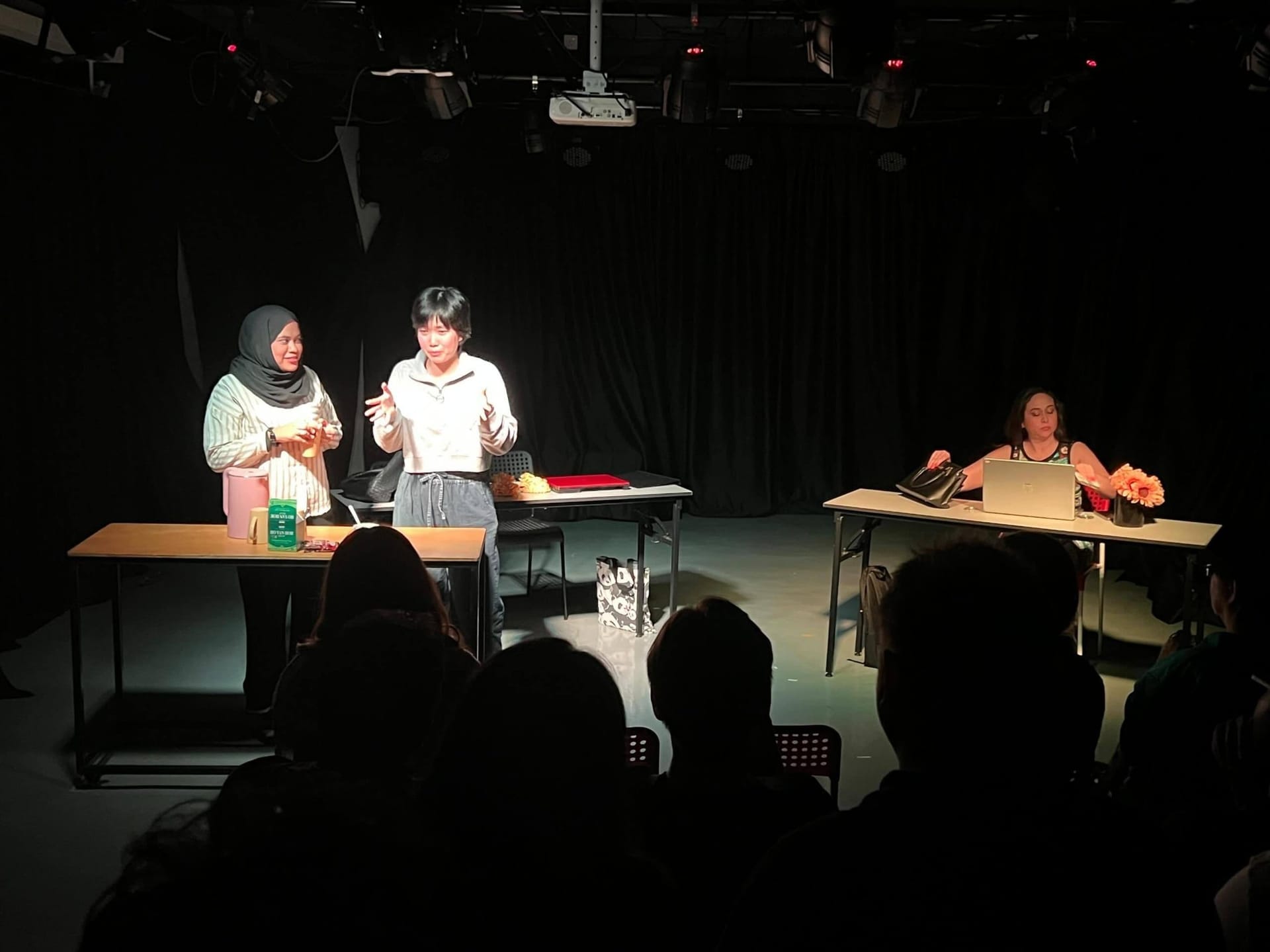
The second play focuses on Maria (played by Cristina), a cheerful and energetic woman whose colourful personality is often perceived as eccentric by those around her. While her colleagues (played by Jade and Natasha) privately mock her for being overly enthusiastic, her boyfriend (played by Ian Lee) constantly encourages her to remain the fun and exciting person he fell in love with. When a seemingly minor incident leaves her feeling rejected, she descends into a depressive episode. As her behaviour changes, those around her finally recognise something is wrong and encourage her to seek medical help, leading her towards understanding and accepting her condition.
The difficult balancing act
The production deserves credit for taking on such a difficult subject.
Educational theatre is notoriously difficult to pull off. A playwright must not only tell a compelling story but also educate audiences without sounding like a classroom lecture. It is a delicate balancing act, and unfortunately both plays occasionally tipped too heavily towards the educational side.
There were visible attempts to lighten the mood through humour. The first play relied on the banter between Victor's friends, a stereotypically nagging mother, and a lecturer who briefly broke the fourth wall to engage directly with the audience. The second play contained fewer comedic moments but still sought opportunities to generate laughter.
While these moments clearly landed with portions of the audience, I found myself questioning whether they belonged in a production dealing with such serious subject matter.
There is sometimes a tendency among theatre practitioners to equate audience laughter with audience engagement. Yet when discussing mental health, perhaps discomfort, empathy and reflection are more valuable reactions than amusement. For me, some of the comedic moments diluted the seriousness of the themes rather than enhancing them.
That said, both plays contained several genuinely effective theatrical moments.
Effective theatrical moments
The strongest element of the first play was the introduction of a character known simply as Shadow (played by JaabirG). Dressed in a black bodysuit and mask, Shadow emerged whenever Victor's depression took hold, physically attaching itself to him and silently following him throughout his journey. Without speaking a single word, the character became a haunting visual representation of depression's presence. These scenes were easily the most memorable moments of the evening.
The second play featured an equally effective device. Whenever Maria imagined what others might be thinking about her, the lighting shifted dramatically to red. These sequences allowed the audience to enter her mental world and experience the distorted perceptions that accompanied her condition. It was one of the few moments where the production truly showed rather than told.
Dilemma of under-rehearsed actors
The cast clearly possessed talent, but many performances felt under-rehearsed.
In the first play, Athif demonstrated strong stage presence and a commanding voice, but greater control over facial expressions and vocal modulation would have helped convey the character's emotional deterioration more convincingly.
Meanwhile, Amyrul Fadhlan and Aki appeared to rely heavily on improvisation. Improvisation can be effective, but there comes a point where a director needs to draw a line and lock down performances.
The second play appeared more polished overall. Cristina delivered expressive facial work and successfully captured the emotional extremes of the character. However, her Ecuadorian accent occasionally made dialogue difficult to understand, particularly when vocal projection dropped. Nevertheless, her performance demonstrated considerable potential and was often at its strongest during the more emotionally vulnerable moments.
Jade and Natasha also delivered confident performances and showed encouraging potential.

Simple but functional staging
Considering the limitations of IBOX Theatre's intimate performance space, Director Arunen did a commendable job making the venue work. The staging was simple but functional.
However, some of the set design choices felt unnecessarily cluttered. A rack of clothes (in Play 1) was not needed to establish a bedroom, nor was a dedicated coffee-making station (in Play 2) required to communicate an office gossip corner. In a venue where every square foot matters, less would have achieved more.
The repeated use of identical locations also created practical problems. Scenes frequently moved from bedroom to classroom/office and then back to bedroom again. Because of the venue's limited space, crew members were forced to conceal previous set pieces repeatedly behind curtains during transitions, resulting in noticeable delays. A script revision reducing the number of repeated locations could have significantly improved pacing.
Highlights of the evening
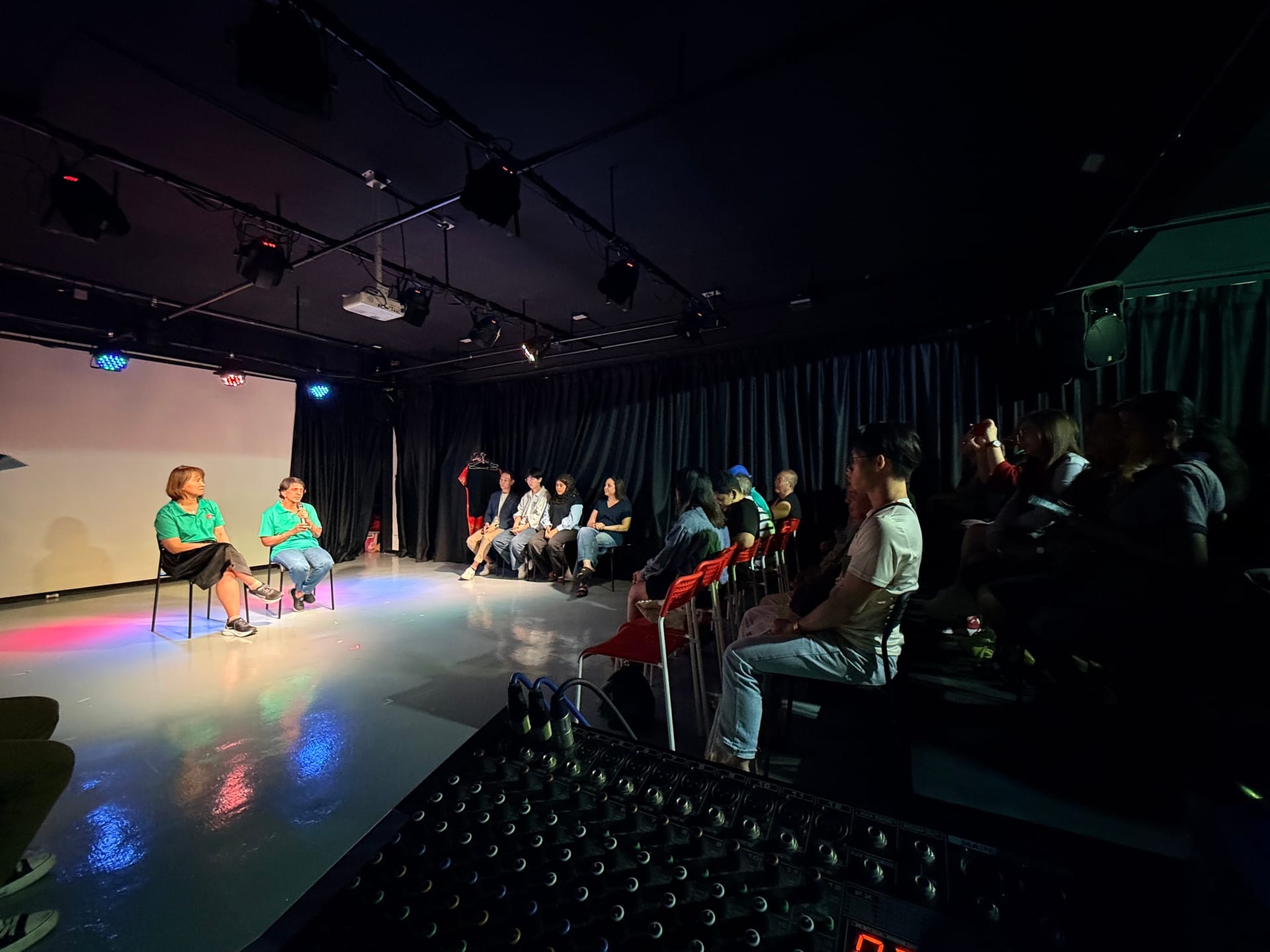
One of the evening's highlights came after the curtain call, when representatives from Befrienders Penang joined the production on stage. Their presence reinforced the production's educational mission and highlighted the support available to those experiencing mental health challenges.
However, this also felt like a missed opportunity.
Rather than simply promoting the organisation's services, a Q & A session could have provided audiences with valuable insights related to the issues explored in the plays. Personally, I left wondering whether the production oversimplified mental illness by presenting it as a straightforward cause-and-effect relationship. Having mental health professionals available to address such questions would have added an extra layer of value to the evening.
I'm Just a Little Unwell may not have fully solved the challenge of blending education and entertainment, but perhaps that is too high a standard for any debut production.
What it did achieve was something arguably more important: it started a conversation. In a society where mental health is still often misunderstood, that is a victory worth acknowledging.
Conversations about mental health should not end when the curtain falls. If you or someone you know needs support, Befrienders Penang can be reached at 04-2910100.
About the writer:
Tau Foo Fah is a creature of impulse and odd rituals who claims her best writing happens in her car - where profound ideas and questionable decisions collide. Equal parts observer and instigator, her work blends sharp wit with truths that linger longer than they should. Offstage, she collects stories, eavesdrops with intent, and turns everyday absurdities into something dangerously close to art.
Seni:Kita (pentaspena.pg@gmail.com) is a content creator under the Newswav Creator programme, where you get to express yourself, be a citizen journalist, and at the same time monetize your content & reach millions of users on Newswav. Log in to creator.newswav.com and become a Newswav Creator now!
The User Content (as defined on Newswav Terms of Use) above including the views expressed and media (pictures, videos, citations etc) were submitted & posted by the author. Newswav is solely an aggregation platform that hosts the User Content. If you have any questions about the content, copyright or other issues of the work, please contact creator@newswav.com.
