
I remember stepping into the Temple of Fine Arts as a mridangam student back in 1988. I was 17 and rebellious, and unfortunately, I never completed my training for personal reasons.
Decades later, my youngest daughter began her own journey at the Temple of Fine Arts, starting with mridangam and vocal classes before she was spotted by her Bharatha Natyam teacher, who recognised that she was a natural. We encouraged her, and for eight years, we watched her bloom—not just as a dancer, but as a person.
So when I sat down to watch Sangamam last weekend, the latest presentation by the Temple of Fine Arts (TFA), I was not simply watching a concert. I was, in some ways, revisiting a part of my own past.
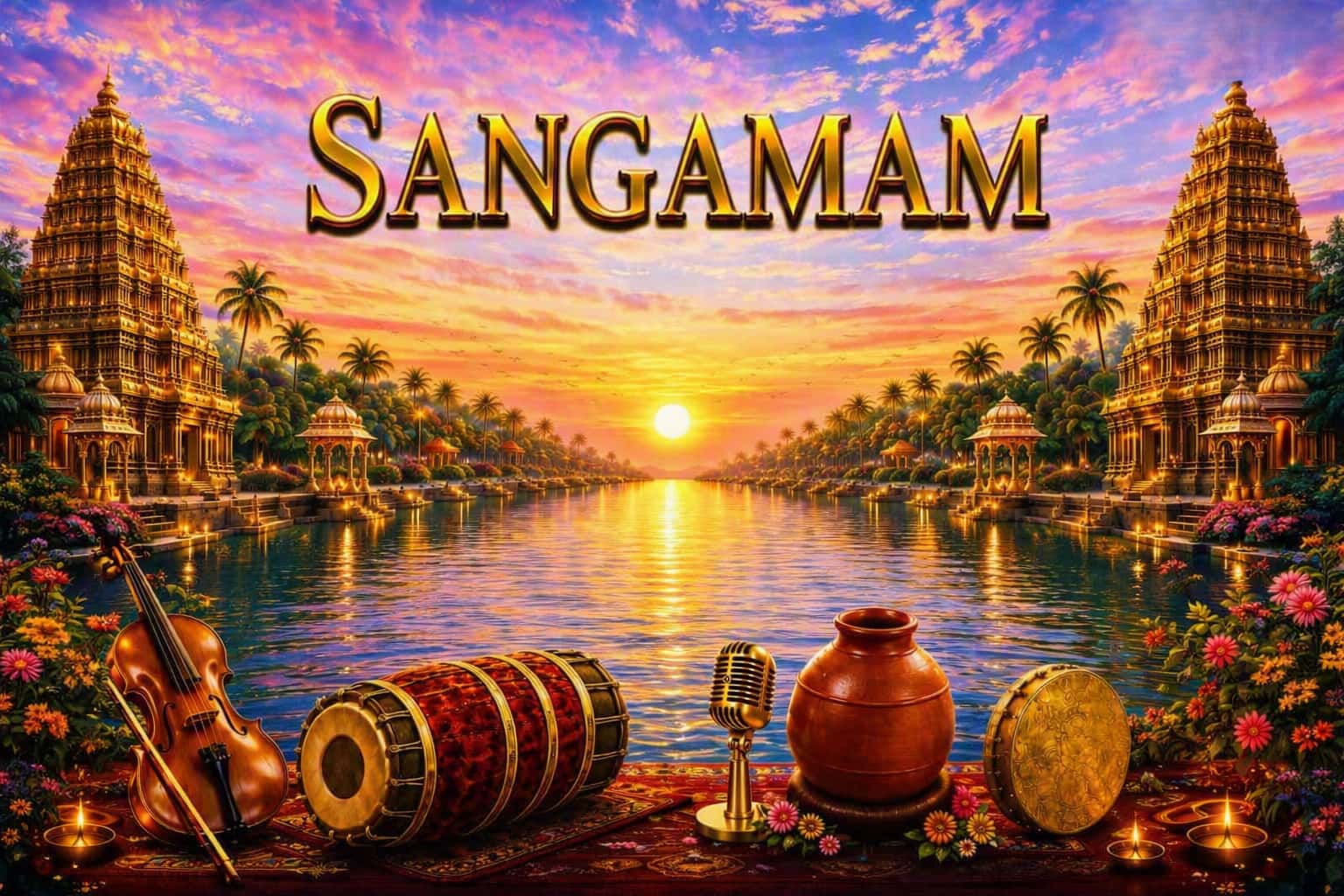
And Sangamam was an apt name for the evening.
The word Sangamam means a confluence—the coming together of streams. Traditionally, it is associated with the confluence of three mighty rivers: the Ganga, Yamuna and the spiritual Saraswathi. On this evening, Penang witnessed another kind of confluence: three exceptional streams of Carnatic music coming together on one stage.
And what a beautiful confluence it was.
The first segment began with a violin duet featuring two masters, Shri Mogethen Gowrisan and Shri Premkumar Sockalingam, accompanied by Shri Muthuraman Ganesan on the mridangam and Shri Barath Sai on the ganjira.
The two violinists seemed to be having a musical conversation with each other, sometimes gentle and lyrical, at other moments energetic and playful. It was a mesmerising opening that immediately set the mood for the evening.
Their second piece, Mahaganapathi, composed by the legendary Carnatic composer Muthuswami Dikshitar, was a personal favourite of mine. The musicians brought out its vibrant and uplifting energy while displaying remarkable virtuosity and rhythmic control.
I particularly enjoyed watching the two violinists move between smooth, lyrical slides and crisp, staccato bowing during the more intense passages. It was not just music to listen to; there was something fascinating about watching the instruments almost speak to one another.
The second segment brought us to what could be called the heart of Carnatic music: the human voice.
This time, it was the rich and resonant voice of Shri Vijayakumar Gopinath, accompanied by Shri Hariraam TingYuan Lam on violin, Shri Darmen Krisnan on mridangam and Karthik Krishnasamy on ghatam.
Together, they created a beautiful tapestry of melody, improvisation and rhythm.
Shri Vijayakumar Gopinath opened with a Varnam in Hamsadhwani raag and Adhi taala. For those unfamiliar with Carnatic music, a Varnam is often used to open a concert. It helps establish the mood, rhythm and musical foundation, while also giving the performer an opportunity to showcase both melody and technique.
From there, the performance moved through Muruga Muruga sung in Saveri raag and Misra Chapu taala, Unnaiyallal in Kalyani raag and Adhi taala, Suttum Vizhi in Rathipathipriya raag and Tisram taala and closed with Madhava Maamava in the Neelambari raag and Adhi taala.
Now, if you are wondering what all these ‘raags’ and ‘taalas’ mean, you are not alone.
In Sanskrit, a ‘raag’ means “something that colours your mind.” A raag can be thought of as the melodic framework of a piece—the collection and arrangement of notes that gives the music its character and helps evoke particular emotions. Joy, sadness, happiness, devotion, romance, yearning and many other feelings can be expressed through different raags. Some raags are even traditionally associated with particular seasons such as spring or monsoon.
‘Taala’, on the other hand, is a repeating cycle of beats that gives Carnatic music its structure and keeps the musicians connected, even as they improvise and explore.
And that connection between melody and rhythm became even more evident in the final segment of the evening: the Thani Avarthanam.
This was, for me, the highlight of the concert.
‘Thani’ means rhythm, while ‘Avarthanam’ means repetition. Together, Thani Avarthanam means repetition of rhythm. It is a showcase where percussionists take centre stage and explore rhythm through instruments such as the mridangam, ganjira and ghatam. It is one of those moments in a Carnatic concert when the musicians are given the freedom to really show us what they can do.
And as someone who has always been partial to all kinds of drums, this was the moment I had been waiting for.
The audience was invited to join in and keep the rhythm along with the musicians. What followed was an exhilarating exchange of beats, with each percussionist building on what came before until the performance reached its grand climax.
Each beat seemed to travel beyond the stage and into the audience. The mridangam, ganjira and ghatam spoke in their own distinct voices, yet somehow came together as one.
It was brilliant.
And it was a fitting way to close an evening built around the idea of confluence.
More than just music
The Temple of Fine Arts Malaysia was established in 1981 by Swami Shantanand Saraswathi. For decades, it has provided a space for young people to learn, practise and perform Indian classical arts and culture. More than simply teaching artistic skills, institutions like TFA create an environment where discipline, creativity and confidence can grow.
Sangamam was a testament to that commitment.
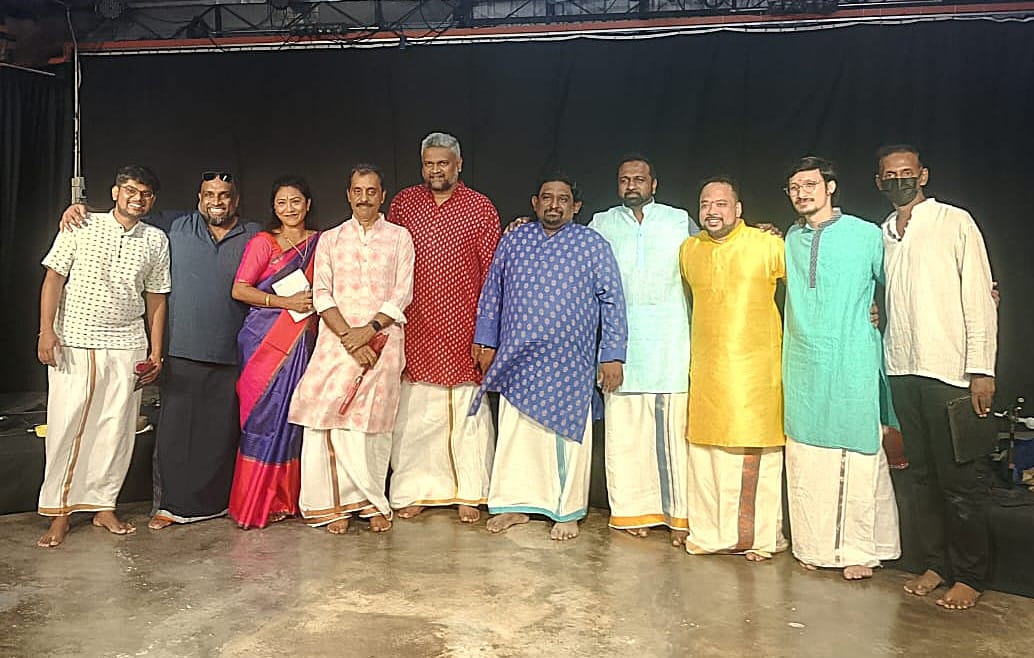
Every performer on stage was, in some way, a product of the Temple of Fine Arts, supported by teachers who nurtured their talents and parents who encouraged them to pursue the arts.
And perhaps that is what stayed with me most after the concert.
When I began my journey at TFA almost 40 years ago, I did not know where that journey might take me. I certainly never imagined that decades later, I would be sitting in the audience as a father, watching my own daughter discover her passion—and eventually, as a writer, being trusted to review a TFA presentation.
That is the real value of places like the Temple of Fine Arts. They give young people—and adults too—a platform to discover something within themselves that they may not even know exists.
Here in Penang, Melaka and Kuala Lumpur, we are fortunate to have institutions where young people can learn from masters and experience the performing arts first-hand.
As parents, we often focus on academic achievement and careers. But perhaps we should also give our children the opportunity to discover the artist within them—whether through classical music, dance, theatre or contemporary arts.
Because sometimes, what begins as a simple music class can become something much bigger.
It can become a journey.
And sometimes, generations later, that journey comes full circle.
About the writer:
Nicholas Fletcher is an educator, physical trainer, nature lover, husband, father and occasional dabbler in the performing arts. He enjoys staying active, being outdoors and exploring the many ways people express themselves—both on stage and in the audience.
Seni:Kita (pentaspena.pg@gmail.com) is a content creator under the Newswav Creator programme, where you get to express yourself, be a citizen journalist, and at the same time monetize your content & reach millions of users on Newswav. Log in to creator.newswav.com and become a Newswav Creator now!
The User Content (as defined on Newswav Terms of Use) above including the views expressed and media (pictures, videos, citations etc) were submitted & posted by the author. Newswav is solely an aggregation platform that hosts the User Content. If you have any questions about the content, copyright or other issues of the work, please contact creator@newswav.com.