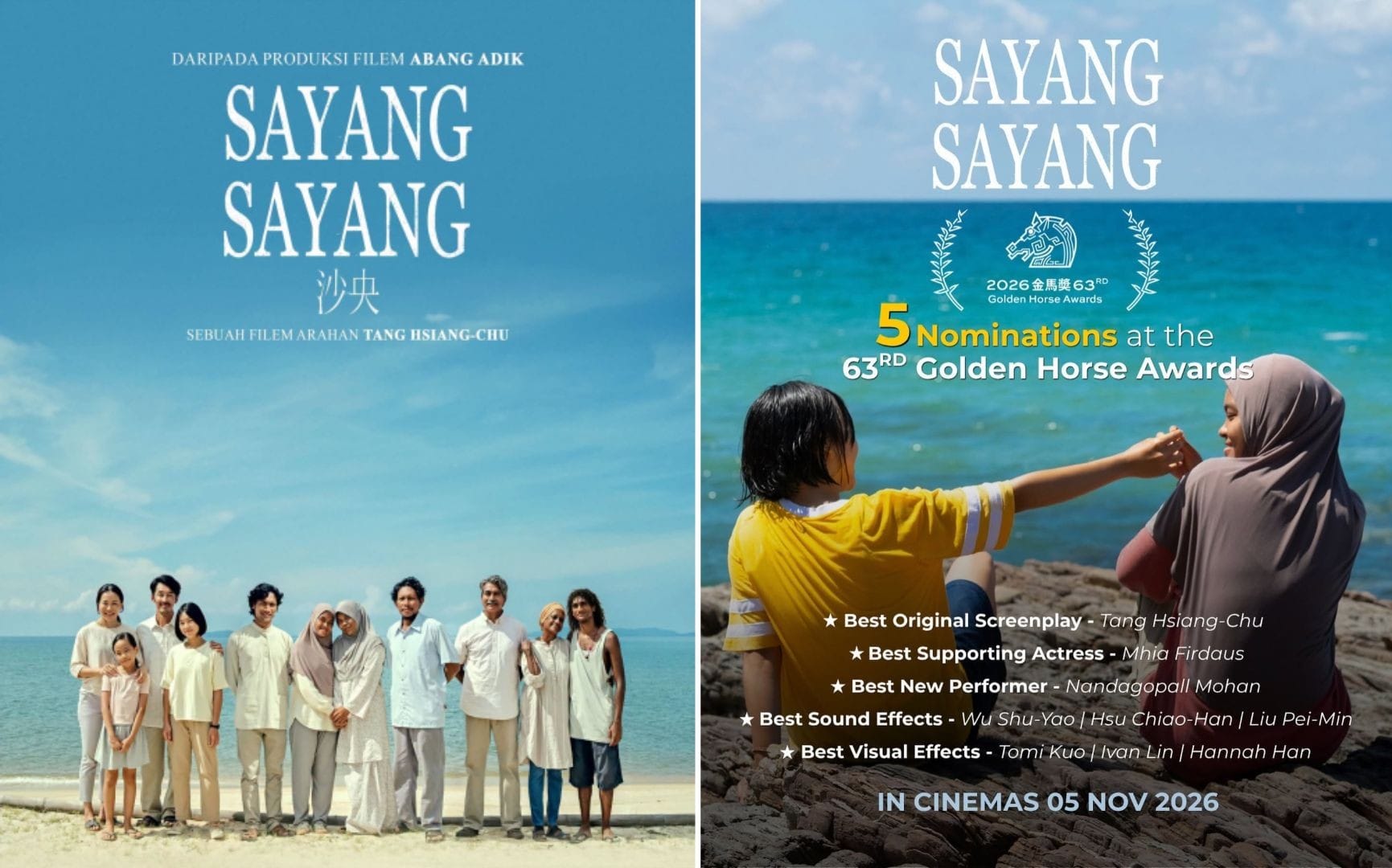
Have you seen this image recently? A group of people dressed in white, standing in a row, with the sea behind them.
If you have been scrolling through social media over the past month, chances are you have. It's part of the promotion for Sayang Sayang, the Malaysian-Taiwanese production that has been making quite a bit of noise, particularly after securing five nominations at the 63rd Golden Horse Awards.
The film opened in selected cinemas earlier this month, and I finally got around to watching it.
Without further ado, here's a spoiler-free review, along with a few thoughts that stayed with me after the credits rolled.
(Be careful. There are sharks!)
My honest opinions on the movie
Sayang Sayang touched my heart, albeit a little slowly.
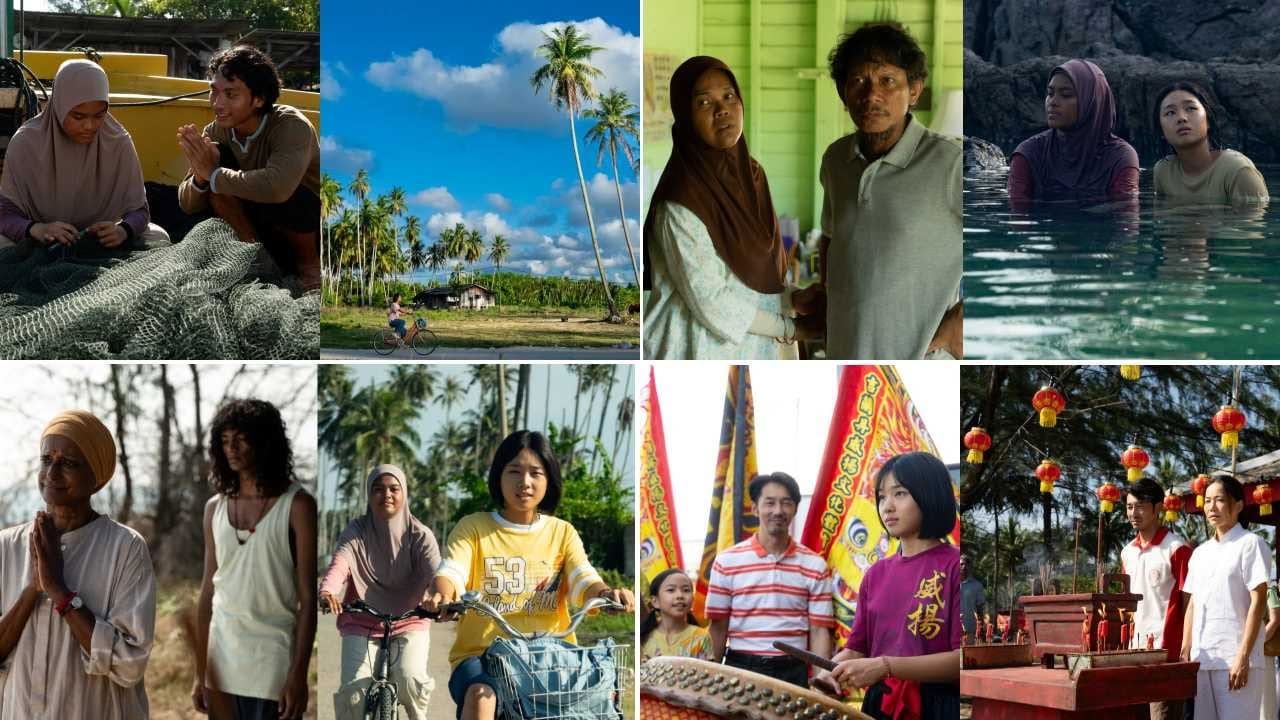
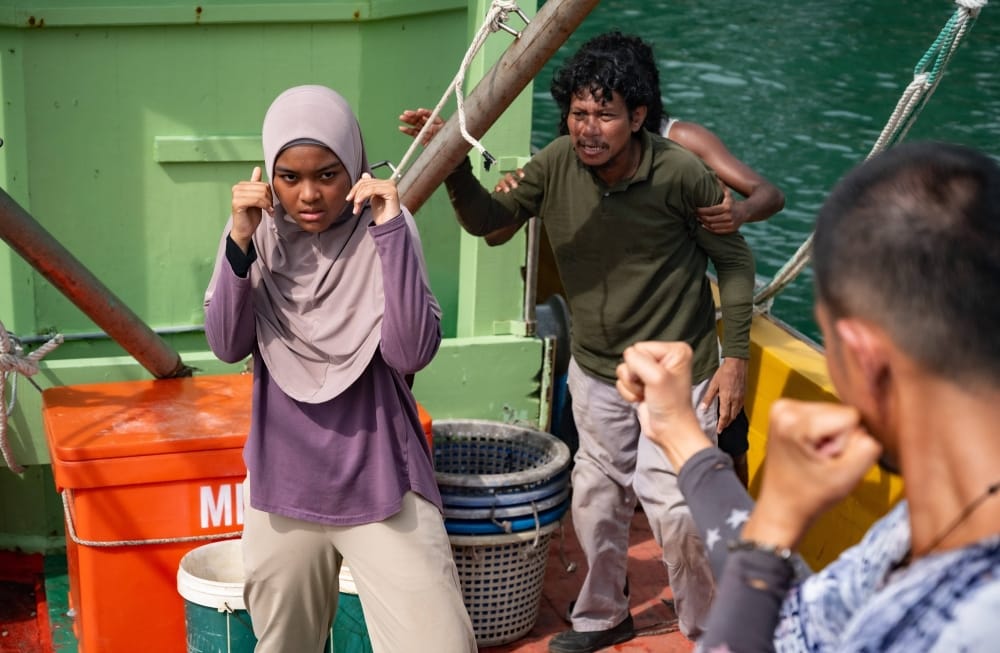
The film takes us to a coastal fishing village in Terengganu. It follows three deaf teenagers – Mina, San San and Ajay – whose lives intersect against the backdrop of a local legend about whale sharks that have mysteriously disappeared from the waters.
Coming from different cultural and family backgrounds, each teenager navigates their own struggles with identity, family expectations, communication and the desire to be understood. As their stories unfold, the film explores the complexities of growing up, the bonds that connect people and the relationship between a community and the sea it calls home.
What I particularly liked was that the film didn't turn these characters into inspirational figures simply because they are deaf. They are teenagers, after all. They have ambitions, get frustrated with their families, want to make their own decisions and occasionally struggle to communicate what they really feel.
Their disability is part of their lives, but it isn't the entirety of their identity.
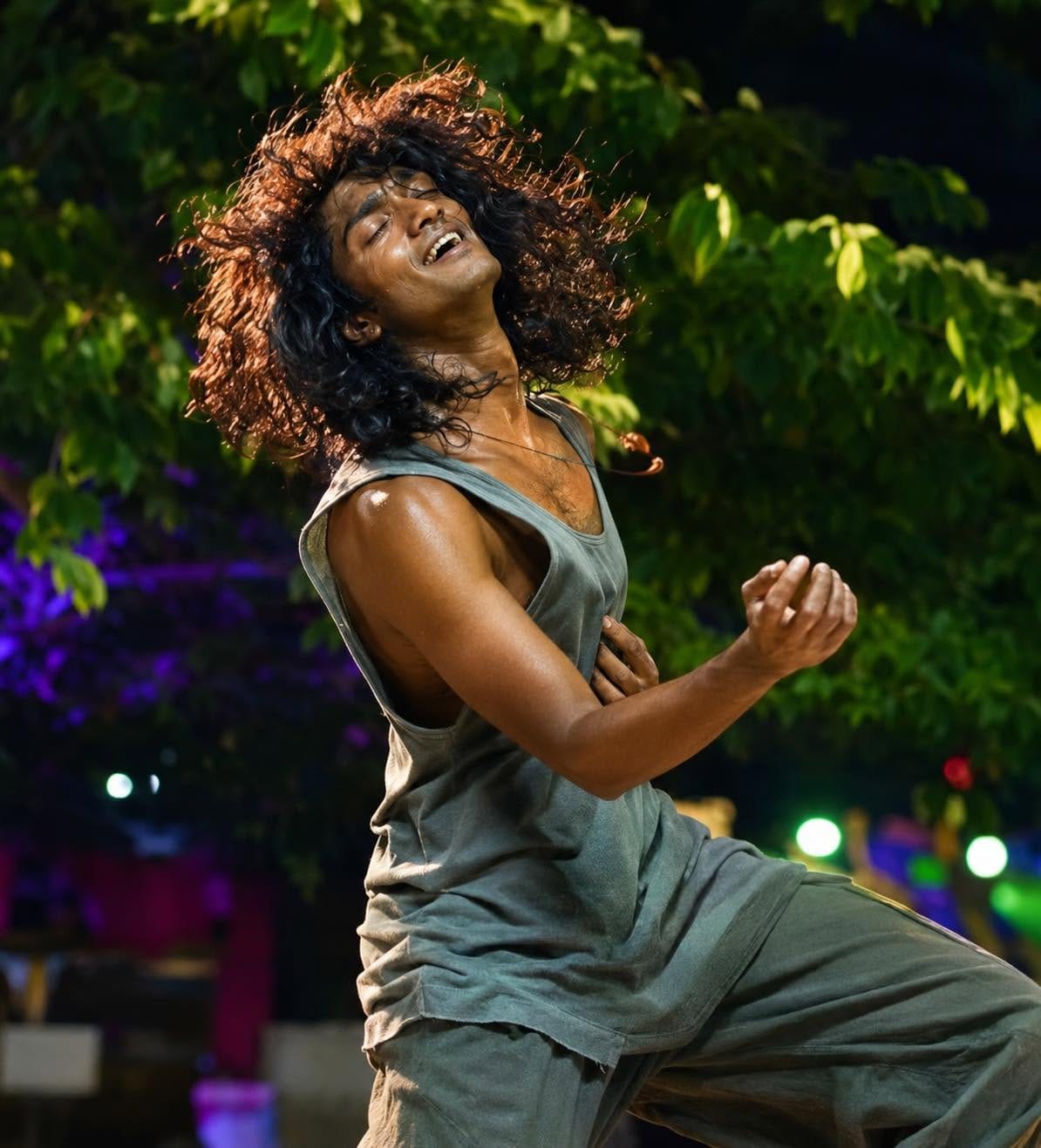
The performances were another highlight. The three young actors did a commendable job bringing their characters to life through facial expressions, body language and sign language. Nandagopall Mohan, in particular, was impressive as Ajay. His performance has a certain physical intensity that makes it difficult to look away.
The film is also beautifully photographed. The East Coast scenery, the coastline and the underwater sequences give the story an almost dreamlike quality. There are moments when the camera simply allows us to take in the surroundings without rushing us towards the next plot development.
Perhaps that's the intention. Sayang Sayang isn't particularly interested in entertaining us with one dramatic incident after another. It wants us to spend time with its characters and their world.
However, I have to admit that the pacing occasionally tested my patience. Some scenes linger a little too long, while certain characters could have benefited from more backstory. I found myself wanting more things to happen, or at least a little more development in some of the relationships.
There's a fine line between allowing an audience to absorb a moment and making them wonder when the moment is going to end.
Still, the film's ending was cathartic. It brought a sense of closure to what is essentially a gentle, sentimental story.
One aspect I particularly appreciated was the sound design. Rather than simply filling every scene with dialogue and background music, the film makes wonderful use of natural sounds – the crashing waves, the wind and even footsteps on sand.
It creates an interesting contrast between the world of those who hear and those who don't.
I wonder what deaf audiences made of the film. Did they experience the storytelling differently from us hearing audiences? Did the film represent their experiences authentically? That's a conversation I'd genuinely like to hear more of.
The thing with Taiwan x Malaysia movies
Collaborations between Taiwan and Malaysia in the performing arts are nothing new. Our shared language and cultural connections, particularly within the Chinese-speaking communities, have provided opportunities for creative partnerships over the years.
And let's not forget Malaysia's natural landscapes, which filmmakers seem to find rather irresistible.
Sayang Sayang is written and directed by Tang Hsiang-Chu, who has visited Malaysia over the past two decades. He eventually brought his vision to life with the involvement of producer Jin Ong, the filmmaker behind the critically acclaimed Abang Adik.
What I find interesting about these collaborations is how they often give us a different perspective of ourselves.
Sometimes, it takes someone from outside our immediate environment to notice the things we have become so accustomed to that we no longer see their significance.
Our different languages, religious traditions, food, family structures and cultural practices are not merely background details. They are stories in themselves.
And I think this is where Malaysian cinema has so much untapped potential.
Look at some of the other productions with similar creative connections:
- The Garden of Evening Mists (2019), a historical romance set in Malaya during the Japanese occupation.
- Snow in Midsummer (2023), which explores the May 13 incident through a combination of Chinese opera and Malay folklore.
- The Waves Will Carry Us (2025), which explores Malaysian Chinese migration history, family identity and belonging.
These films approach Malaysian history and identity from different angles. Some are uncomfortable, some are deeply personal, and others explore aspects of our multicultural society that mainstream entertainment rarely touches.
Perhaps the lesson here is that our stories don't always need to be told in the conventional way. They can be experimental, unconventional and even a little uncomfortable.
Here's something that made me a little sad.
When I watched Sayang Sayang over a busy weekend, the cinema hall was largely empty.
Five Golden Horse nominations. An impressive ensemble cast. Beautiful cinematography. A story rooted in our own cultural landscape.
And yet, not many people were watching.
For those unfamiliar with the Golden Horse Awards, they are among the most prestigious film awards in the Chinese-language cinema industry, often regarded as the Asian equivalent of the Oscars.
For Sayang Sayang to receive five nominations is no small achievement. Its recognition spans storytelling, acting and technical craftsmanship.
Mhia Firdaus was nominated for Best Supporting Actress, while Nandagopall Mohan received a Best New Performer nomination. The latter is particularly impressive for someone making his feature-film debut.
But here's the bigger question: why does a film need international recognition before we start paying attention to it?
As of this writing, more than half of the films in Malaysia's top ten box office chart are foreign productions. Many Malaysians who aren't particularly involved in local filmmaking or theatre may not even know that Sayang Sayang exists.
Sadly, this isn't unusual.
Films that put our cultural identities front and centre, especially those that don't follow the typical blockbuster formula, often struggle to attract enough local support to sustain their cinema run. This can happen even when they receive critical acclaim and international recognition.
So, do Malaysian audiences not appreciate our own culture and history?
I don't think that's necessarily true. In fact, I would argue otherwise.
Look at the popularity of Ola Bola. Look at the interest generated by The Garden of Evening Mists. Even Dear You, a Chinese film exploring the history of Chinese migration to Thailand, has found an audience beyond its home market.
Clearly, there is an appetite for stories about identity, heritage, family and belonging.
Perhaps the issue isn't that Malaysians don't want to watch these stories. Perhaps it's that we have become so accustomed to a particular kind of cinema that we don't always know what to make of films that approach storytelling differently.
Not every movie needs a dramatic opening, a major plot twist every 20 minutes or a hero who saves the world before the closing credits.
Some stories need room to breathe.
Of course, filmmakers also have a responsibility to keep their audiences engaged. Being artistic doesn't automatically make a film good, and being slow doesn't automatically make it meaningful.
But we should at least give different kinds of filmmaking a chance.
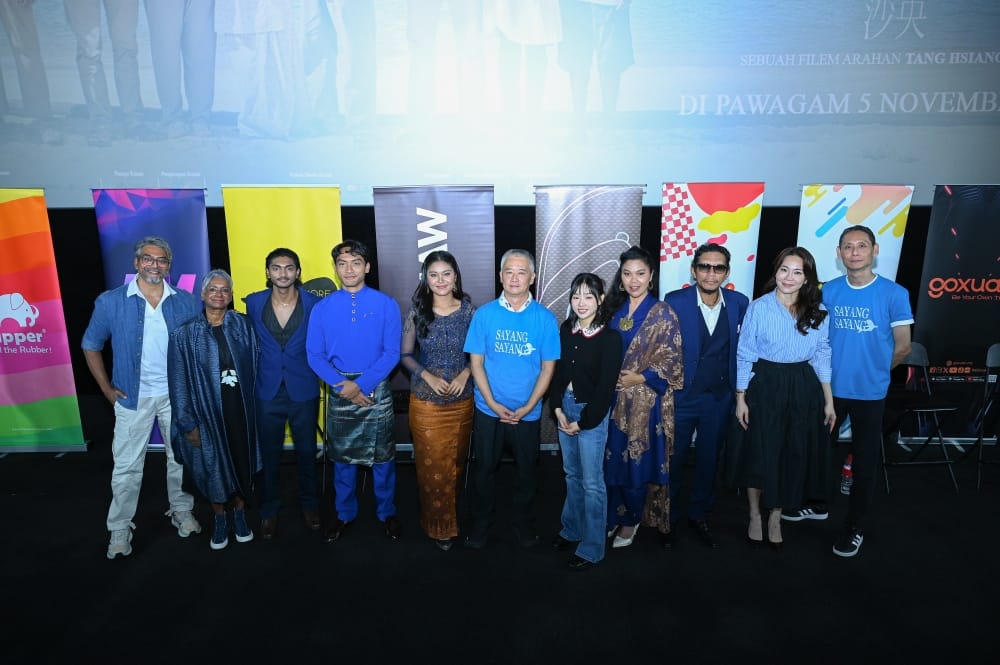
So… why should you go watch it?
Let's be honest. We're having quite a movie year in 2026. The cinemas are filled with everything from action blockbusters and horror films to superhero adventures and animated favourites.
Sayang Sayang can easily get lost among the posters screaming for our attention.
It doesn't have the action sequences of Chelot, the familiar star power of Kudrat 1968: High Council, the superhero appeal of DC and Marvel, or the cuteness of Chiikawa and Hoppers.
What it does have is a story that feels distinctly Malaysian.
It has our people, our languages, our traditions and our landscapes. It features Malaysian talents telling a story that doesn't necessarily follow the formula we're used to seeing on screen.
And perhaps that's the most compelling reason to watch it.
We often talk about wanting Malaysian films to make it onto the international stage. We celebrate when our actors receive nominations, when our directors get recognised and when our productions travel beyond our shores.
But that journey begins at home.
If we want the world to discover our stories, perhaps we should first show some interest in discovering them ourselves.
I'm not suggesting that every Malaysian film deserves our money simply because it is Malaysian. But I do believe films like Sayang Sayang deserve an opportunity to find their audience.
So, if you're looking for something different from the usual cinema fare, give it a chance.
You might find yourself sitting through a slower, quieter film than you're accustomed to. You might even leave with a few questions.
But perhaps that's not such a bad thing.
Let's hope Sayang Sayang reaches more hearts before its cinema run ends.
Maybe it's time we discovered our own whale sharks.

About the writer:
Felina is new to the arts scene, young, curious, and hungry. She wants to sink her paws into as many facets of the performing arts as she can, as she believes practical experience is more nutritious than theory. Find her on, behind, or seated in front of the stage, as she is ready to pounce at any given moment.
Seni:Kita (pentaspena.pg@gmail.com) is a content creator under the Newswav Creator programme, where you get to express yourself, be a citizen journalist, and at the same time monetize your content & reach millions of users on Newswav. Log in to creator.newswav.com and become a Newswav Creator now!
The User Content (as defined on Newswav Terms of Use) above including the views expressed and media (pictures, videos, citations etc) were submitted & posted by the author. Newswav is solely an aggregation platform that hosts the User Content. If you have any questions about the content, copyright or other issues of the work, please contact creator@newswav.com.