
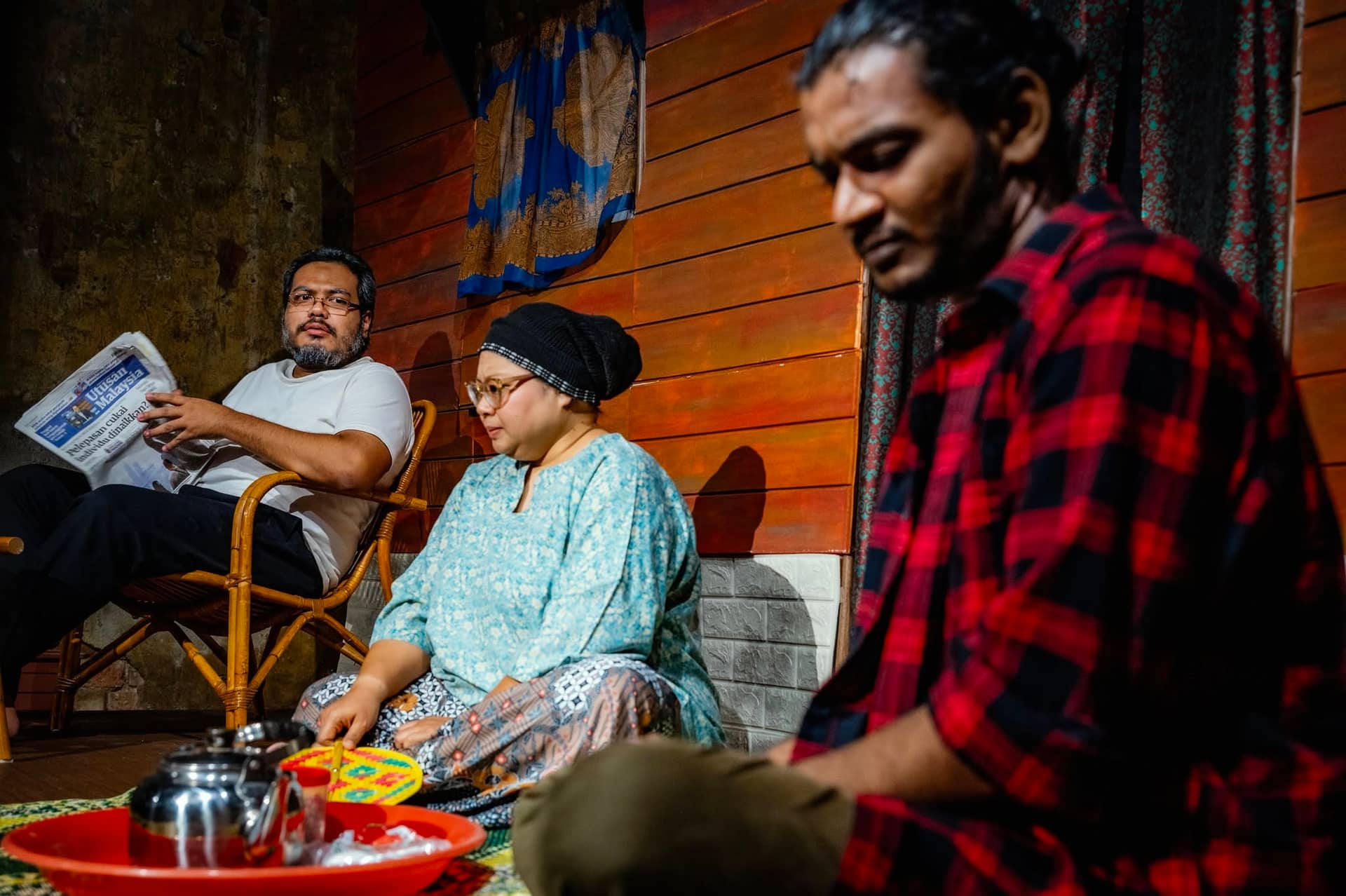
Sepanjang Hayat marks Penang-based director and producer Fa Abdul’s debut in Malay-language theatre. ‘An intimate theatre experience for an intimate crowd’, the production ran for four performances over a weekend in the second week of October at Jetty 35, Weld Quay, George Town, with English surtitles provided, on three nights.
“This is a story about a father who preaches compassion but disowns his own son for marrying a Chinese woman; a mother caught between the man she loves and the son she misses; and a family fractured by the choices of one son, leaving his siblings trapped between loyalty, love and the weight of their parents’ expectations.” – Fa Abdul
Sepanjang Hayat is a story about relationships within a family. The tragedy isn't the absence of love, but the conditions it must negotiate. Fa beautifully highlights how love, when present, is rarely allowed to exist on its own terms. Instead, it is filtered through inherited beliefs, the fear of shame, the need for acceptance, and the desire to retain control—dynamics that resonate with the relationships we navigate in our own lives. Some impose these conditions in the name of love; others accommodate them, while some begin to question whether the price of belonging is too high.
Perhaps this is what makes the tragedy so difficult (and delicate) to confront. It does not ask us if we love one another but rather how we love. Do we leave room for the other person to be themselves, or do we make our love conditional on who we believe they should be?
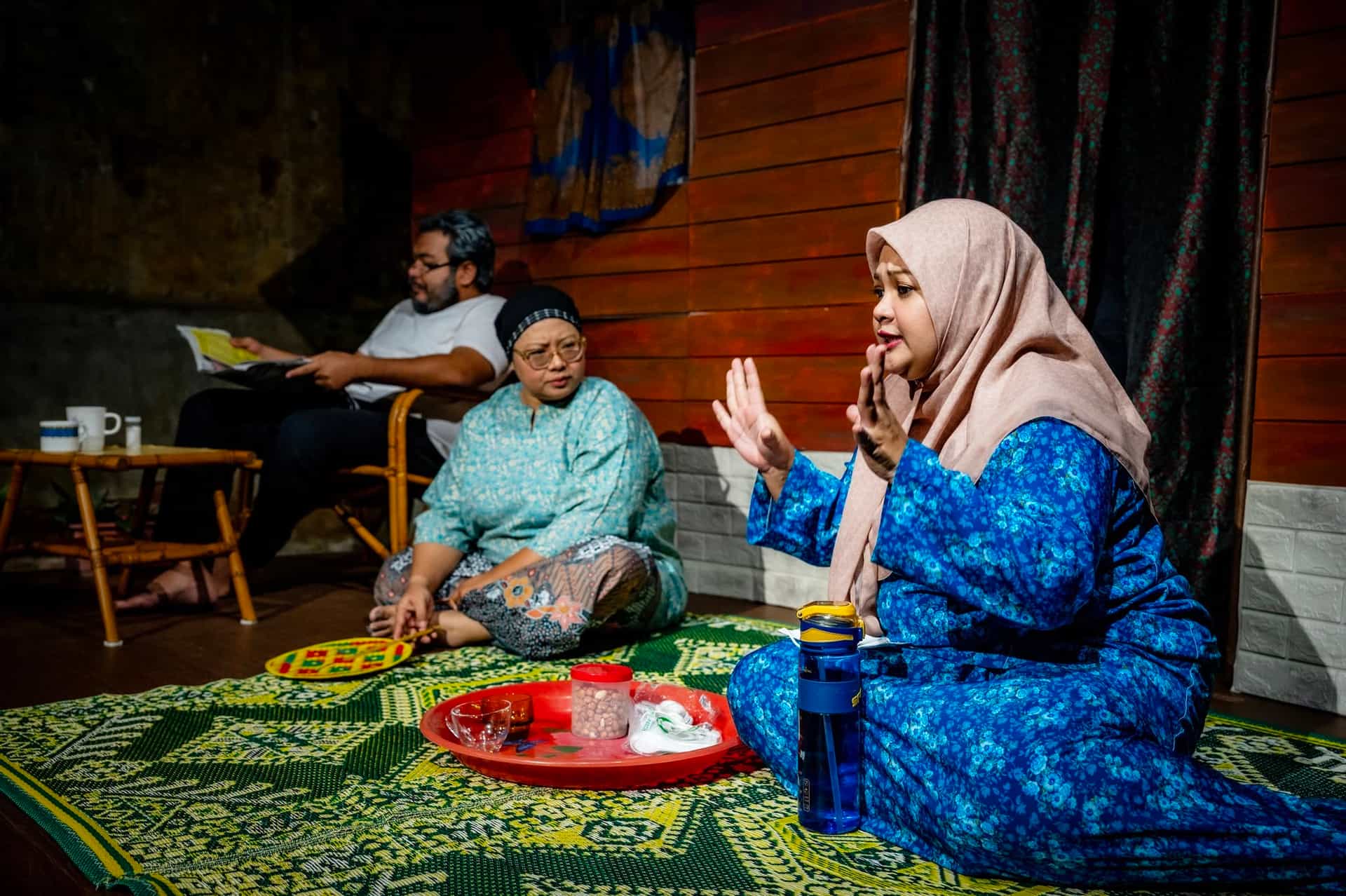
Anchored by a compelling ensemble, the play centres on the elderly couple, Karim and Bedah, played by Jay Norhan and Eiyha Abdullah. The supporting cast includes Athif Irfan as Amran, the second son whose fragile ego may have deeper roots; Didi Aldian as Aini, the youngest and most obedient daughter, who becomes a convenient target; and Izatul Akmal as Kiah, a crowd favourite whose water bottle and unannounced visits poke around uncomfortable truths disguised as gossip and teasing.
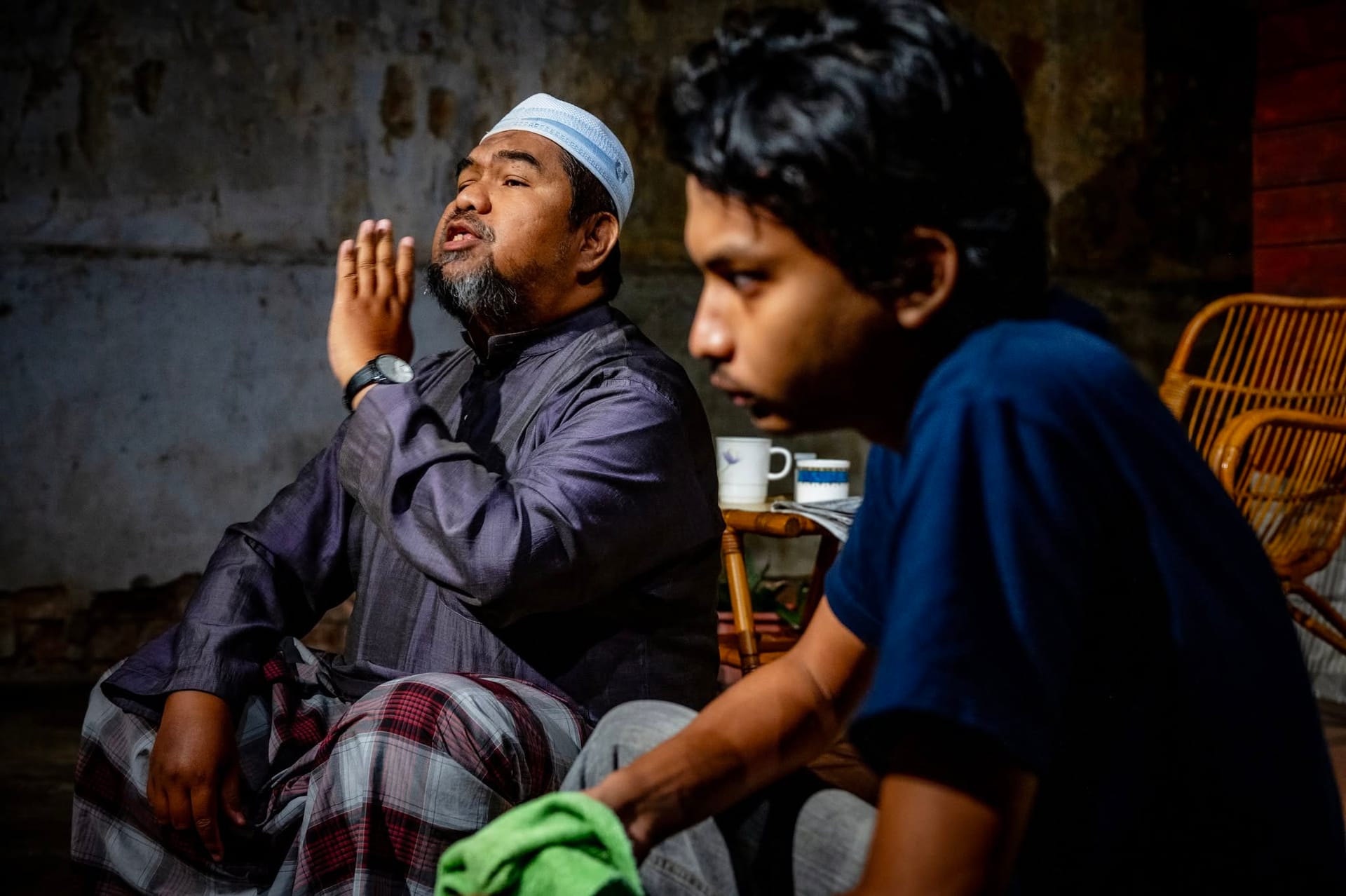
Not to be underestimated, Yusof Bakar delivers a chilling portrayal of Sidek, who seeks to crush his nemesis, Karim. Arunen T. plays Krishnan, Aini’s love interest, who repeatedly expresses his willingness to convert to Islam to marry her, yet finds himself confronting both Aini’s sense of hopelessness and Karim’s demeaning scepticism. Rounding out the cast is Dr H. Hadi as Samsudin, the liberal Muslim whose projects and perspectives challenge traditional ways of life and inherited beliefs within the Malay social milieu in which the characters live.
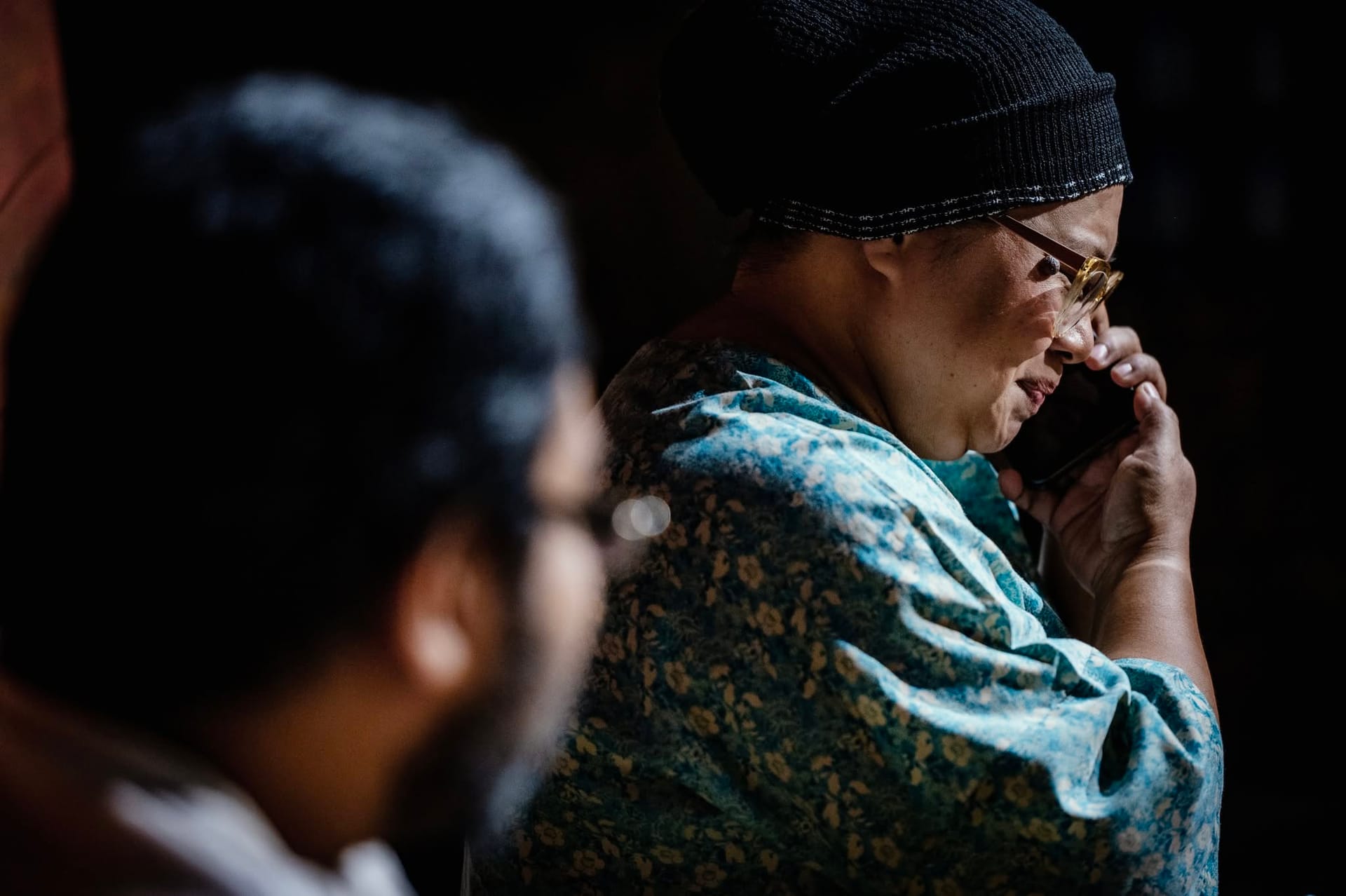
I would like to draw attention to the story as experienced through the eyes of what I consider its most compelling character: Bedah. Eiyha brings her delicate, quiet complexities with remarkable nuance. Every other character orbits around her, each carrying their own complexities, while she is left to navigate the near-impossible task of holding them all together—as a wife, a mother, a friend, and not least, a woman in her own right.
“All this time, I thought that if I were a good wife, kept quiet, remained patient and did what my husband said, our marriage would be happy and peaceful. But now I realise that staying silent can hurt a family too.” — Bedah, Sepanjang Hayat.
The dutiful wife
Bedah has spent 35 years embodying an ideal of wifehood in which devotion is demonstrated through deference. She believes that being a good wife means remaining patient and obedient in the face of patriarchal authority embodied by her husband, Karim, all in the name of preserving harmony within the family.
In scene after scene, Fa visually reinforces this dynamic by portraying Bedah as the one who chooses to sit on the floor while her husband occupies the chair. She serves him tea and coffee, but never the other way around.
The only time she briefly defies this self-imposed obligation by sitting in the chair, a minor but high-pitched exchange ensues.
Perhaps Bedah's level of submission may feel excessive by contemporary standards. But viewed from a more universal perspective, her behaviour raises the question: when does devotion cease to be a freely chosen expression of love and become an obligation we feel compelled to fulfil?
It's a tension that could emerge in any relationship, in different forms and to varying degrees, whenever devotion becomes entangled with duty. How easily can the things we do out of love become measures of our worth in someone else's eyes? How often do we take on the responsibility of keeping everyone around us happy, believing this is what love requires of us? And at what point do we begin to mistake our ability to endure for proof that we are doing something right?
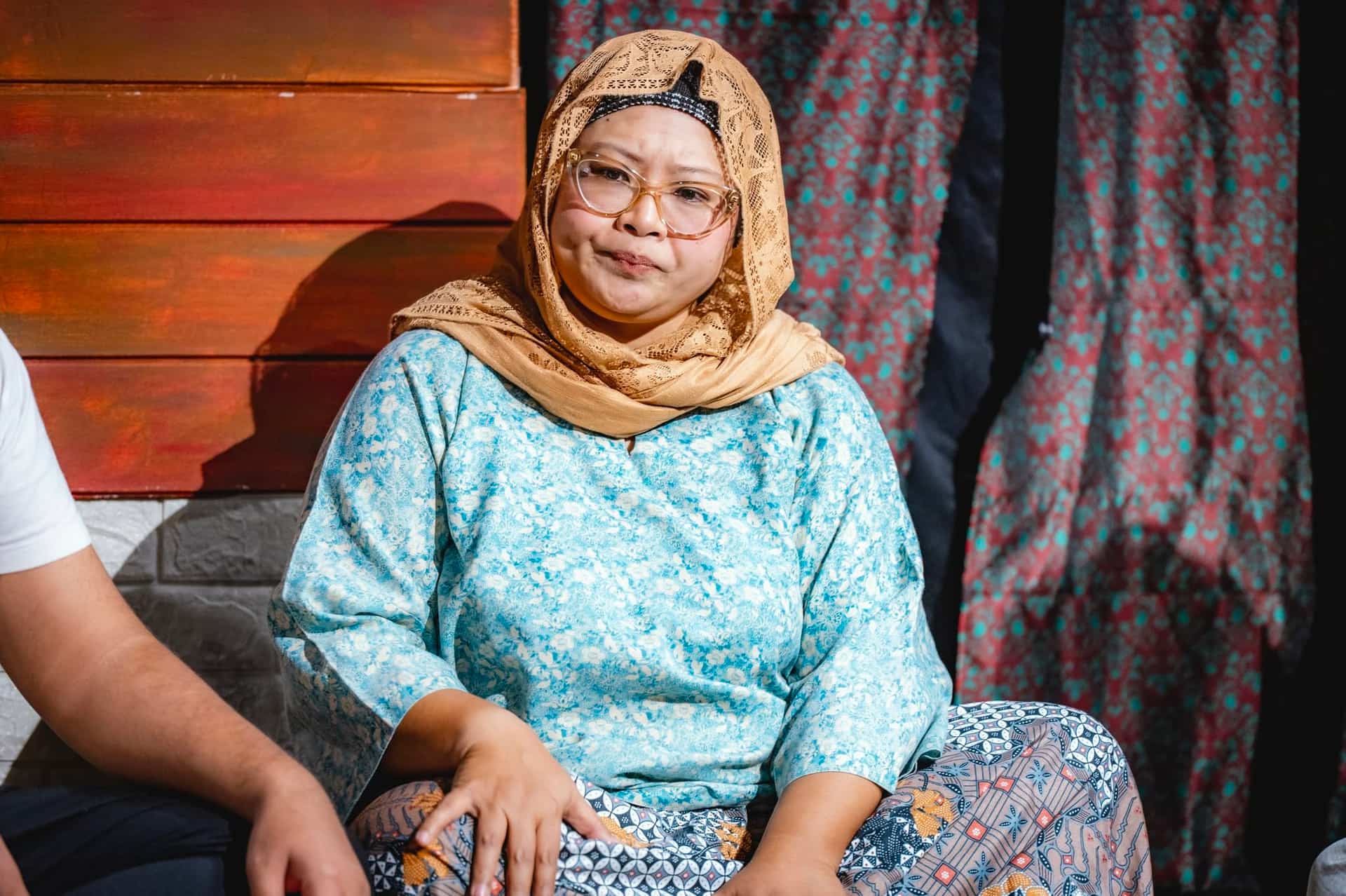
“I used to think that if we raised our children well, taught them religion and guided them to respect their elders, everything would fall into place. But children aren't things. We can't shape them exactly the way we want.” — Bedah, Sepanjang Hayat.
The mother
The play opens with harmonious banter between the elderly couple, which very soon turns sour with the mention of their eldest son, Amir, who has apparently been estranged from the family for some time over his personal life choices. Karim positions himself as the final authority in the family, asserting his patriarchal dominance while everyone else listens without question—a familiar scene in many households.
Soon, the conundrum surrounding the estranged son is explained. Amir's decision to marry his non-Malay, non-Muslim girlfriend, Lay Chin, after she became pregnant, and to take responsibility for their relationship, exposes the complex dynamics within a Malay family. Karim invokes religion to justify his authority, while Bedah is left to reconcile her longing for her son with her hopes for family unity, all while accommodating her husband's fragile ego. In Karim, love appears to be entangled with shame—his son's choices challenge not only his expectations of family, but also his sense of authority, honour, and identity as the male head of a Muslim household. Under the scrutiny of the micro-society in which they live, he struggles to reconcile the love he has for his son with what he feels compelled to defend.
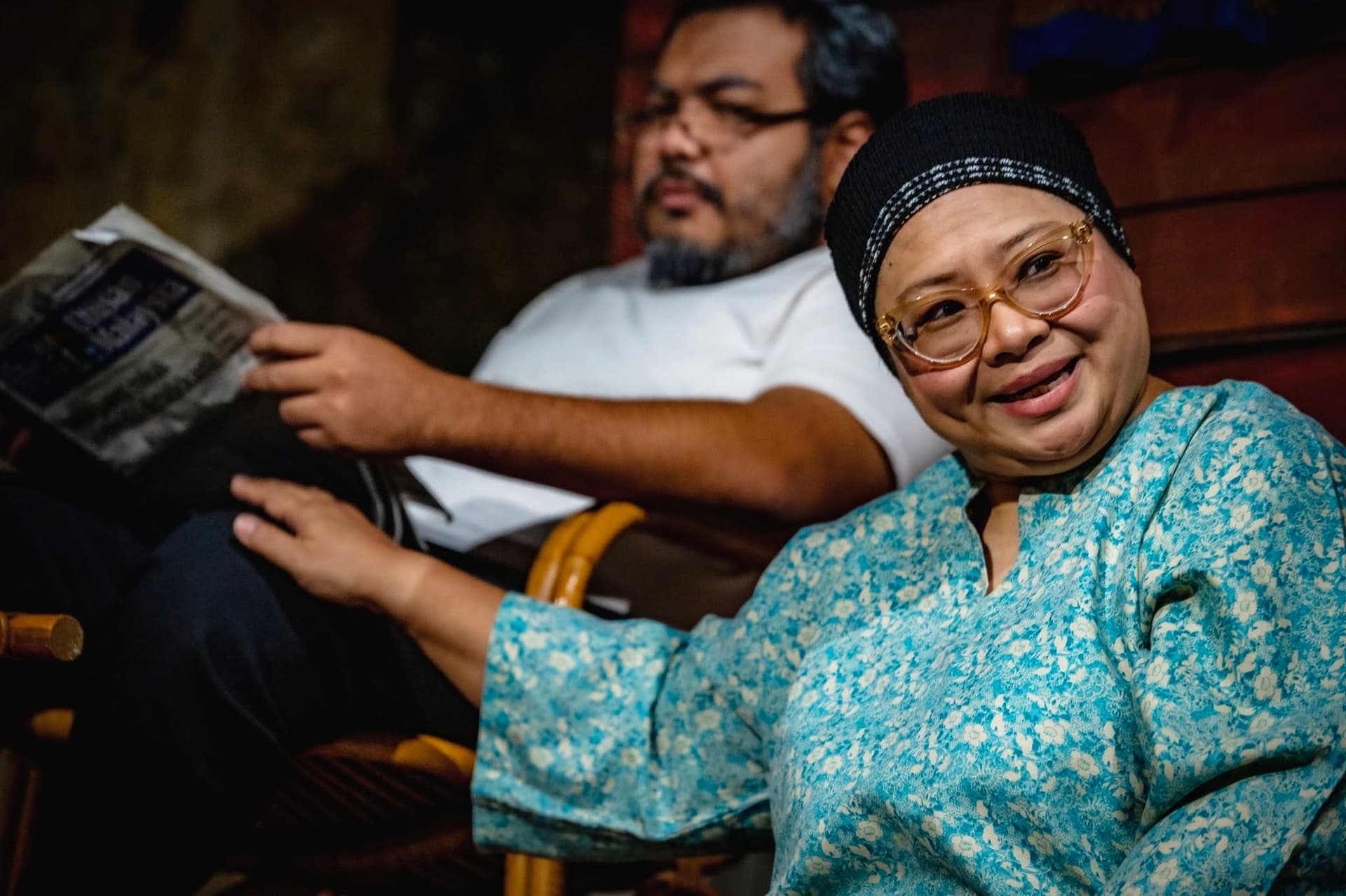
“I’m tired of looking after everyone’s feelings. My heart has gone numb!” — Bedah, Sepanjang Hayat.
The consequences then ripple through the rest of the children. Burdened by his brother's absence, Amran, convincingly played by Athif Irfan, assumes the responsibilities of the eldest son, yet his behaviour also reveals the unequal distribution of freedom and responsibility within the family. While he asserts control over the women around him, Bedah bears much of the emotional fallout from his behaviour. Karim's reluctance to confront Amran leaves her to manage the consequences, often placing her between the people she loves.
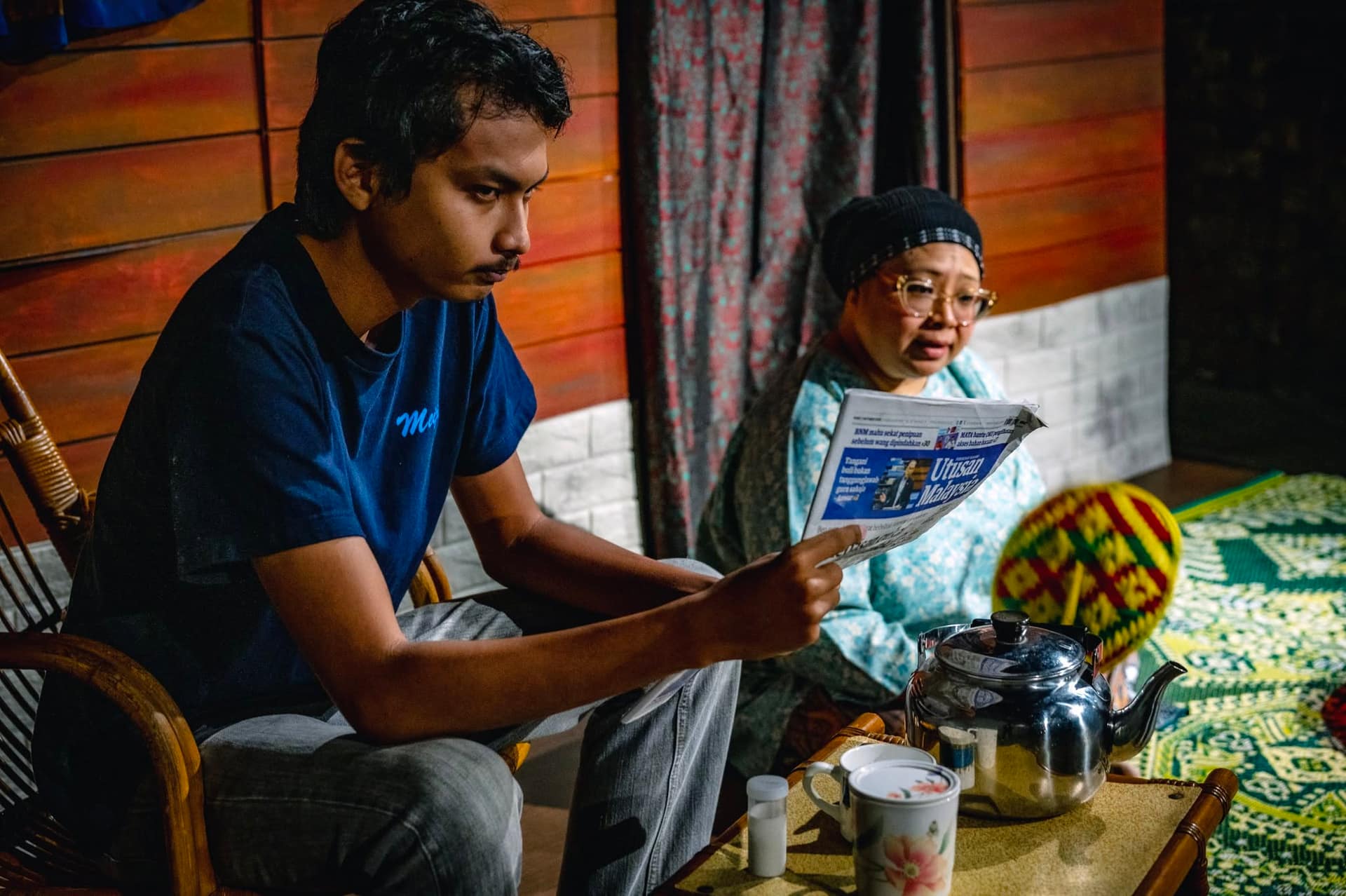
“Sometimes, we don’t choose what we want, we choose what’s easy for others. Being a woman is difficult.” — Aini, Sepanjang Hayat.
Through Aini, Bedah's struggle becomes intergenerational. Although she is seen defending her daughter in some scenes, the expectations surrounding female honour and obedience are the very ones Bedah herself has inherited and, to some extent, perpetuated. Love, which should be a source of joy, becomes constrictive when filtered through these inherited beliefs. Even as she tries to protect Aini's freedom of choice, Bedah may unknowingly pass on the very constraints that have shaped her own life.
The amount of emotional labour Bedah performs to keep the family together is enormously demanding. She accommodates Karim, worries about her children, and tries to preserve the relationships that other people are willing to fracture.
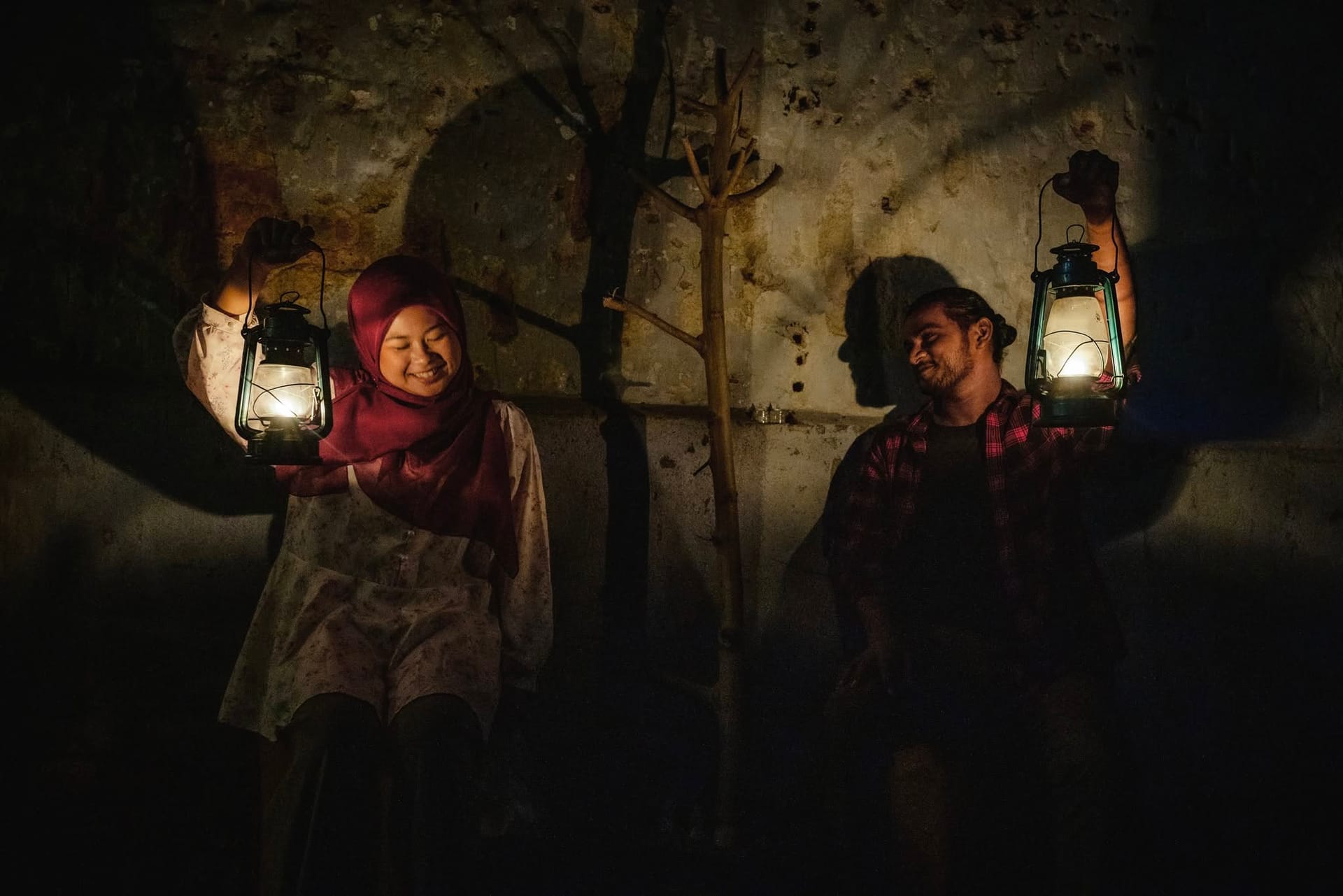
“Religion is broad, it is usually other people’s minds that are narrow.” — Karim, Sepanjang Hayat.
Culture and religion can provide meaning, belonging, moral guidance and a framework for living. But when interpreted through fear and personal insecurity, they become ideas that serve as instruments of control. People inherit these ideas, internalise them, and eventually become their enforcers, often without questioning whether the very ideas they uphold genuinely serve them or the people they love. The tragedy I see in this play is not that these people do not love one another, but that their love must negotiate with everything they have been taught to fear.
What if the family isn't merely struggling to love one another under the weight of inherited beliefs? What if each person has become a guardian of the very conditions that make being loved so difficult? A family doesn't need one person constantly issuing orders for its rules to persist. Its members have, perhaps subconsciously, internalised these rules. They have learnt to anticipate, reproduce, and enforce them. The system survives not only because someone holds power, but because everyone has learnt to organise their lives around it.
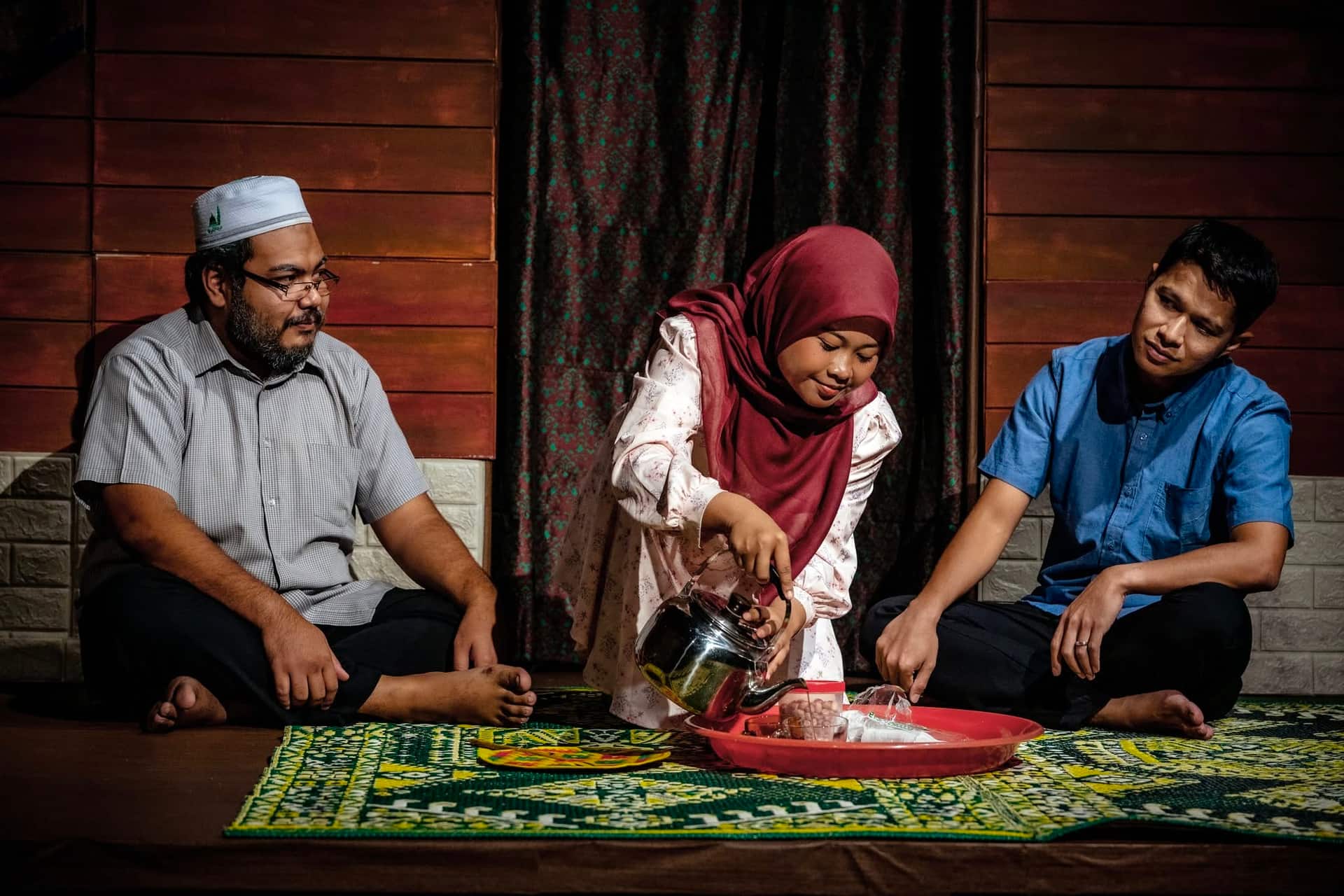
And perhaps this is where the play's questions become our own. We may recognise the unfairness of a rule without recognising how much of our own behaviour has been shaped by it. It makes me wonder how often we mistake what we have inherited for what we have freely chosen.
Echoing Fa’s sentiment, “...the need to understand people behind their choices,” I invite a compassionate reading of this play. What may seem like another family drama is, in its 75 minutes, a rich character study. People are complex and beautiful, their sense of self refracted through beliefs and insecurities.
Love should be simple, yet it rarely is. We filter it because its raw intensity feels overwhelming, and we feel unable to embrace it fully. We similarly constrain freedom with rules because we struggle to accept lasting bliss. Trauma deepens these insecurities, making us suspicious of happiness itself, as though bliss were something to be feared, even something sinful.
In the final scene, my analytical mind temporarily left the room, making way for a solitary moment with my heart.
“Why—given that no one fully conforms to these standards, which are themselves fictions—do these standards reproduce themselves so easily, and in such a rigid manner?” — Édouard Louis, translated from Que faire de la littérature?
I think the play leaves the audience with a heightened awareness of what is happening in their own homes and relationships. It also gives them the courage to question, even if only for the sake of understanding, because questioning allows one to feel heard, while understanding allows one to make peace with an experience. Whether this awareness will eventually lead to change is difficult to predict. But at the very least, a shift in an individual's awareness, however subtle, is itself a measure of the play's success.
I left the theatre thinking not only about Bedah and her predicament, but also about the beliefs we inherit, the expectations we accept, and the ways we unknowingly pass on. Perhaps we cannot change everything we have been taught to believe. But we can begin by asking ourselves whether those beliefs still serve the people we love.
About the writer:
Azida, a true lover of the arts, is on a self-declared break from the corporate world. Based in Penang, she spends her days hopping from one performance to another in search of stories that move and entertain. Offstage, she finds herself in unscripted adventures - collecting mangoes and coconuts or occasionally being chased by monkeys. Equal parts observer and participant, she writes with curiosity, insight, and a love for life’s unpredictability.
Seni:Kita (pentaspena.pg@gmail.com) is a content creator under the Newswav Creator programme, where you get to express yourself, be a citizen journalist, and at the same time monetize your content & reach millions of users on Newswav. Log in to creator.newswav.com and become a Newswav Creator now!
The User Content (as defined on Newswav Terms of Use) above including the views expressed and media (pictures, videos, citations etc) were submitted & posted by the author. Newswav is solely an aggregation platform that hosts the User Content. If you have any questions about the content, copyright or other issues of the work, please contact creator@newswav.com.