
There was something quietly radical about a book launch earlier this month at the Penang Institute.
Titled Emotion and Passion in Gender Policy, it explored sexuality, intimacy, and shifts in power across centuries of Malay texts, from spiritual manuscripts and instructional poetry to modern gender policy and legal codes.
It was not scandalous. Not provocative for the sake of it. Just… honest.
Focusing on themes such as marital rape and wife-beating, the discussion traced how the emotional weight and social meaning of the same story can shift as it moves through different historical and cultural frames.
The session led by Professor Maznah Mohamad struck me how unfamiliar it felt, not because the subject was new, but because the space for it has disappeared. The author wasn’t inventing anything outrageous; she was, in many ways, reclaiming something that once existed. A time when discourse within Muslim societies—on bodies, desire, intimacy—was not automatically buried under shame.
Somewhere along the way, silence became safer. And we inherited that silence so completely that even curiosity now feels like rebellion.
And so, when authors and writers speak, like Professor Maznah Mohamad did during this book launch, we call them brave. Brave for touching subjects that have become taboo on our Malaysian soil.
But here’s the uncomfortable question: why must they be brave at all?
Because increasingly in Malaysia, writing that questions, complicates, or reclaims, comes with consequences. Just look at what is happening now.
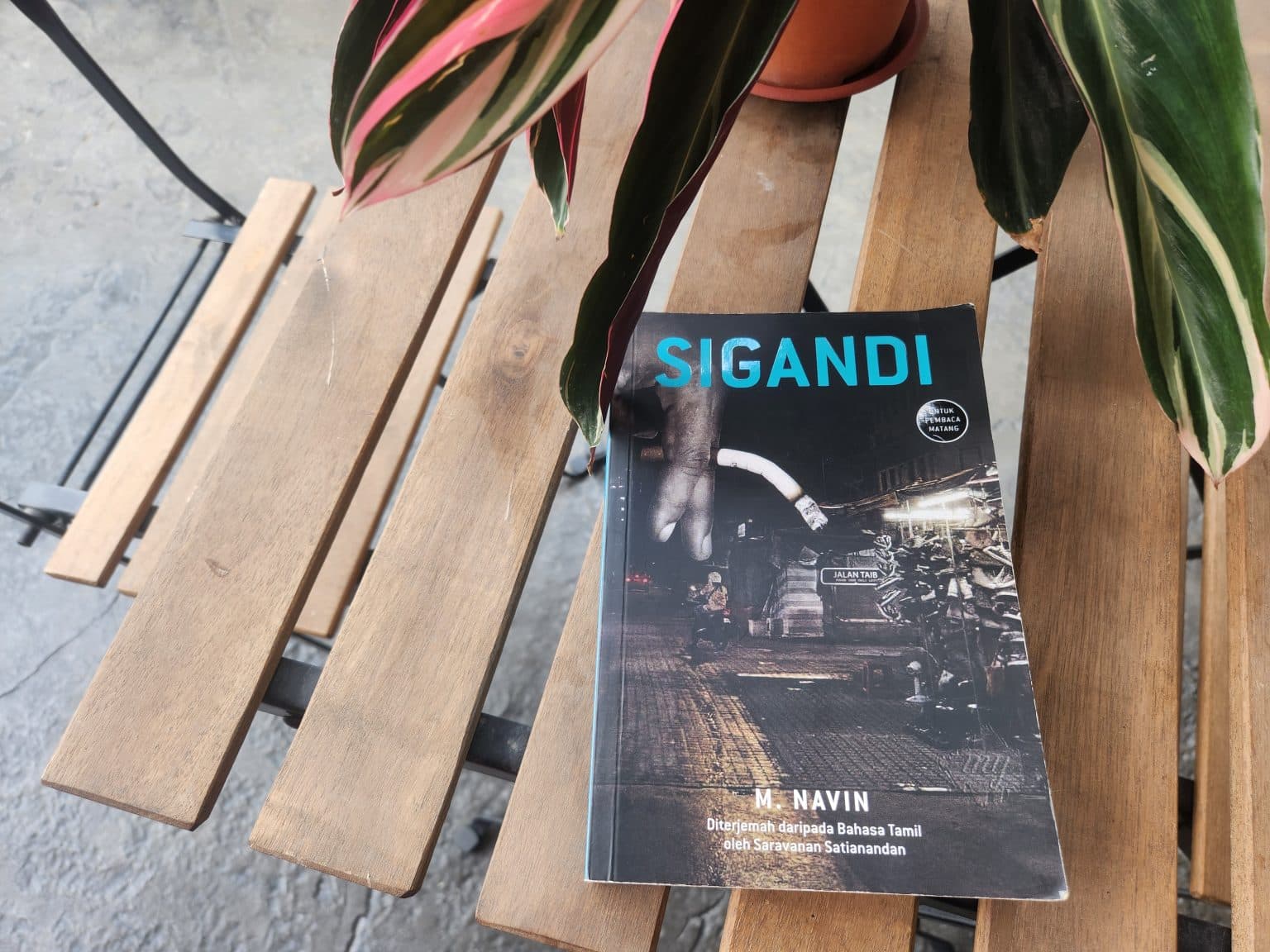
The recent statement by PEN Malaysia on the banning of Sigandi by the Ministry of Home Affairs Malaysia (KDN) does not feel like an isolated incident. It feels like part of a rhythm we are beginning to recognise. A pattern, as they describe it.
Sigandi, written by M. Navin, traces a young boy’s descent into survival and exploitation after he runs away to Kuala Lumpur. As he falls under the control of a syndicate leader named “Ibu,” he forms an intimate connection with a prostitute under “Ibu’s” control. What unfolds is a story of exploitation, survival, and the slow erosion of agency within systems of power and control.
First published in Tamil around 2022, the book circulated without controversy. It only came under scrutiny after it was translated into Malay and reached a wider readership.
Before this, books related to Shamsiah Fakeh and Komrad Asi were also banned. Different authors, different contexts, but the same quiet removal. No public explanation. No meaningful engagement. Just… gone.
And that is the thing about book bans. They are rarely about the book itself.
They are about control. About who gets to tell stories. Who gets to shape narratives. Who gets to decide what is “acceptable” knowledge.
Because when a novel like Sigandi is banned, it is not just literature being suppressed. It is the idea that Malaysian stories can be complex, uncomfortable, even contradictory.
And when historical figures like Shamsiah Fakeh are erased from accessible narratives, we are being told, very clearly, that history must be neat. That struggle must be simplified. That certain truths are better left unread.
But what worries me more than the bans themselves is the silence around them.
No detailed justification. No transparent process. No space for public challenge.
As PEN Malaysia points out, silence is not neutrality. It is a strategy.
And in that silence, something dangerous happens: absence becomes normal. We stop asking why a book is not available. We stop noticing whose voices are missing. We adjust.
Until one day, conversations like the one at Penang Institute—about Muslim women and sex—feel rare enough to be extraordinary.
And that brings me back to the writers. We celebrate them for their courage, for speaking when it is easier to stay quiet. But increasingly, we are also watching them leave—to publish elsewhere, to perform elsewhere, to exist in spaces where their work does not have to fight so hard just to breathe.
And the question we should be asking is not whether they are brave enough to stay.
It is: until when are we going to make leaving the only way they can continue creating?
Because a country that cannot hold its writers, especially the ones who challenge it, is not just losing voices. It is losing the ability to understand itself.
About the writer:
Tau Foo Fah is a creature of impulse and odd rituals who claims her best writing happens in her car—where profound ideas and questionable decisions collide. Equal parts observer and instigator, her work blends sharp wit with truths that linger longer than they should. Offstage, she collects stories, eavesdrops with intent, and turns everyday absurdities into something dangerously close to art.
Seni:Kita (pentaspena.pg@gmail.com) is a content creator under the Newswav Creator programme, where you get to express yourself, be a citizen journalist, and at the same time monetize your content & reach millions of users on Newswav. Log in to creator.newswav.com and become a Newswav Creator now!
The User Content (as defined on Newswav Terms of Use) above including the views expressed and media (pictures, videos, citations etc) were submitted & posted by the author. Newswav is solely an aggregation platform that hosts the User Content. If you have any questions about the content, copyright or other issues of the work, please contact creator@newswav.com.