Recently, actress Rosamund Pike made headlines after calling out an audience member who was using a phone during a performance of her play in London's West End. According to reports, Pike waited until the curtain call before addressing the audience, reminding them that actors can see the glow of screens and feel when attention drifts away from the stage.
The incident sparked debate online. Some applauded her for speaking up. Others felt actors should remain professional and leave audience management to the theatre.
As someone involved in theatre, I understand her frustration. Because what happened in London is not unique. It happens in Malaysia all the time.
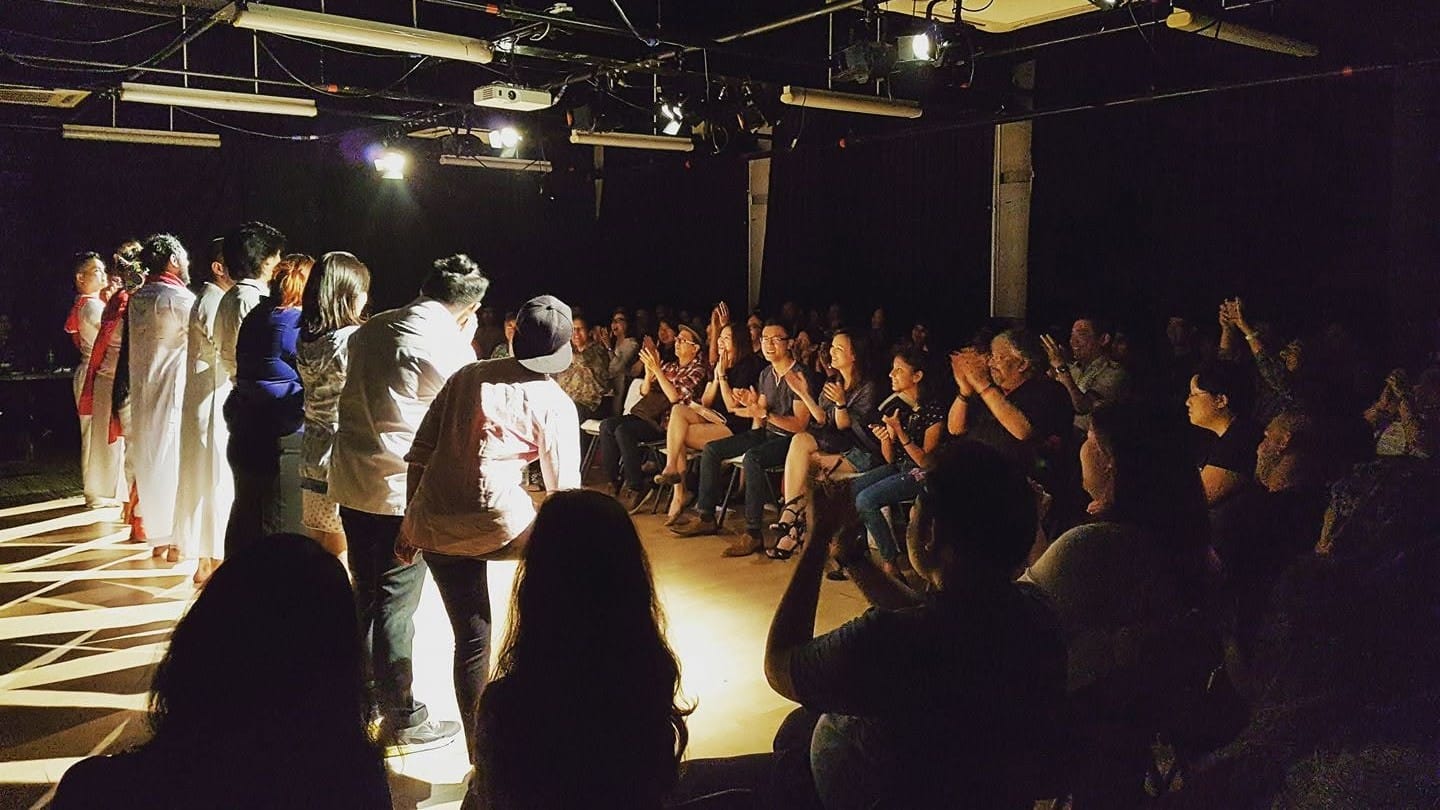
Just two weeks ago, I attended a theatre production at IBOX Theatre, Gelugor, Penang. Seated a few rows in front of me were several audience members who spent a significant portion of the performance on their phones. Some were scrolling through social media. Others were busy replying messages on WhatsApp. The glow from their screens was impossible to ignore.
What frustrated me even more was that they did not even bother dimming their screens or making any attempt to be discreet. The bright light kept pulling my attention away from the stage.
Later, I discovered that these individuals had attended the show primarily to support a friend who was performing. Throughout the performance, they remained glued to their phones. Then, the moment their friend walked onto the stage, the phones disappeared.
Apparently, only one actor deserved their attention. Everyone else did not.
That, to me, is deeply disrespectful.
Disrespectful to the actors on stage who have spent months rehearsing. Disrespectful to the production team who have worked tirelessly behind the scenes. Disrespectful to the organisers who trusted you enough to welcome you into the theatre.
And perhaps most importantly, disrespectful to the paying audience members around you who came to enjoy the performance without a glowing rectangle constantly flashing in their peripheral vision.
Unfortunately, this was not an isolated incident.
As a theatre practitioner, I have seen similar behaviour in almost every theatre I attend, and in productions I have personally been involved in. It happens despite repeated reminders before the show. It happens despite announcements over the speakers. It happens despite clear house rules pasted at the entrance door.
People simply do not listen.
Some treat theatre like a cinema. Others treat it like a gathering. Some seem to believe that because they paid for a ticket, they have purchased the right to do whatever they want.
They have not.
A theatre ticket buys you a seat. It does not buy you permission to ruin the experience for everyone around you.
Other forms of theatre misconduct
Unfortunately, phones are only part of the problem.
Over the years, I have witnessed every imaginable form of theatre misconduct.
People texting during performances. Whispering conversations that somehow grow louder with every scene. The unmistakable crinkle of sweet wrappers being opened during a quiet emotional moment. Latecomers arriving long after the show has started and then loudly squeezing through an entire row of seats.
I once watched an audience member pass a large packet of Twisties down an entire row during a performance. One person took a handful, then passed it to the next person, who passed it to the next. All while loudly crunching away as actors were trying to perform on stage.
What surprises me is that this behaviour persists despite repeated reminders. Yet the moment the lights go down, many seem to forget everything they have just heard.
Perhaps the problem is that too many people see theatre as merely a social outing rather than an artistic experience. They come to support a friend, take a few photos, post a few stories, and then mentally check out until someone they know appears on stage.
But theatre does not work that way.
Every actor on that stage deserves the same attention. Every scene deserves the same respect. Every audience member around you deserves the chance to enjoy the performance they paid for without being distracted by glowing screens, rustling wrappers or the sound of someone enthusiastically demolishing a packet of snacks.
Stricter enforcements
So, what can we do?
Some theatres overseas have experimented with locking phones in special pouches that can only be opened after the performance.
Others have ushers actively monitoring audiences and warning anyone caught for any misconducts.
Some productions have even paused performances until the offending audience member is removed.
But theatre in Malaysia faces a unique challenge. We are constantly trying to attract new audiences. The last thing many producers want is to be seen as overly strict or unwelcoming.
Perhaps the answer lies somewhere in the middle.
We need stronger front-of-house enforcement. Not just the usual pre-show announcements that people have learned to tune out, but ushers who are empowered to politely remind audience members to put their phones away. Repeat offenders should be warned. If they continue disrupting the performance, they should be asked to leave.
More importantly, we need to change audience culture.
Because theatre is one of the few art forms that still exists entirely in the present moment. There is no pause button. No replay function. No chance to rewind and catch the line you missed because you were checking WhatsApp or Instagram.
Every performance exists only once.
And that moment deserves our attention.
Going to the theatre is not the same as watching Netflix at home. It is a shared experience. The actors and the production team have spent months rehearsing and perfecting cues. The audience around you has paid good money to be there.
The least we can do is give them our attention for ninety minutes.
Perhaps theatres also need to stop being so apologetic about enforcing basic etiquette. We already accept that cinemas can remove people for recording films. We accept that libraries can ask noisy patrons to leave. We accept that airplanes have rules about electronic devices.
Yet somehow in theatres, asking someone to stop scrolling Instagram is treated as an unreasonable infringement of personal freedom.
It isn't. It is simply asking people to respect everyone else in the room.
That said, do I think actors should confront audience members from the stage the way Rosamund Pike did?
No.
I understand why she did it. I sympathise with her frustration. But if one of my actors used the stage to publicly air that frustration, I would not be pleased. The stage is not a place for personal grievances.
There are proper channels. Speak to the director. Speak to the producer. Raise the matter after the performance. Let the management handle it.
Theatre requires discipline from everyone involved, including the actors.
There is no place for a phone in theatre. But there is no place for a diva either.
Respect, after all, must travel both ways.
About the writer:
Tau Foo Fah is a creature of impulse and odd rituals who claims her best writing happens in her car - where profound ideas and questionable decisions collide. Equal parts observer and instigator, her work blends sharp wit with truths that linger longer than they should. Offstage, she collects stories, eavesdrops with intent, and turns everyday absurdities into something dangerously close to art.
Seni:Kita (pentaspena.pg@gmail.com) is a content creator under the Newswav Creator programme, where you get to express yourself, be a citizen journalist, and at the same time monetize your content & reach millions of users on Newswav. Log in to creator.newswav.com and become a Newswav Creator now!
The User Content (as defined on Newswav Terms of Use) above including the views expressed and media (pictures, videos, citations etc) were submitted & posted by the author. Newswav is solely an aggregation platform that hosts the User Content. If you have any questions about the content, copyright or other issues of the work, please contact creator@newswav.com.