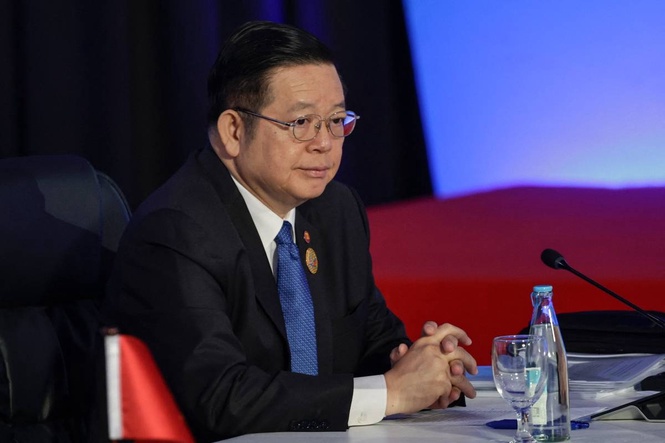
FUZHOU, China — Association of Southeast Asian Nations (Asean) Secretary General Kao Kim Hourn led the call for regional cooperation on "responsible governance and ethics, a safety network, and harnessing infrastructure" amid the rapid rise of artificial intelligence (AI) at a media forum here on Wednesday.
In a video speech at the 12th Asean Plus Three Media Cooperation Forum, Kao warned that AI's "rapid rise raises serious questions about trust, accountability and safety in the media."
Kao highlighted Asean’s efforts to "promote responsible AI governance, including the Asean Guide on AI Governance and Ethics, the Asean Responsible AI Roadmap, and the Asean AI Safety Network."
He encouraged practical cooperation in content verification, investment in journalists' professional capacity, and the responsible use of AI in newsrooms.
He cited the important role of credible and responsible media in strengthening cross-border understanding, supporting social cohesion and advancing people-to-people connectivity.
He also underscored the media's growing responsibilities amid the rapid circulation of information and increasing use of AI.
He stressed the need to ensure that the development of AI infrastructure was "responsible and safe."
Kao said a 10-year plan for the Plus 3 countries — China, South Korea and Japan — was in the works to enable them to forge a strong partnership with Asean built on a "consensus of respect for diversity, [and a] wider effort to make a dynamic and people-centered region amid numerous challenges, including AI."
Media executives from the Asean Region echoed the call, recognizing an "invisible wall of misunderstanding and misinformation that has grown thicker and thicker, creating animosity that has increased the divide."
Geopolitical tension and emergencies caused by climate change are among the issues that can create misinformation, with media responsible for either "building a bridge of mutual understanding or severing it."
Michael Ang, director and board member of The Manila Times and one of the speakers, said “he rapid shift toward digital distribution, platform dominance and the ethical integration of artificial intelligence present challenges no single outlet can navigate alone."
"Generative AI tools offer operational efficiency, but they also raise urgent questions about verification, copyright and public trust," Ang said in his speech, which carried the common theme of "Openness and Cooperation for Shared Development."
"To build an accountable, future-ready media network across East Asia, we must move toward practical structured collaboration anchored on technical exchange programs on best practices in the newsroom, build collaborative reporting initiatives that protect diversity and elevate underrepresented stories and establish fact-checking networks to counter misinformation," he said.
Zosito da Silva, vice president and editor-in-chief of the Tatoli News Agency in Timor-Leste, sought the creation of a "self-fact-checking network" and for stories to come not only from the "big countries" but from the "small countries" as well.
Other media executives present were Syvanh Homsayadeth, editor-in-chief of the Pasaxon Newspaper in Laos; Heng Sovann, editor-in-chief, Apsara Media Services; Thanchanok Jongyotying, editor-in-chief, Thai News Network; Han Yonghong, associate editor, Lianhe Zaobao, Singapore; and Kang Miao, deputy director, Xinhua, News Agency Fujian Branch.
The 12th Asean Plus Three Media Cooperation Forum and the 2026 Media Cooperation Forum on Belt and Road were organized by the People's Daily, China's English-language newspaper, and Fujian province.