.jpeg)

In a world where global summits are often framed by rigid speeches and policy declarations, the Association of Southeast Asian Nations (ASEAN) - Gulf Cooperation Council (GCC) – People's Republic of China Economic Forum, in Kuala Lumpur offered a rare poetic detour. Amid high-level economic dialogue and geopolitical balancing, the emergence of a trilingual musical performance—titled “A Shared Future” (命运共同体)—breathed symbolic life into the forum’s ambition. This wasn’t just a song; it was a civilizational manifesto, declaring that the arc of diplomacy need not bend toward militarism or domination, but can instead trace the gentle, powerful curve of harmony, empathy, and artistic collaboration.
Cultural Diplomacy in Action: Seven Voices, One Message
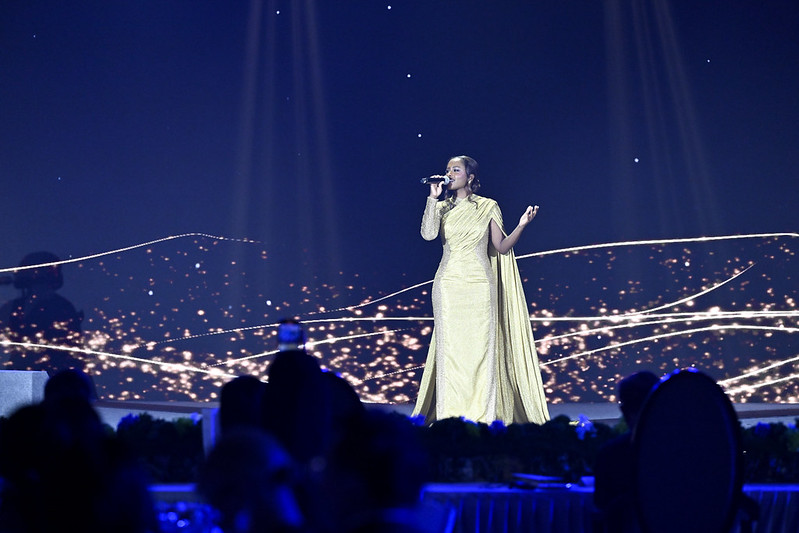
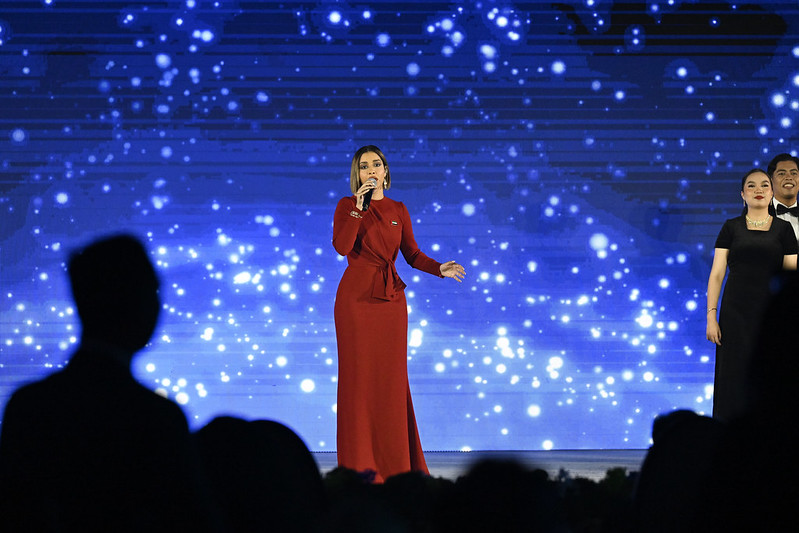
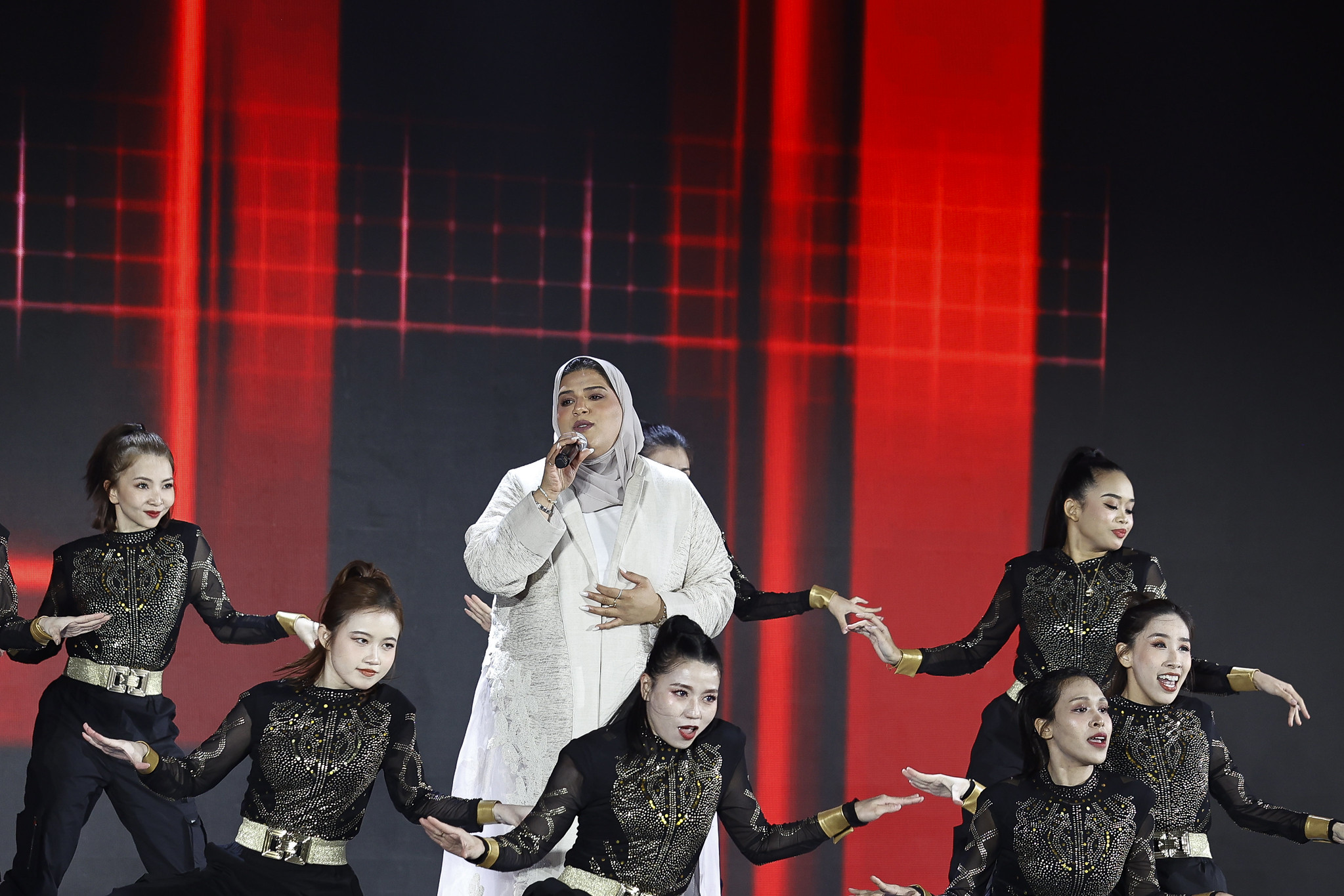
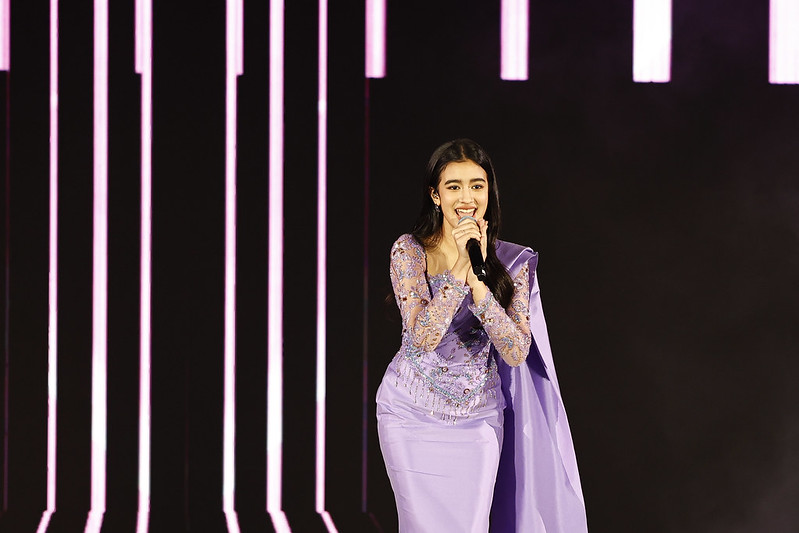
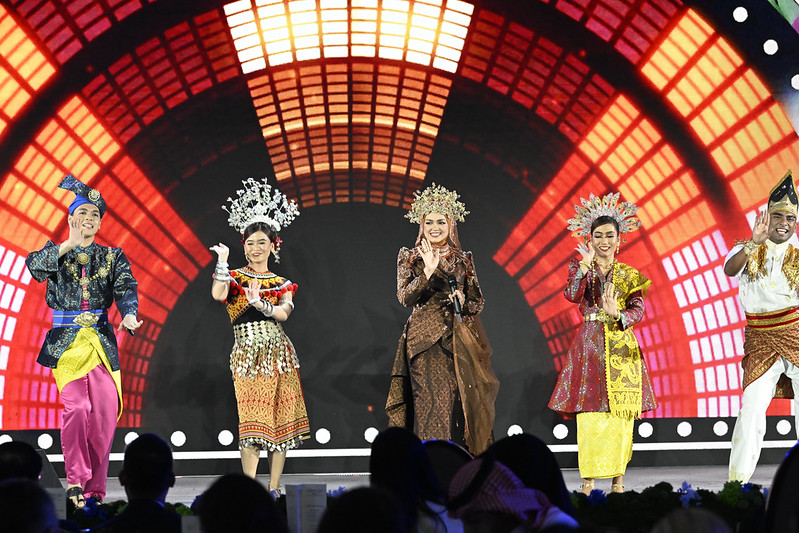
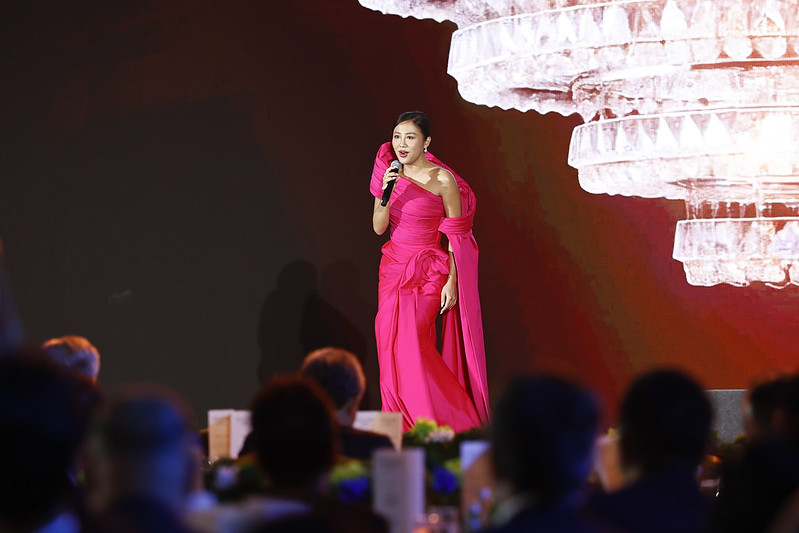
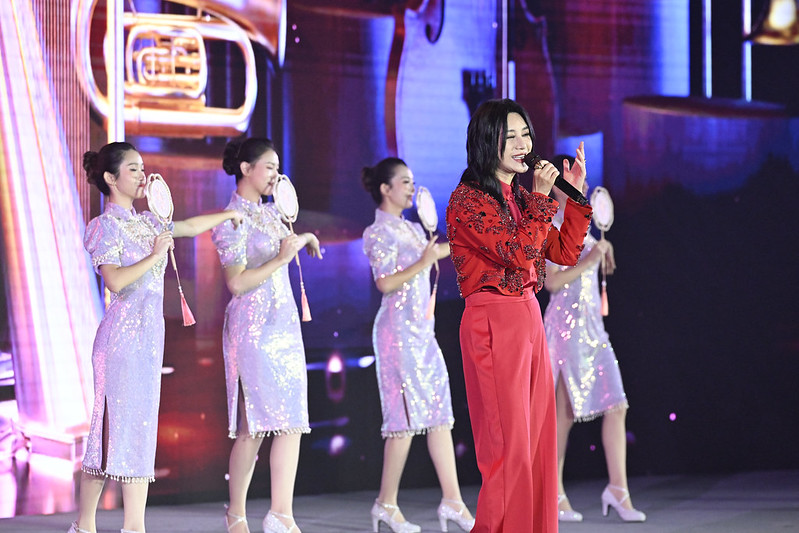
The premiere of A Shared Future was the forum’s emotional and philosophical crescendo. It united seven female artists from three distinct regions—Gulf, ASEAN, and China—whose voices, identities, and musical styles converged in a single, diplomatic chorus. Each artist embodied the soul of her nation, turning melody into message.
From the Gulf Cooperation Council, Dalia Mubarak of Saudi Arabia offered her signature power vocals, rooted in the deep cadences of Khaleeji rhythms. Her presence was confident, commanding, and imbued with the strength of a region redefining its global narrative. Alongside her stood Balqees Fathi of the United Arab Emirates, whose voice—both regal and tender—carried the warm resonance of the desert winds and the cosmopolitan promise of the Emirates. Completing the Gulf triad was Dana Al-Mir of Qatar, whose poised and graceful performance added a subtle layer of emotional clarity and refined theatricality.
From ASEAN, the performance welcomed Princess Norodom Jenna of Cambodia, whose royal charisma was as striking as her musical cadence. Her presence was a reminder of Southeast Asia’s monarchical heritages interlaced with modern aspirations. Siti Nurhaliza of Malaysia, a household name and national treasure, sang with an emotional immediacy that seemed to collapse the space between stage and spectator. Phan Mai Huong of Vietnam followed with a crystalline voice, laced with softness and serenity—a musical thread delicately weaving the broader ASEAN experience. The journey culminated with Laur Zhang from China, whose rich, dramatic range summoned the sonic memory of a civilization whose musical tradition dates back millennia.
Together, these women formed not a band, but a chorus of nations. Their synchronized harmony became a metaphor for geopolitical alignment through cultural empathy. They did not merely sing—they engaged in an act of soft power diplomacy, in which the stage became a parliament of resonance, and their voices—like brushstrokes on silk—painted the canvas of a new world vision.
The Philosophical Refrain: Power Redefined by Voice
The philosophical proposition at the heart of this performance was radical: that in an age of drone warfare, digital surveillance, and nuclear proliferation, the most enduring expression of power is not the roar of cannons, but the pitch of voices. As the song’s trilingual lyrics unfolded—in Arabic, Malay, and Chinese—it was clear that this was not just about inclusion, but about creating a shared epistemology: three worldviews, three civilizational lexicons, one emotional language.
The song’s poet, Karl Gergisati Safi, infused the lyrics with a philosophical cadence that avoided cliché and instead invited contemplation. His verses were not just translations—they were revelations: musical metaphors calling for economic solidarity, environmental stewardship, and digital ethics. Composer Ahmad Al-Zamily orchestrated these lines into a symphony that balanced regional tonality with universal appeal. His composition was neither classical nor pop, but rather a hybrid idiom capable of communicating across cultural synapses.
And while the performers voiced their lines in three languages, it was the shared rhythm, breath, and resonance that rendered translation unnecessary. The linguistic diversity—Arabic’s rhetorical depth, Malay’s lyrical fluidity, and Chinese’s tonal precision—became a sonic reflection of political plurality harmonized through culture. Where diplomacy often falters in translation, art transcends it.
Artificial Intelligence: The Silent Collaborator
One of the most arresting dimensions of A Shared Future was the silent presence behind the curtain: artificial intelligence. The project drew from 18 symbolic images—spanning architecture, dress, nature, and ritual—feeding them into a machine-learning system that helped map emotional tones, lyrical concepts, and musical suggestions. This was not a machine generating art, but a tool amplifying human insight.
This integration of AI into cultural production poses critical questions. What is the future of creativity? Can machines interpret collective memory, or do they simply replicate patterns? The forum chose to answer not with caution, but with confidence: technology, when wielded ethically, can become an ally in cultural preservation and production. In this instance, AI served not as a replacement, but as a catalyst, enhancing the artists’ ability to articulate a shared message.
This synthesis of tradition and innovation mirrored the forum’s economic ambitions. Just as AI bridged past and future in music, the summit sought to bridge policy with humanity, trade with trust, and industry with identity.
Conclusion: A New Paradigm for Power
“A Shared Future” may have lasted only a few minutes on stage, but its echo lingers far beyond the forum walls. In a time when multilateralism is being tested by populism, protectionism, and polarization, this performance posited an alternative vision: a world in which identity is not weaponized, but harmonized. A world in which politics learns from poetry, and where the soft power of culture quietly outpaces the hard calculus of interest.
In Kuala Lumpur, this vision was not abstract. It was embodied—in voices, in languages, in faces. Seven women sang as one. A poet and composer dared to dream in three tongues. Artificial intelligence served not as overlord but orchestra. And a summit once bound by statistics and policy sheets found its soul in a song.
It is perhaps no exaggeration to say that this was diplomacy’s crescendo, a reminder that the future is not only to be negotiated—it is to be sung.
Abdullah Bugis (kualalumpur.abdullah@gmail.com) is a content creator under the Newswav Creator programme, where you get to express yourself, be a citizen journalist, and at the same time monetize your content & reach millions of users on Newswav. Log in to creator.newswav.com and become a Newswav Creator now!
The User Content (as defined on Newswav Terms of Use) above including the views expressed and media (pictures, videos, citations etc) were submitted & posted by the author. Newswav is solely an aggregation platform that hosts the User Content. If you have any questions about the content, copyright or other issues of the work, please contact creator@newswav.com.

