
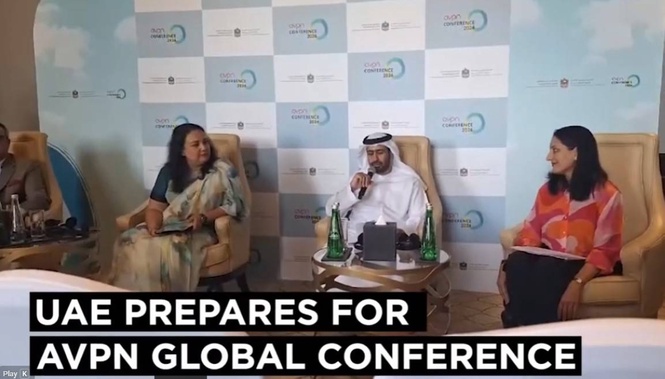
NEW DELHI — Governments across Asia must step up efforts to mobilize the region’s growing wealth for development, with experts saying the challenge is no longer a shortage of capital but a lack of action to put it to work.
“I don’t think there’s a shortage of capital per se. I think it’s simply for our leaders to start to step up,” AVPN Chairman Achal Agarwal told The Manila Times during the AVPN Global Conference 2026 in New Delhi on Monday.
He said the region needed to move beyond simply identifying its growing pool of wealth and focus on how that capital can be deployed more effectively toward development priorities.
“I think we need to move into an era where the leaders themselves really want to have an impact,” Agarwal said.
The call comes as Asia faces a growing mismatch between its substantial private wealth and the financing needed to address poverty, inequality, climate change and other development challenges.
AVPN said Asia faced a $26-trillion financing need through 2030 to sustain economic growth, eradicate poverty and address climate change while also confronting an annual $1.5-trillion gap in financing for the Sustainable Development Goals.
Agarwal stressed that the challenge was not simply to generate more money but to create mechanisms that allow existing capital to reach projects capable of producing measurable and sustainable impact.
This includes greater use of blended finance, he added, which combines different forms of capital to reduce risks and encourage additional private investment.
“Leaders must think really about what impact can be created, and how can we make that sustainable,” Agarwal said.
AVPN CEO Naina Subberwal Batra said Asian wealth holders needed to play a much larger role in financing development across the region as a majority of private-sector development capital deployed in Asia continues to come from outside the continent.
“Most of the money that goes toward development from the private sector unfortunately comes from outside Asia and this despite the fact that we have a lot of wealth in Asia,” she said.
Batra said 60 percent of development money deployed in Asia comes from outside Asia, despite the region being home to more than 1,000 billionaires and a rapidly expanding pool of private wealth.
“I think we have to move away from our reliance on international development because every country right now is looking inwards,” she said.
Trust remains a major obstacle
Batra said that one of the biggest barriers to mobilizing private capital was trust.
She argued that philanthropists and investors needed greater confidence that their money will be used effectively, particularly when working with governments or unfamiliar organizations.
“You have to work with government to get scale in most Asian countries. And unfortunately, the level of trust in most governments is not very high,” Batra said.
“So that, again, prevents philanthropists from wanting to work with government,” she added.
In many Asian countries, low levels of trust in government can discourage philanthropists from partnering with the public sector, even though government involvement is often necessary to achieve scale.
Batra said organizations such as AVPN could serve as a bridge between policymakers and philanthropists by improving transparency, conducting due diligence and helping investors identify credible projects.
“Only if we do that, are we going to see that tide changing,” she said.
Batra said this year’s conference brought together close to 2,000 of the region’s most influential funders, investors, corporates and policymakers to shape practical and scalable pathways for inclusive growth.
“We need an ecosystem where philanthropists, investors, corporates, governments and innovators see themselves not as separate actors, but as co-owners of shared outcomes,” she said.
“That is what the conference is here to build, partnerships that translate intent into coordinated action, and capital that moves in ways that honor the realities of our communities.”

