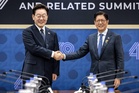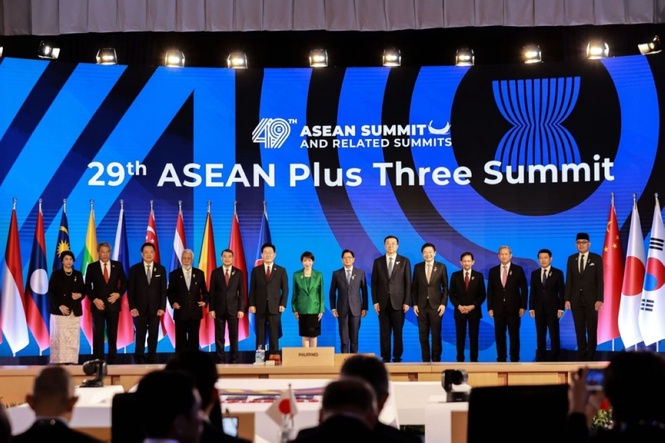
PRESIDENT Ferdinand Marcos Jr. said Asia has made progress in achieving energy security and urged oil-producing and oil-consuming nations to act in unison to shield global supply chains from geopolitical shocks.
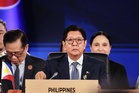
Speaking at the 4th Asia Zero-Emission Community (AZEC) Leaders’ meeting on Tuesday as co-chair, Marcos said the region has about 600 active energy projects, showing that cooperation is fortifying the continent’s energy supply.
He noted, however, that stockpiling is not enough and that oil consumers and producers must unite to ensure volatility from global conflict does not hamper Asia’s energy supply.
“We must deepen information sharing and practical storage arrangements, as well as commit to upholding international law to keep sea lanes open and maintain fair, transparent markets. Neither buyers nor sellers benefit from volatility,” said Marcos in his opening remarks.
Recalling recent disruptions along critical maritime chokepoints such as the Strait of Hormuz, the president stressed that no single nation can insulate itself from energy shocks by acting alone.
Guided by the vision of “AZEC 2.0,” Marcos said that energy security, economic growth, and decarbonization must advance together through a pragmatic, country-driven agenda.
For the Philippines, he outlined domestic initiatives such as actively developing the Philippine Strategic Petroleum Reserve while welcoming high-impact investments in grid modernization, energy storage, natural gas, and energy efficiency, and using liquefied natural gas as a transition fuel.
The country is also pursuing a target of at least 25 gigawatts of renewable energy capacity by 2035 under the Green Energy Auction Program — and aiming for a 50-percent renewable share in the power generation mix by 2040 — alongside laying the groundwork for nuclear energy with partners like Japan.
He also stressed that the country is mobilizing green capital through the newly issued Carbon Market Policy Framework and the Philippines’ first Article VI Implementation Agreement with Singapore, backed by the National Just Transition Framework to protect workers and communities.
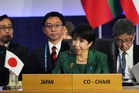
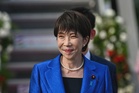
Meanwhile, also as co-chair of the AZEC, Japanese Prime Minister Sanae Takaichi proposed creating a task force to coordinate cooperation in Asia on oil stockpiling and the release of supplies during emergencies — one that will allow neighbors in the region to use idle storage capacity in Japan.
Takaichi told Southeast Asian leaders at the summit in Manila that the initiative would be coordinated with a Philippine-led joint oil stockpiling scheme.
“We intend to promote it as an equivalent of an Asian version of the International Energy Agency,” she said at the Asia Zero Emission Community (AZEC) leaders’ meeting during the Asean Summit.
Takaichi also proposed a “Power Gulf Initiative” aimed at strengthening cooperation between Middle Eastern oil producers and Asian energy-consuming countries.
Asian countries are seeking to strengthen energy security after the Iran war exposed their vulnerability to disruptions in Middle Eastern oil and gas supplies passing through the Strait of Hormuz. About 90 percent of crude oil going through the waterway is destined for Asia, according to Japan’s Agency for Natural Resources and Energy.
The AZEC members are Australia, Brunei, Cambodia, Indonesia, Japan, Laos, Malaysia, the Philippines, Singapore, Thailand and Vietnam.
Compared with Japan, Southeast Asian countries hold smaller oil stockpiles, and supplies of crude and petroleum products such as naphtha — a key feedstock for plastics — have become very tight.
A disruption in Southeast Asian production has fueled anxiety among Japanese health care providers that rely on Asia for critical supplies such as containers, tubes and gloves.