KUALA LUMPUR — Asia-Pacific airlines face growing exposure to elevated jet fuel prices as older hedging contracts expire and carriers must decide whether to lock in new cover at higher levels, industry executives said.
The spot price of jet fuel is trading at about $148 a barrel, down from nearly $180 at the end of October but still far higher than $85 or so before the Iran war began in late February.
Wong Hong, director general of the Association of Asia Pacific Airlines, said fuel now makes up about 33 percent of airlines’ operating costs, a share global industry group IATA had pegged at 25 percent last year before prices surged.
Wong, whose group represents 18 of the region’s carriers, called hedging a “very, very tricky dilemma.” Airlines that had hedging contracts in place over the past six to eight months were “coming out smelling like a rose,” he said, but now faced re-hedging at higher prices.
Deciding whether to add more hedges is a bet on whether fuel prices will remain high, and airline executives attending AAPA’s annual assembly in Kuala Lumpur this week differed in their views on how long the pain would last.
“Our view is that we are facing a new normal where the fuel price is there to stay at the levels that we see more or less today,” Air Astana CEO Ibrahim Canliel said in an interview, referring to Brent oil prices of about $90 to $100 a barrel.
The Kazakh carrier’s first-half hedges have expired and prices were at levels that “did not make sense” to lock in new cover, he said. But the airline plans to rebuild its position, aiming to hedge all of the fuel it buys outside Kazakhstan, about 30 percent of its total in a typical year, Canliel added.
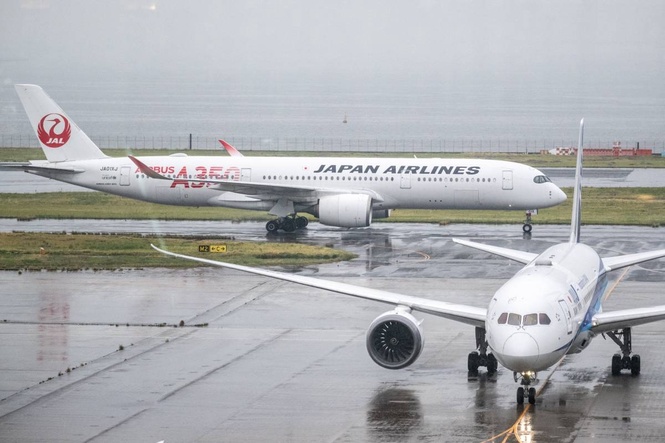
Japan Airlines (JAL) expects fuel prices to fluctuate, senior managing executive officer Ross Leggett told Reuters.
“We still think it will be cyclical. It’s going to go up and down,” he said, adding the airline was budgeting for a “worst-case scenario” of $160 a barrel for jet fuel, the average price it paid from April to September.
Juichi Hirasawa, CEO of All Nippon Airways (ANA), said the airline’s fuel costs would rise by 100 billion yen ($626 million) this fiscal year above initial plans, but said he expected the fuel market to stabilize in the second half of the financial year ending March 31.
Both ANA and JAL hedge only domestic fuel consumption and rely on fuel surcharges and ticket price changes to cover international exposure. Neither airline signaled any change to that approach.
Leggett said JAL would introduce a domestic fuel surcharge from April next year, a first for the carrier, after concluding it could no longer rely on government fuel subsidies indefinitely.
ANA’s Hirasawa said a domestic surcharge was “under consideration,” but competition from bullet trains made the decision difficult.
‘Breaking point’
With oil prices rising, ticket prices have also climbed but not always fast enough to cover all of the higher fuel costs.
“There has to be a breaking point where passengers will say no,” Wong said.
Asia-Pacific passenger growth was negative in aggregate from April to August, with September “just above water,” Wong said, adding that capacity cuts were “clearly a potential risk.” Singapore Airlines shows how margins have been squeezed even at carriers with substantial hedging. Its fuel bill jumped 56 percent in the six months to September, to SG$3.97 billion ($3.09 billion), cutting operating profit by 29 percent even as revenue hit a record.
Singapore Airlines paid an average of $171 a barrel before hedging, up 87 percent year on year. Hedging gains of SG$731 million, against a SG$75-million loss a year ago, cut the effective price to $145 a barrel, but Chief Financial Officer JoAnn Tan said hedging “only offers some level of protection.” “No one can predict fuel prices, which is why we hedged,” she said at an earnings briefing on Thursday.