
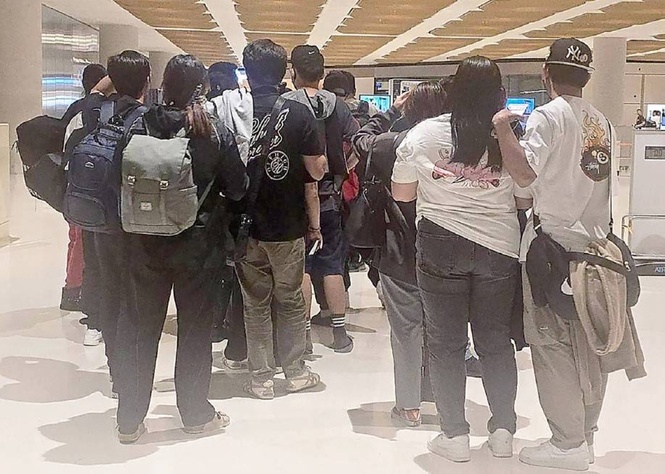
FIRST of two parts
THE promise usually begins with a simple online message.
A high-paying call center job in Thailand. A customer service position in Malaysia. A crypto company in Dubai offering salaries far higher than what many Filipinos earn at home.
For hundreds of Filipinos desperate for better opportunities abroad, the offers appeared legitimate.
But for many, the journey ended inside heavily guarded scam compounds in Myanmar, Laos, and Cambodia — where victims said they were beaten, starved, sold to other syndicates, and forced to scam strangers online.
Workers follow scripts, assume fake identities, and target victims across the globe through social media and messaging apps.
Among the most common schemes are romance scams, where trust is slowly built before money is extracted, and cryptocurrency fraud promising unrealistic returns.
The geography of these operations reveals a pattern. Along the rugged frontier between Thailand and Myanmar, towns like Myawaddy have become synonymous with scam hubs.
Similar clusters have taken root near border crossings in Cambodia, including Poipet, and in special economic zones in Laos.
Authorities say many of these networks are linked to Chinese criminal syndicates that shifted operations overseas following tighter enforcement in mainland China.
While Beijing has backed regional crackdowns, analysts note that enforcement remains uneven, and the networks continue to adapt.
For countries like the Philippines, the issue hits close to home. Filipinos have been among those trafficked into scam centers, prompting rescue missions and renewed warnings from authorities about overseas job offers that seem too good to be true.
The Bureau of Immigration (BI) and the Department of Migrant Workers (DMW) have sounded the alarm over what authorities describe as one of the fastest-growing forms of modern human trafficking in Southeast Asia.
Immigration officials revealed that trafficking syndicates have shifted tactics in recent years, increasingly targeting educated Filipinos, young professionals, overseas workers, and even individuals already working abroad.
BI Commissioner Joel Anthony Viado warned that these criminal networks are becoming more organized, more deceptive, and more dangerous.
“These transnational crimes are becoming more and more alarming, and I call on everyone to remain vigilant,” Viado said.
Unlike traditional illegal recruitment schemes, today’s trafficking operations rely heavily on social media, encrypted messaging applications, and fake online advertisements.
Authorities said recruiters commonly use Facebook, Telegram, WhatsApp, and other digital platforms to advertise attractive overseas jobs supposedly connected to customer service, business process outsourcing, online marketing, or cryptocurrency trading.
Victims are usually promised monthly salaries ranging from $1,000 to $1,500, free accommodations, commissions and fast deployment.
Many applicants, believing they are pursuing legitimate careers abroad, voluntarily process their travel documents and leave the country legally.
Once overseas, the deception begins.
Several rescued Filipinos narrated how they were initially flown to Thailand or Malaysia as “tourists” before being secretly transported by land or river crossings into Myanmar, Laos, or Cambodia.
Inside the compounds, passports are confiscated. Victims are isolated from the outside world, and escape becomes nearly impossible.
One Filipina trafficked to Myanmar said she was recruited through Facebook after being promised a customer service job in Thailand.
Upon arrival, she was fetched by a private vehicle, transported for several hours, and eventually smuggled across a river into Myanmar.
Instead of office work, she was forced to operate online scams targeting Indians. Her task was to convince strangers to invest in a fraudulent platform called “Pacific Mall.”
Workers inside the compound endured nearly 16-hour shifts daily without pay, rest days, or freedom of movement, she said.
Those who failed to meet scam quotas faced punishment, threats, or physical abuse.
For her eventual release, the Filipina was allegedly ordered to recruit three replacement Filipinos.
Authorities said the woman later contacted a friend in the Philippines who produced fake travel itineraries to trick her captors into believing replacement recruits were on the way.
Only then was she escorted back to Thailand, where she sought refuge at the Philippine Embassy.
In another case, six Filipinos trafficked to Laos managed to escape after being repeatedly sold from one scam company to another.
The victims said they were originally recruited for supposed chat support jobs in Thailand.
Instead, they were forced to work as “love scammers” targeting Asians through online romance schemes.
Workers were ordered to create fake social media profiles, establish emotional relationships with targets, and persuade them to invest money in bogus companies and cryptocurrency platforms.
The victims described the operation as emotionally exhausting and psychologically disturbing. Many admitted they feared punishment if they refused orders.
Others said they felt trapped by debt, intimidation, and fear of retaliation.
To be continued...