
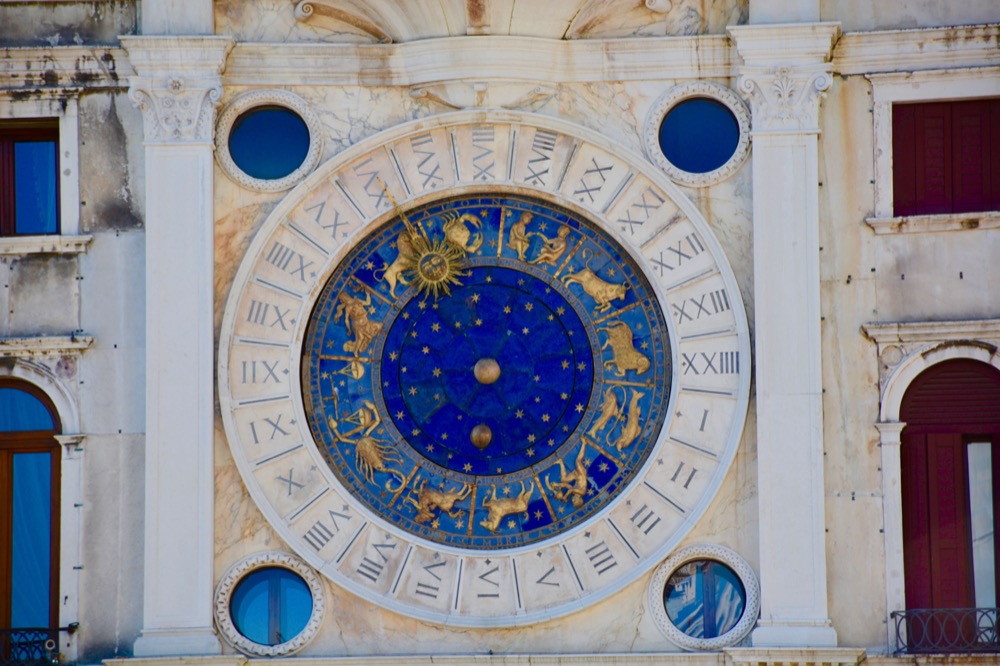
The recent political episode involving Tamil Nadu Chief Minister C. Joseph Vijay and the appointment of an astrologer to an official advisory role have once again reignited debate on the role of astrology in governance and public life.
On May 12, the newly formed Tamilaga Vettri Kazhagam (TVK) government issued an official order appointing prominent astrologer Rickey Radhan Pandit Vettrivel — popularly known as Radhan Pandit — as an Officer on Special Duty (Political) to the Chief Minister.
The appointment immediately triggered controversy. Opposition parties, rationalist movements, and even some ruling coalition allies reportedly questioned the appropriateness of placing a “cosmic advisor” on the state payroll.
Critics argued that such a move compromised constitutional values, encouraged unscientific thinking, and blurred the line between governance and personal belief systems. Within less than 24 hours, amid mounting criticism and public pressure, the appointment was revoked.
Yet despite the swift reversal, the incident revealed something deeper and more enduring: astrology continues to hold influence within the corridors of power.
Malaysian Astrological Society President Kavin Thayalan said that although the appointment was brief, it nevertheless highlighted the growing recognition of astrology as an important tool in decision-making. “The very fact that such an appointment was considered reflects the continuing belief among many political leaders and influential personalities that cosmic timing, planetary influences, and spiritual guidance may play a role in shaping human affairs,” he said.
Publicly or privately, astrology still occupies a curious place in modern society, criticised by some, quietly respected by others, yet never entirely dismissed.
Interestingly, Radhan Pandit was not merely an astrologer operating in the background. He had reportedly maintained a close relationship with Vijay and actively participated in the party’s political journey. Long before the elections, he had publicly predicted that TVK would create a “political tsunami” in Tamil Nadu and sweep into power, a prediction that reportedly strengthened trust within Vijay’s inner circle.
Beyond astrological guidance, he also served as a media spokesperson and campaign aide during the election period.
Political observers noted that the short-lived appointment appeared to reflect not only personal trust but also gratitude for loyalty and campaign support.
Reports also indicate that Radhan Pandit had previously been associated with former Tamil Nadu Chief Minister J. Jayalalithaa, illustrating how astrology has historically remained intertwined with political culture in parts of India.
For centuries, kings, emperors, and ruling dynasties across civilisations relied heavily on astrologers before making important decisions. Royal courts in India, Nepal, China, Persia, Egypt, and parts of Europe often maintained official astrologers who advised rulers on coronations, wars, treaties, travel, and succession planning.
In India, especially, astrology was never viewed merely as superstition.
It formed part of a larger spiritual and cosmic science that sought to understand the relationship between human life and celestial rhythms.
Auspicious timings were carefully selected for battles, marriages, state ceremonies, and the laying of foundation stones for cities and palaces.
Even today, many political rallies, oath-taking ceremonies, election campaigns, and party launches are quietly aligned with timings believed to be favourable.
While modern governance outwardly emphasises rationalism and administrative systems, the human tendency to seek reassurance beyond logic remains deeply embedded within cultural consciousness.
The Tamil Nadu episode also highlights the continuing tension between tradition and modernity. Critics argue that governance should be rooted entirely in science, policy, competence, and accountability.
They believe official reliance on astrology risks undermining rational thought and public confidence in institutions.
Supporters, however, counter that seeking spiritual or astrological guidance is a personal matter and part of longstanding cultural traditions.
To them, consulting an astrologer is no different from seeking advice from religious leaders or spiritual teachers during uncertain times.
Interestingly, many who publicly dismiss astrology often privately consult astrologers during difficult periods in life.
Business tycoons seek favourable dates for investments. Film stars consult astrologers before launching movies. Politicians look for auspicious moments during campaigns.
Chennai-based seventh-generation astrologer Master Yuvaraj Sowma said that whether one believes in astrology or not, its psychological influence cannot be denied.
“At its highest level, astrology was traditionally intended not to create fear or dependency, but to encourage preparedness, discipline, self-awareness, and spiritual reflection.
“A genuine astrologer does not control destiny, but attempts to interpret tendencies, cycles, and possibilities that may unfold during certain planetary periods,” he said.Yuvaraj said astrology was traditionally viewed as a mirror rather than a prison. Like a weather forecast, he said it was meant to help individuals prepare for changing conditions rather than surrender control over their lives.
However, astrology becomes problematic when it is commercialised, politicised, or misused to manipulate vulnerable individuals. Blind dependence on predictions without wisdom, ethics, practical effort, or common sense can become dangerous.
No astrologer can replace sound governance, integrity, competence, accountability, or hard work.
The challenge, therefore, lies not in whether astrology exists but in how it is approached. Ancient traditions themselves repeatedly emphasised that karma, character, discipline, and right action remain more important than planetary positions alone. Still, the recent controversy serves as a reminder that despite rapid technological advancement and modern education, humanity continues to search for meaning beyond logic alone.
Science may explain the mechanics of life, but many people continue to seek spiritual frameworks to understand uncertainty, suffering, timing, and destiny.
The stars may not govern every event, but belief in cosmic influence remains deeply woven into the spiritual and cultural consciousness of millions around the world.
From ancient palaces to modern political offices, astrology continues to occupy a fascinating and controversial space, questioned by rationalists, embraced by believers, yet never entirely ignored.
Award-winning writer Dr. T. Selva is the author of the bestsellers Vasthu Sastra Guide and Secrets of Happy Living. To get a copy, WhatsApp 019-2728464. He can be reached at drtselvas@gmail.com. Website: www.vasthuguide.com

