
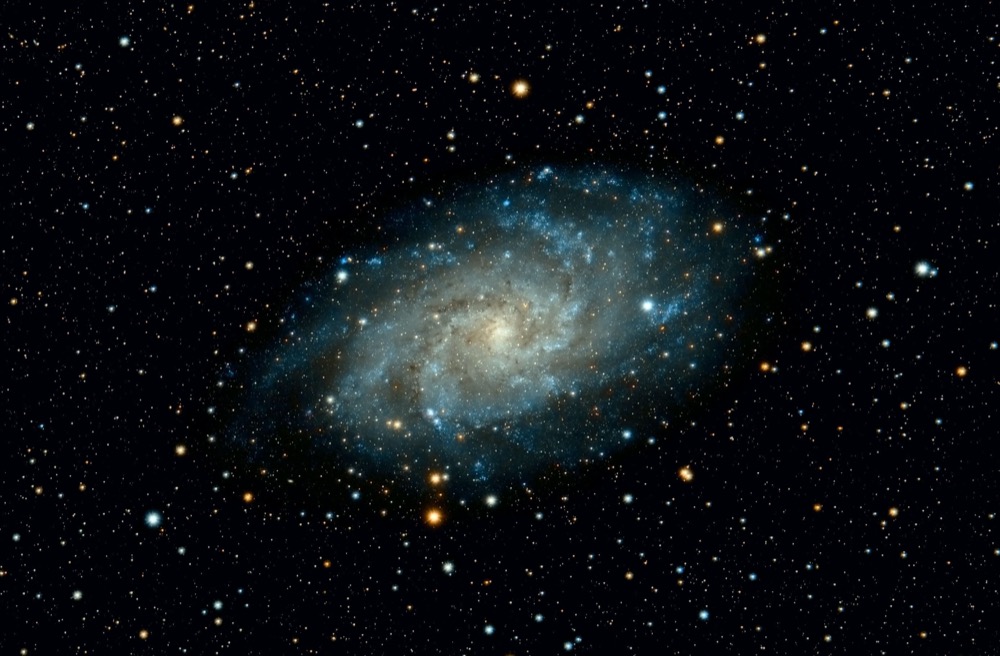
Astronomers have made an unprecedented discovery about the winds blasting from the star-forming galaxy M82, revealing speeds that shatter previous expectations. This new data, gathered by NASA’s XRISM spacecraft, has confirmed wind velocities topping an astonishing 2 million miles per hour, far faster than previously predicted.
Published in Nature, this groundbreaking study not only pushes the boundaries of space exploration but also challenges long-standing models of how galaxies evolve, shedding light on the complex forces at work in galaxies like M82.
The Shocking Winds of M82
The galaxy M82, also known as the Cigar Galaxy, has long been a subject of fascination for astronomers due to its intense star formation activity. But recent observations by NASA’s XRISM spacecraft have brought M82 back into the spotlight, this time for an even more extraordinary reason: its powerful winds. These winds, composed of gas and dust, stretch an astounding 40,000 light-years away from the galaxy’s core, and they travel at a mind-boggling speed of 2 million miles per hour.
Before the XRISM mission, astronomers relied on theoretical models to understand these galactic outflows. The classic model of starburst galaxies, like M82, suggests that shock waves from intense star formation and nearby supernovae heat gas, initiating powerful winds. But until now, scientists lacked the precise tools to test the velocities of these winds.
“Prior to XRISM, we didn’t have the ability to measure the velocities needed to test that hypothesis,” says Erin Boettcher, a member of the research team from the University of Maryland and NASA’s Goddard Space Flight Center. “Now we see the gas moving even faster than some models predict, more than enough to drive the wind all the way to the edge of the galaxy.”
This discovery is far more than just an astronomical curiosity. The outflow from M82 provides crucial insights into the fundamental processes that govern galaxy formation and evolution, pushing us closer to understanding the forces that shape the universe.
The Source of the Winds: Stellar Activity at M82’s Core
At the heart of M82 lies an extraordinary concentration of stellar activity. The galaxy’s center is a cauldron of star formation, supernovae, and cosmic rays, all contributing to the powerful winds that are now the focus of intense study. The XRISM spacecraft has revealed not just the speed of these winds, but also the temperature at the galaxy’s core, an astonishing 45 million degrees Fahrenheit (25 million degrees Celsius). The intense heat generates significant pressure, which drives the winds outward in a manner akin to atmospheric winds on Earth.
The winds of M82 are more than just fast; they are also highly energetic.
“If the wind blows steadily at the speed we’ve measured, then we think it can power the larger, cooler wind by driving out four solar masses of gas a year,” explains Edmund Hodges-Kluck, a member of the XRISM team in a statement. “But XRISM tells us much more gas is moving outward. Where do the three extra solar masses go? Do they escape out of the galaxy as hot gas some other way? We don’t know.”
This puzzle underscores the complexity of M82’s wind system, prompting further investigation into how material is expelled from the galaxy and whether it escapes in forms not yet observed.
New Discoveries, New Questions
The data gathered by XRISM has not only provided answers but has also raised new questions about galactic behavior. The discovery of faster-than-expected wind speeds and the extra mass being expelled challenges our current models of starburst galaxies. “Some of our early models of starburst galaxies were developed in the 1980s, and we’re finally able to test them in ways that weren’t possible before XRISM,” says Skylar Grayson of Arizona State University, another member of the research team. “It provides opportunities to figure out why the model might not be capturing everything that’s going on in the real universe.”
As the XRISM mission continues to observe M82, scientists hope to refine existing models and perhaps discover even more unexpected features in the galaxy’s behavior. This ongoing investigation could not only enhance our understanding of M82 but also provide insights into the larger processes that govern galaxies across the universe.
Enjoyed this article? Subscribe to our free newsletter for engaging stories, exclusive content, and the latest news.