
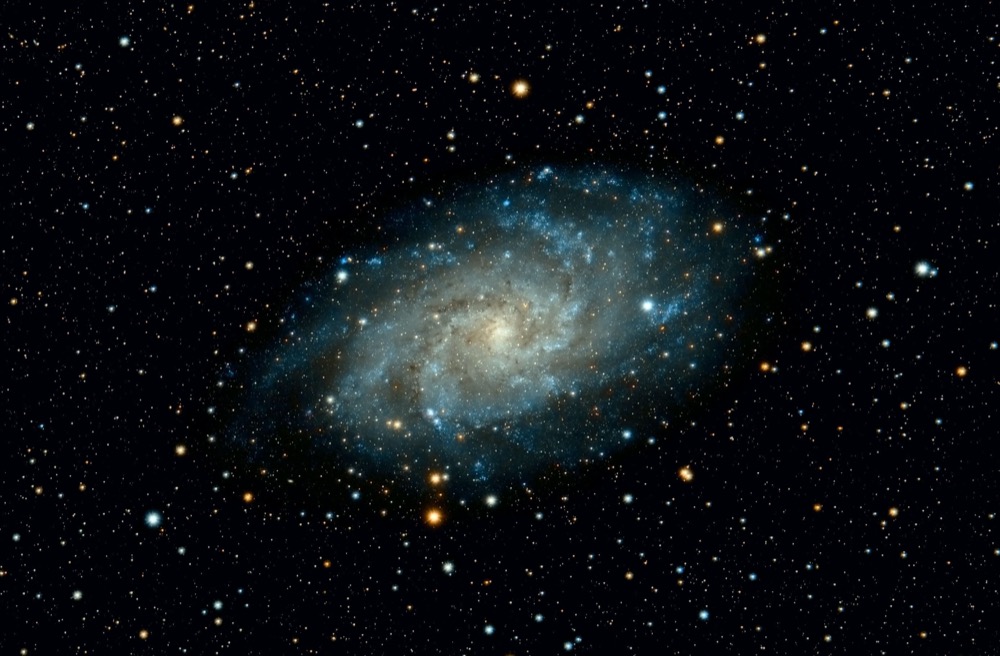
Astronomers have observed one of the most extreme ultra-fast outflows ever detected from a supermassive black hole, revealing a dual-layered wind racing through the cosmos at a significant fraction of the speed of light. The discovery comes from detailed X-ray observations of a hyper-luminous quasar at cosmic noon and was recently submitted to the arXiv preprint server. These outflows provide an unprecedented glimpse into how black holes regulate their host galaxies during their peak growth periods.
Ultra-Fast Outflows And Their Cosmic Role
Black holes that consume large amounts of matter do not simply swallow their surroundings; they actively shape them. The so-called ultra-fast outflows (UFOs) are streams of gas launched at velocities exceeding 10% of the speed of light. These winds deposit enormous energy into their surroundings, heating interstellar gas, suppressing star formation, and even halting galaxy growth entirely. Cosmic noon, a period roughly 1.6 to 3.5 billion years after the Big Bang, is when both galaxies and black holes were growing at their fastest, making it the prime epoch for studying these phenomena.
UFOs reveal themselves in X-ray spectra through absorption features caused by highly ionized iron absorbing X-rays. Because these winds are moving outward so rapidly, the absorption lines are blueshifted to higher energies. Until now, many high-redshift UFOs were observed primarily in gravitationally lensed quasars, where foreground galaxies magnify the quasar light. While useful, lensing introduces uncertainties that make measuring the true nature of these outflows more challenging.
The Discovery Of A Dual-Component Wind
The WISSHFUL observing program, led by Giorgio Lanzuisi of INAF Bologna, targeted 15 hyper-luminous quasars to detect UFOs in non-lensed systems. Its first target, WISSH13, a quasar at redshift 3.294, hosts a black hole weighing approximately 2 billion solar masses and shining three times brighter than expected for its mass. By combining XMM-Newton and NuSTAR observations from October 2024 with archival 2017 data, the team created a high-quality X-ray spectrum revealing two distinct absorption features.
Modeling indicated these features represent two separate components of the same UFO, moving at roughly 10% and 30% of the speed of light.
“The detection of two distinct velocity components (∼0.1c and ∼0.3c) with different variability patterns suggests a complex, stratified outflow,” the team writes.
This layered structure, with a faster “spine” from the innermost accretion disk surrounded by a slower “sheath” from farther out, aligns closely with theoretical predictions. Together, these winds eject 21 and 24 solar masses per year, ranking them among the most powerful and massive UFOs ever observed.
Implications For Galaxy Evolution
The immense energy carried by these winds is not just a spectacle; it plays a critical role in galactic evolution. By injecting energy into the surrounding gas, the outflows can regulate both the growth of the central black hole and the star formation in the host galaxy. Interestingly, despite the extreme redshift of WISSH13, the winds follow the same scaling relations observed in lower-redshift active galaxies, consistent with results reported in the arXivstudy. This continuity suggests that similar physical mechanisms have operated across cosmic history, providing a valuable window into the life cycle of galaxies.