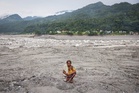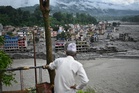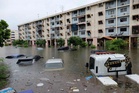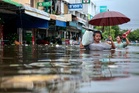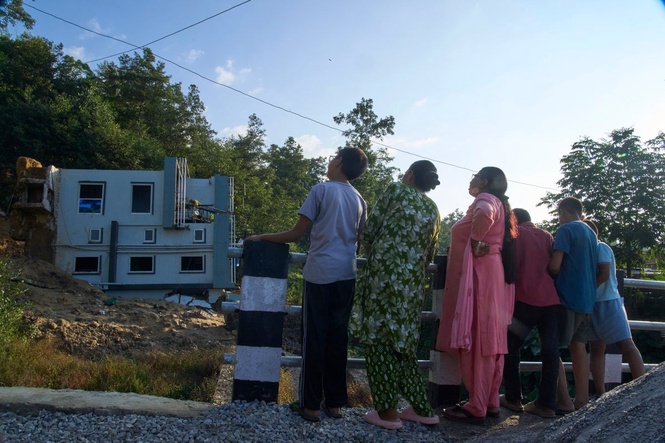
At least 30 people have been killed in a fresh wave of heavy rain and landslides in Nepal over the past week, the national disaster management authority said.
The Himalayan nation is still reeling from deadly flash floods that killed over 1,400 people in August, left nearly 6,000 missing, and wiped out entire settlements.
The latest landslides reportedly damaged roads, bridges, and homes, leaving communities cut off and forcing people into emergency shelters.
The weather conditions are also having a major impact on the Annapurna Circuit, one of Nepal’s key trekking routes. Hundreds of trekkers have had to abandon their journeys, with many airlifted by helicopter from Manang and Mustang after roads and bridges were damaged, according to media reports.

Trekkers who attempted to leave overland described having to cross multiple landslide sites, damaged trails and flooded areas. Some took three-four days to reach safety, while others spent nights stranded in forests.
“Even thunder would make us run and come out to see if anything was coming our way,” Nepali guide Tse Ring Doma told the BBC.
A landslide hit an area above Samagaun village in Manaslu region at around 3am local time on Sunday, following several days of heavy rain. The noise startled hundreds of trekkers, climbers and expedition workers staying in the village.
“We simply rushed out of our rooms, looking for a safe place. We did not know where to go,” Abiral Rai, an accredited mountain guide stranded in Samagaun with his client, told The Everest Chronicle.
“There was a huge sound that woke us all from our beds. We could not understand what had happened. It seemed the landslides had come from several places. The sound was alarming and scared us all.”
It was one of several landslides to strike Nepal as heavy rain and snowfall swept across the country.
In the higher mountains, climbers reportedly moved to lower ground as avalanches and snow made conditions increasingly dangerous.

Maya Lamdan, 27, and Nadav Lamdan, 21, were among the travellers airlifted from Samagaun, a remote Himalayan village where landslides had blocked roads and disrupted power supplies.
“Already after a few days of being stuck in the village, we saw that a rain system was approaching, and we stayed there so that we would be somewhere safe rather than continuing the trek. But the last 24 hours were far beyond what we expected,” Maya Lamdan told Israeli news site Walla.
She said the group was asleep at about 3am when someone knocked on their door and warned them to get onto the roof because floodwaters were approaching.
The next morning, they learned that two landslides had hit the area nearby.
“All the locals started running from the village toward the hills with headlamps. There was real panic.”
Jake Stacy, a trekker from Suffolk, was stranded with his guide in Yak Kharka, in upper Manang, after heavy snowfall last week.
He decided not to continue towards Thorang La pass, the highest point on the circuit. “We made our own paths on mountain slopes,” he told the BBC after returning to base camp.
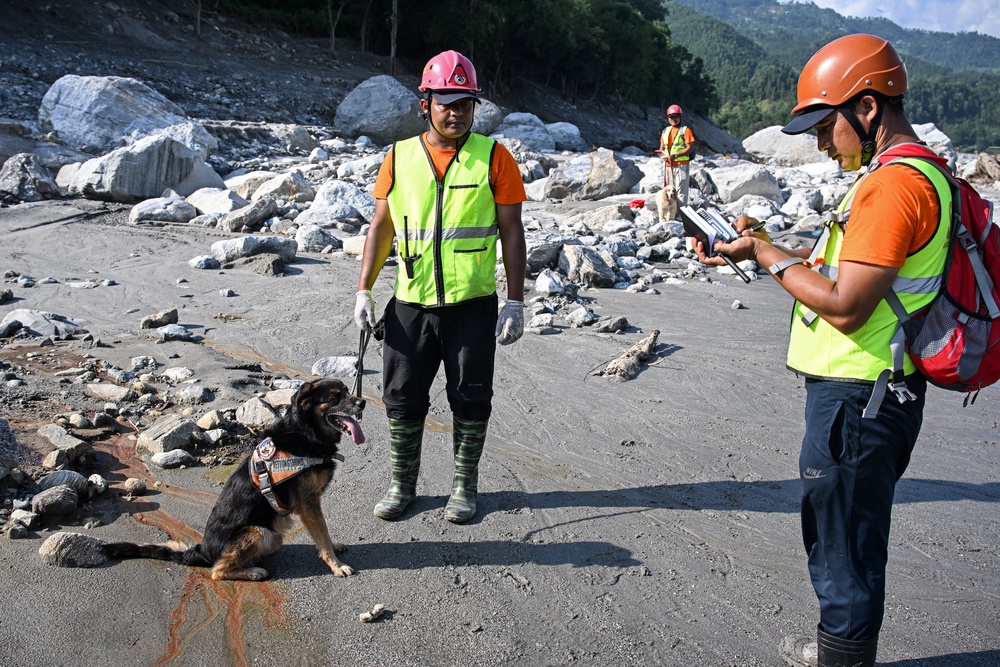
Last week, local authorities had warned of possible flash floods in 49 of Nepal’s 77 districts, with more than half of the country facing a high risk of flooding.
Earlier, it was reported that power had been disrupted in Manang, Mustang, Myagdi and Baglung. The rising Rahuganga river had damaged infrastructure and transmission towers linked to a 40MW hydropower project, according to water resources and energy minister Biraj Bhakta Shrestha.
Shanti Mahat, a spokesperson for the National Disaster Risk Reduction and Management Authority, said that Rasuwa and Nuwakot, which were badly affected by floods in August, should remain “alert”, although they were not currently classified as high-risk areas.
A landslide near Chame partially blocked a river, creating a temporary lake that flooded homes and a bridge. Authorities were trying to drain the accumulated water.
Nepal🇳🇵 is facing heavy and continuous rainfall, causing floods, landslides and avalanches, associated with a low-pressure system over the Bay of Bengal. Nepal's Meteorological Department reminds people to take precaution. Follow the latest forecasts & warnings from @NMD_Weather. pic.twitter.com/M41knHDDgJ
Meanwhile, at least four people died and 12 remained missing after an avalanche near Himlung Peak, close to the Tibet border.
A rescue operation to recover the missing was temporarily suspended due to bad weather conditions.
The avalanche swept away the base camp of the Himlung Himal, a 7,126m peak in the Nar Phu area of Manang, on Sunday.
The latest spate of landslides and flash floods has affected tourism in the country. Nearly 700 trekkers have reportedly been waiting in Pokhara because authorities haven’t reopened the Annapurna Circuit.
Pilgrims travelling to Muktinath, a major Hindu pilgrimage site, have been advised to fly from Jomsom to Pokhara because roads are cut off.
A series of deadly events have made the past three months particularly dangerous for the climbing community.
“Mountaineering is inherently high risk at every step. The most important thing climbers can do is to hire experienced, qualified manpower, even if it costs more,” Tul Singh Gurung, chief of the National Mountain Guides Association, told Outside magazine.
“This is very important. The mountains will always be there, but if we make poor decisions, our lives won’t.”
Read MoreBad weather forces Nepal to suspend search for missing climbers after avalanche
Avalanche in Himalayas kills four and leaves at least 10 people missing
More than 60 people dead as heavy rain triggers flooding in northern India
Nepal’s flooding disaster set to pile billions onto its national debt
Warning over Bangladesh’s dengue outbreak after deadliest month
Children among nine killed in Pakistani airstrikes in Afghanistan, Taliban say