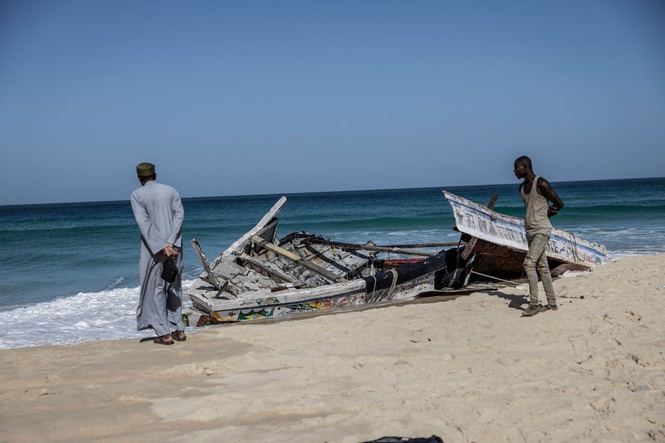
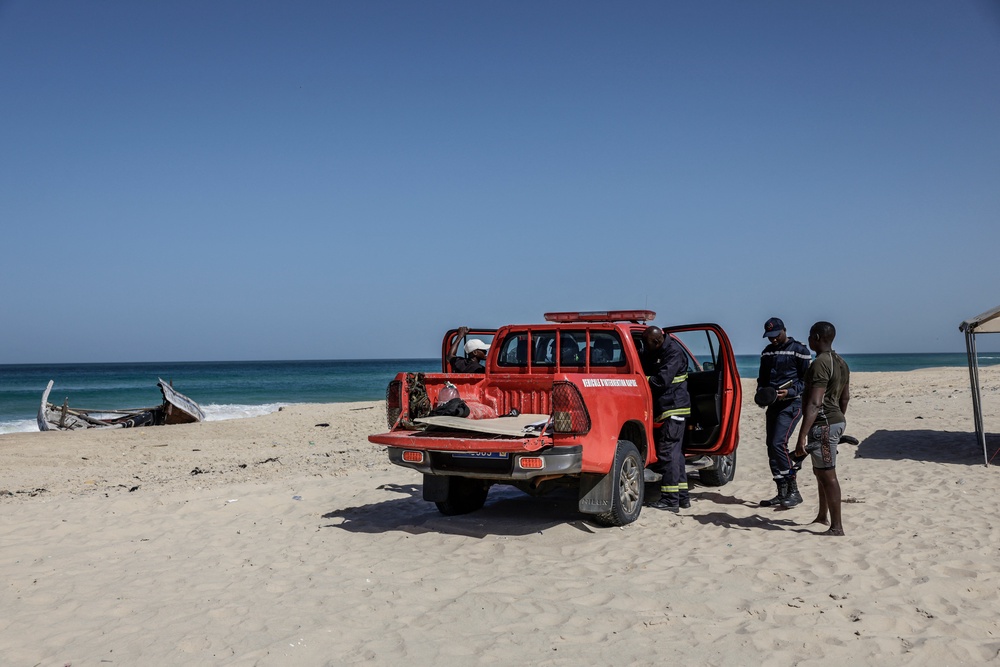
The boat, which left the city of Saint-Louis, located in the northwest of Senegal, was heading towards the Spanish coast when it overturned on Sunday.
According to the Ministry of Interior, only one passenger was rescued alive near the town of Kébémer, north of the capital Dakar.
Early reports said the death toll was 21, but more bodies were discovered on Monday – bringing the total number of fatalities to 39. It has not been confirmed how many people were on the boat.
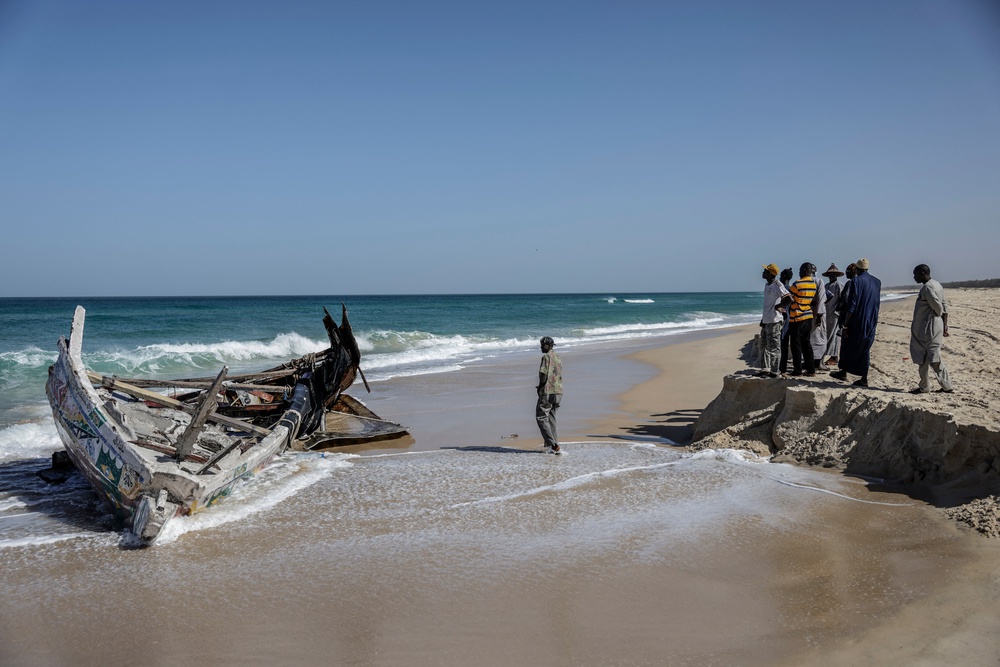
The vessel was following a well-travelled migration route for thousands of young Senegalese seeking better economic conditions. They risk perilous conditions to travel on uncovered wooden canoes for around 800 miles on the Atlantic Ocean to reach Europe.
Young people from the country in particular face high unemployment and poverty as Senegal struggles with an economic crisis.
Senegal’s president Bassirou Diomaye Faye offered condolences and vowed to clamp down on networks behind the dangerous crossings.
Thousands of people have died in recent years attempting to reach Spain’s Canary Islands from West Africa, including 635 in the first five months of this year, according to migrant rights group Walking Borders.
Action for Human Rights and Friendship, a local non-governmental organisation, on Monday said it was calling on the National Assembly to investigate Senegal’s “migration governance” – adding: “It is no longer enough to deplore shipwrecks, announce control measures and count interceptions”.
On Monday, Greek authorities also recovered 13 bodies from a boat found sailing near the island of Crete.
According to the coast guard, a passing Moroccan-flagged cargo ship rescued 18 people from the same vessel, which was carrying migrants. One more person was confirmed dead at a health centre in Crete after the people on board were taken ashore – bringing the total death toll to 14.
Another two boats, one carrying about 47 people and another with about 40 people on board, were also found sailing south of the tourist island.
Greece is one of the main entry points into the European Union for people fleeing conflict and poverty in the Middle East, Africa and Asia. In recent months, thousands have been making the dangerous sea crossing from north Africa, usually from Libya to Crete.
Others have made the far shorter but often equally life-threatening crossing from the Turkish coast to nearby Greek islands in the Aegean Sea, often in unseaworthy inflatable dinghies or other small boats.
In October, 12 people, including an infant, died when the two boats they were travelling in from Turkey to the islands of Lesbos and Samos capsized.