
Public varsities told to halt penalties tied to freedom of speech, peaceful assembly
PETALING JAYA: The government will phase out the 1971 Universities and University Colleges Act (Auku), with a new higher education framework to replace and to grant students more freedom, standardise campus rules and prepare graduates for an AI-driven workforce
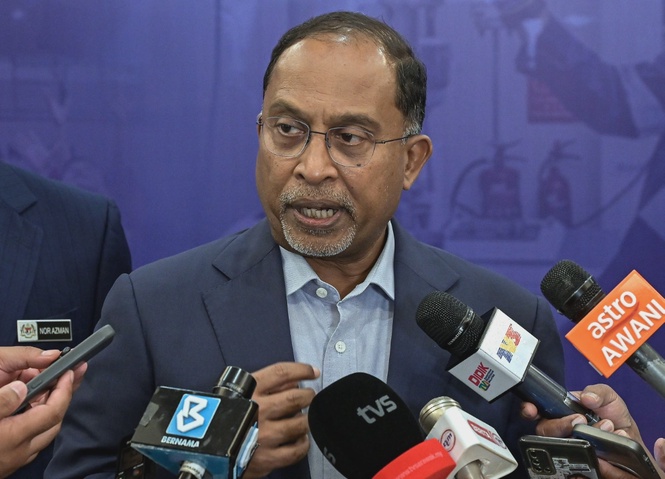
Higher Education Minister Datuk Seri Dr Zambry Abd Kadir said the repeal would be carried out in a planned and phased manner to avoid a legal vacuum that could disrupt the governance and operations of public universities.
He added that the government was developing a new and more comprehensive legal framework, including a proposed “One Higher Education Act” (Ohea), to replace Auku and cover the wider higher education ecosystem.
He also said Prime Minister Datuk Seri Anwar Ibrahim announced the government’s intention to repeal Auku on Aug 15, while the Cabinet subsequently decided that the process must be implemented in an orderly, comprehensive and careful manner.
However, Zambry said immediate measures had already been taken to expand student freedoms without waiting for the new law to be completed.
The Higher Education Ministry has directed public universities to stop disciplinary proceedings involving freedom of speech, expression of views, public criticism and peaceful assembly. He added that serious offences remain subject to national laws.
He also said the ministry is reviewing Sections 15 and 16 of Auku and student disciplinary rules covering freedom of expression, association, peaceful assembly and student activities.
Zambry said at the same time, the ministry would harmonise disciplinary regulations across public universities to prevent students from being treated differently depending on their institution.
He added that some universities currently allowed certain activities or forms of expression while others prohibited them.
The proposed Ohea would also take into account the broader higher education ecosystem, including polytechnics and pre-university education, with the aim of creating a framework that could remain relevant for the future.
He also said alongside the legal reforms, the ministry is accelerating efforts to prepare graduates for technological changes.
Zambry said 455 academic programmes, from diploma to doctoral level, have undergone curriculum reviews as of Sept 30 to ensure they remain aligned with technological developments, industry needs and workforce requirements.
He added that the ministry is targeting 30,000 graduates with specialised AI skills by 2030 through 30 AI-related programmes offered by 11 public universities.
He said it also plans to integrate AI elements into 80% of bachelor’s degree programmes at public universities.
However, Zambry said AI education must be balanced with critical thinking, adding that excessive reliance on AI tools could undermine students’ ability to think and solve problems independently.
He said the reforms were aimed at ensuring the higher education system could produce graduates who were not only technologically equipped but also capable of critical and independent thinking.