by Dr Victor SL Tan
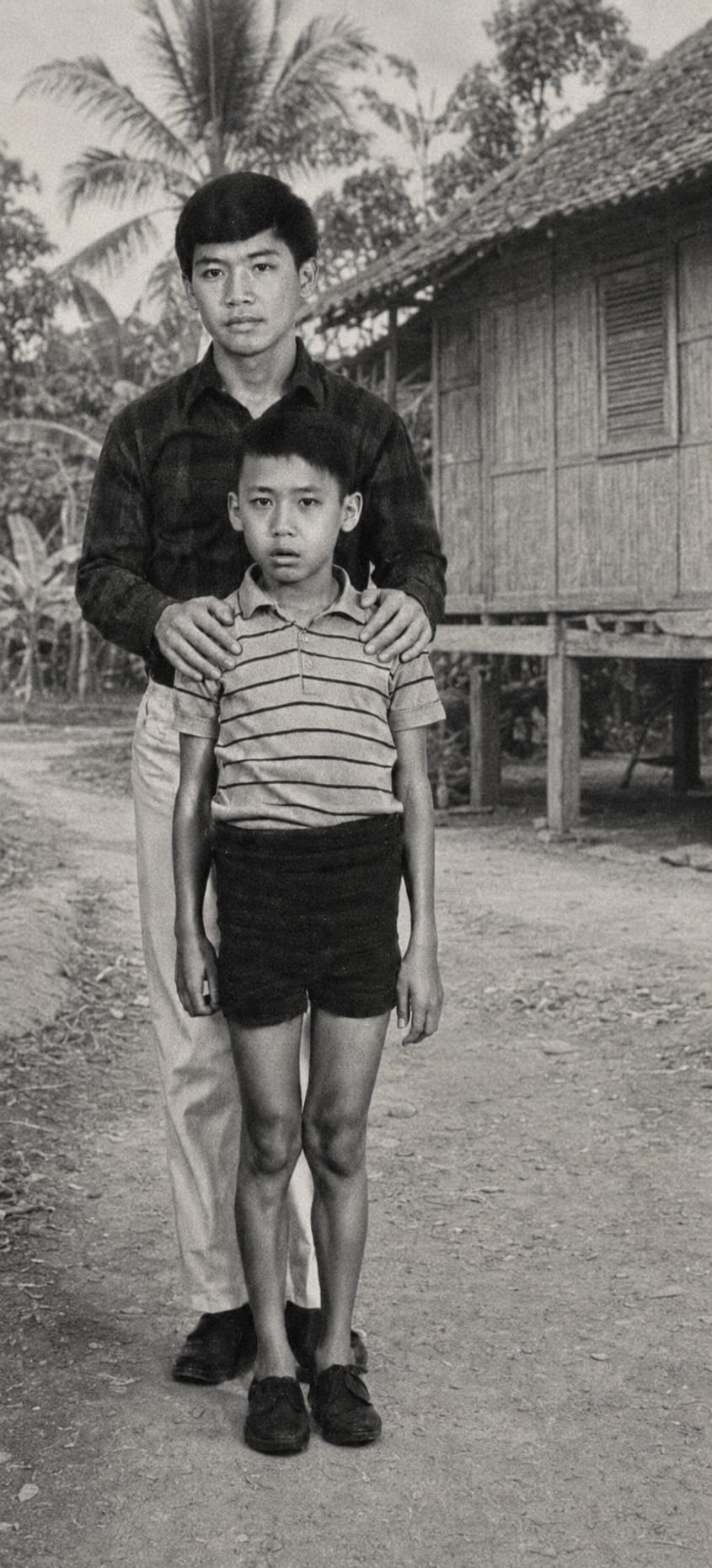
Autism is not a subject I have studied from a distance. It has shaped my life as a brother and a care giver. I lost my mother when I was only sixteen. My younger brother, Soo Hock, was just eleven. He was autistic and, throughout his childhood, was often unwell. Fearing for his life, my parents believed that unseen forces might be trying to take him away from us. In keeping with an old traditional belief, they asked our Malay neighbour to accept him as a godson and gave him a new name—Ahmad. They hoped the change of identity would confuse the evil spirits: Soo Hock, the child they had been pursuing, no longer existed. In his place was Ahmad, a “different” boy whom they would no longer recognise. To others, it may have seemed like superstition. To my parents, however, it was an act of love—the desperate hope of a mother and father who would do anything to protect their vulnerable child.
Before my mum passed away, she had made me promise to care of my brother for the rest of my life should anything happen to her. At an age when I was still trying to find my own direction, part of his future suddenly became my responsibility. That promise taught me an early and enduring lesson: every person experiences the world differently, and love begins when we try to understand that world rather than judge it.
My brother may have faced intellectual challenges, but he possessed gifts that no classroom could have taught. I introduced him to music when he was young, and it soon awakened something remarkable within him. He learned to play the drums, loved to sing and filled our home with rhythm and joy. He could even play mahjong—and, to everyone’s surprise, won on many occasions!
Soo Hock never had the opportunity to attend school. My mother feared that other children might bully or mistreat him. In those days, there were few, if any, special schools equipped to nurture children like him. As a result, he never learned to read or write. Yet what he lacked in formal education, he more than made up for with an extraordinary memory. He could remember the telephone numbers of almost everyone he knew, as well as the registration numbers of countless cars. He reminded me that intelligence cannot be measured by academic qualifications alone. He had his own special abilities, his own quiet brilliance and his own way of enriching our lives.
More than that, my brother became one of my greatest inspirations. His presence gave me a deeper reason to work hard and excel in everything I undertook. I was striving not only to build a better life for myself and my family, but also to ensure that Soo Hock would always be loved, protected and provided for. In many ways, his vulnerability became my strength—and his life gave greater purpose to mine.
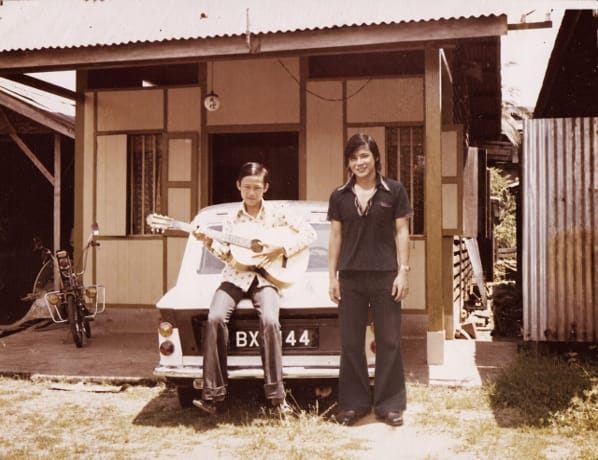
Today, I see that lesson unfolding again through one of my grandsons, who is autistic. Watching my daughter and son-in-law raise him has been most inspiring as their love and care shines through so brightly that brighten our hope for our special grandson. Progress may arrive in ways others overlook—a new word, a smile, a calmer response or a task completed independently. Each step is meaningful. Growth should be measured not only against other children, but also against the child’s own journey.
A Spectrum, Not a Single Story
Autism is a diverse group of conditions related to brain development, affecting communication, social interaction, behaviour and sensory experience in different ways. In its updated September 2025 fact sheet, the World Health Organization reported that nearly 62 million people worldwide—approximately one in 127—were autistic. Although this remains the latest authoritative global estimate, it is based on 2021 data because international statistics take time to collect and analyse.
Closer to home, research published in 2025 estimated that East Asia had approximately 9.47 million autistic people and Southeast Asia another 4.78 million—a combined 14.25 million. (Source: Global Burden of Disease Study 2021. BMC Public Health, 25, 2810.
In Malaysia, the latest nationwide education-based study found that identified autism among school-aged children rose from 6.34 per 1,000 in 2018 to 9.29 per 1,000 in 2022—about one in 108 students. ( Source: Analysis by age and states. Malaysian Journal of Public Health Medicine, 24(3), 71–80 https://doi.org/10.37268/mjphm/vol.24/no.3/art.2645).
These figures are not directly comparable: the Asian estimates cover whole populations, while the Malaysian study records children identified within the school system. Nevertheless, they show that autism touches millions of families across our region and that better screening, understanding and support remain essential.
Statistics tell us how many people may be affected; they do not tell us who one person is. Autistic people have very different abilities and support needs. Some live independently; others require substantial lifelong care. Every person with autism is unique, with different strengths, struggles and ways of experiencing the world. A diagnosis may help us understand the condition, but it can never define the whole person.
From Making People Fit to Helping Them Flourish
For years, I assumed the main task was to help autistic children adapt to our world. That remains important: communication skills, supportive education and practical assistance can open doors. Yet I have gradually discovered a better starting question. Instead of asking only, “How do we make this child fit?”, we should also ask, “What strengths, interests and perspectives already exist within this child?”
This shift does not deny disability or minimise the strain families can face. It balances support for genuine challenges with respect for dignity. Professor Simon Baron-Cohen of the University of Cambridge writes that autism may be associated with “excellent attention to detail, excellent memory for detail and a strong drive to detect patterns.” These qualities are not universal, but they illustrate why we should look beyond limitations. Autistic scientist and advocate Dr Temple Grandin similarly reminds us that there is “no black and white dividing line” between autism and so-called normality.
This makes me think of entrepreneurs. Most people learn established rules; entrepreneurs often progress by questioning them and imagining what does not yet exist. I am not suggesting that every autistic child will become an entrepreneur or that autism automatically produces exceptional talent. My point is simpler: society advances because different minds notice different possibilities. A difference that creates difficulty in one environment may become valuable in another with the right support and opportunity.
My Own Experience of Being Different
That principle carries a personal echo for me. As a boy, I had a severe stutter. Speaking frightened me, and I often felt different from other children. If someone had told me then that I would one day become a professional speaker, addressing audiences around the world, I would probably have laughed in disbelief.
Through years of practice, determination and confidence-building, that is where life led me. I do not compare stuttering with autism; they are different experiences. I share this to underline a truth: being different does not mean having less potential. Sometimes potential is hidden beneath difficulty, waiting for patience, encouragement and the right environment.
We Must Become Discoverers
Parents, teachers and grandparents must therefore become discoverers. We need to notice the details a child notices, the subject that holds attention, the communication method that works and the setting in which confidence grows. Then we can nurture those interests and connect them with education, relationships, daily living and meaningful opportunities.
Education at its best is not about making everyone the same. It is about helping each person become the fullest version of who they are. The goal is neither to leave autistic children isolated in their own worlds nor to force them to hide who they are. It is to build bridges—between their way of experiencing life and the wider community.
When we build those bridges, something remarkable happens. Children gain confidence. Families find hope and practical support. Schools become more humane. Employers discover abilities they might otherwise have missed. Society gains talent, honesty, focus, creativity and perspectives it did not know it needed.
After caring for my autistic brother, learning from my grandson and reflecting on my own journey through difference, I return to one conviction: every child has potential, although that potential will not look the same in every child. Some need someone who can see beyond immediate challenges, believe patiently and provide sustained support.
Perhaps this is our highest calling—not to make every child fit one narrow definition of normal, but to create a world in which each person is respected, supported and able to contribute. Autism invites us to replace judgement with curiosity, comparison with understanding, and awareness with action. Then we do more than help autistic people enter our world. We enlarge our world by learning to enter theirs.
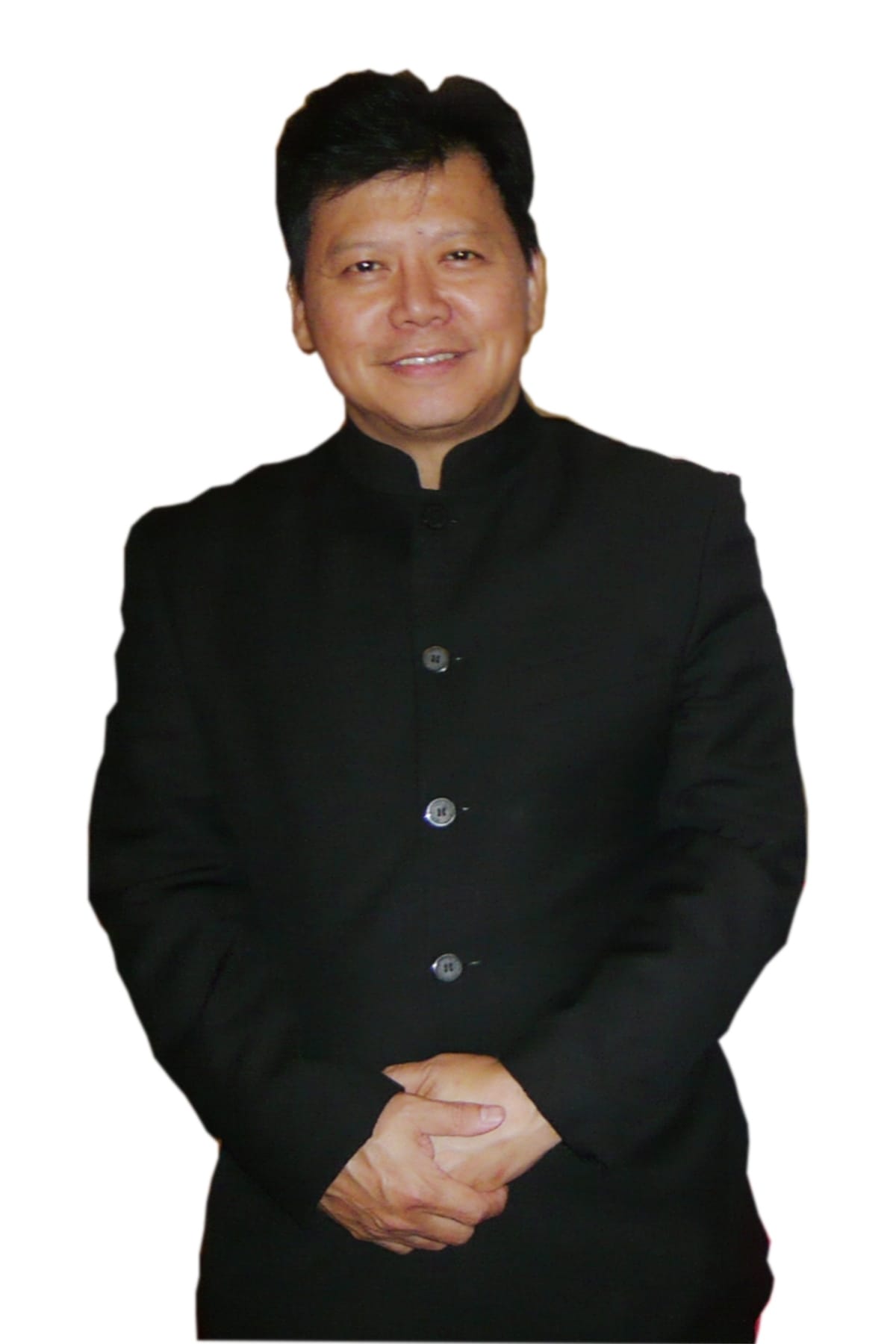
Dr Victor SL Tan is the Chief Executive Officer of KL Strategic Change Consulting Group. He is an author 21 books including Changing Mindsets, Releasing Trapped Minds and The Secret of Change. KL Strategic Change Consulting Group is the winner of The Brandlaureate Award for the company that makes the most positive and profitable impact on organisations through corporate training. For further information he can be contacted at victorsltan@klsc.com or 0123903168
Dr Victor SL Tan (victorsltan@klscc.com) is a content creator under the Newswav Creator programme, where you get to express yourself, be a citizen journalist, and at the same time monetize your content & reach millions of users on Newswav. Log in to creator.newswav.com and become a Newswav Creator now!
The User Content (as defined on Newswav Terms of Use) above including the views expressed and media (pictures, videos, citations etc) were submitted & posted by the author. Newswav is solely an aggregation platform that hosts the User Content. If you have any questions about the content, copyright or other issues of the work, please contact creator@newswav.com.