
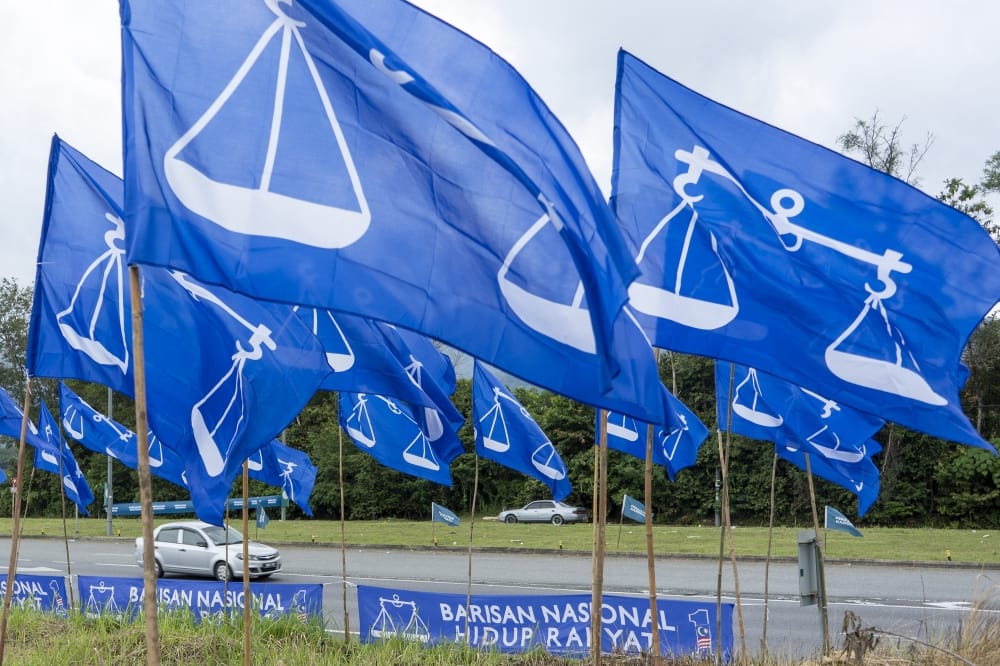
Human relationships are inherently messy, but political marriages of convenience are downright precarious. Across the globe, from the highly fractured multi-party coalitions of contemporary Europe to the deeply polarized legislative chambers of Washington, modern governance has increasingly forced bitter, historic rivals into awkward and uncomfortable beds. In Malaysia, citizens spent years yearning for the elusive promise of political stability following the chaotic musical chairs that saw three different Prime Ministers take office in under five years. When the federal Unity Government was stitched together in late 2022, many breathed a tentative sigh of relief, hoping that the constant, looming threat of administrative collapse had finally subsided into the history books. Yet, as any experienced marriage counselor will tell you, a truce enforced strictly at the top rarely heals the simmering, deep-seated resentments that linger on the ground. That fragile illusion of peace came crashing down in spectacular fashion in mid-May 2026, when a political earthquake radiated from the southern state of Johor, shaking the very foundations of Putrajaya and threatening to plunge the entire nation right back into full-scale electoral warfare.
The Southern Spark That Ignited a National Firestorm
On May 16, 2026, Johor Menteri Besar Datuk Onn Hafiz Ghazi stood before the digital court of public opinion and threw down a gauntlet that took the country by storm. In a bold Facebook post that quickly went viral across news feeds, Onn Hafiz announced that Barisan Nasional (BN) would chart its own destiny, resolving to contest all 56 state seats solo in the upcoming state polls. The declaration, which was formally detailed by Bernama as a move backed by extensive state consultations, shook the political status quo to its very core. To a casual or international observer, this may have seemed like a routine piece of localized electoral posturing. But in the high-stakes, hyper-sensitive arena of Malaysian politics, it was nothing short of a declaration of war against Pakatan Harapan (PH), BN's nominal partner in the federal government.
Onn Hafiz, acting in his capacity as the state BN chairman, explained that this definitive move was a direct response to the profound yearnings of the grassroots who wanted a strong, self-reliant leadership. The announcement was instantly validated by veteran figures like Datuk Seri Ahmad Maslan, who asserted that the move matched the visceral desires expressed by the party's rank-and-file during months of extensive ground tours. The decision sent shockwaves through the political establishment because Johor occupies a sacred, mythic space in the soul of UMNO the cornerstone of BN. It is the birthplace of the party, a traditional "fixed deposit" of conservative Malay political power, and a state where BN still holds a commanding 40-seat supermajority from its resounding victory in the 2022 state elections. By choosing to bypass any seat-negotiation or electoral pact with PH at the state level, Johor BN was effectively signaling that it did not need federal validation to secure its homeland.
Anwar Ibrahim’s Furious Counter-Offensive: The Ring of Fire
The response from the federal leadership was swift, raw, and uncharacteristically explosive. Just twenty-four hours after Onn Hafiz’s declaration, Prime Minister Datuk Seri Anwar Ibrahim arrived in Johor Bahru for the highly anticipated Johor PH Convention. Standing before thousands of flag-waving, fiery delegates at the Persada International Convention Centre, Anwar delivered a masterclass in political theater, letting his legendary composure slip to reveal real, deep-seated fury. Anwar issued an uncompromising, sharp ultimatum to BN, making it clear that his administration would not be pushed around or blackmailed by internal dissent.
Visibly piqued by the audacity of the youthful, 47-year-old Johor Menteri Besar, Anwar threw a stinging jab that echoed through the halls of power: "We don't take kindly to threats. Beaten? I have been beaten. Jailed? I have done that. Now threatened by a child? Oh! No way!" The Prime Minister didn't stop at mere rhetoric; he raised the stakes to an existential level by warning that if BN insisted on fracturing the relationship in the states, he would not hesitate to pull the plug entirely and return the democratic mandate to the people via a snap nationwide general election.
The atmosphere turned combative as other PH stalwarts jumped into the fray. DAP Secretary-General Anthony Loke declared with gritty finality that PH had officially "entered the ring," while Johor PH Chairman Aminolhuda Hassan mobilized the crowd with an emotional rallying cry, urging delegates to completely "bury" BN for a second time, reminiscent of their historic 2018 upset. This theatrical escalation completely stripped away the polite facade of the Unity Government, revealing a volatile, high-stakes brinkmanship where a localized disagreement could accidentally trigger a total federal collapse.
Deep Institutional Fault Lines: A Marriage of Convenience on the Rocks
To understand why this southern rebellion has erupted with such ferocity, one must analyze the complex institutional anomalies built into Malaysia's post-2022 political framework. The federal government is a product of necessity, an arranged marriage forced by a hung parliament where long-time enemies had to clasp hands to block the rise of Perikatan Nasional (PN). However, while federal leaders share cabinet meetings and joint press conferences in Putrajaya, the reality in Johor is starkly different. As noted in regional political analyses, there has never been a formal, institutionalized blueprint for a Unity Government administration within Johor itself.
The state government is purely a BN creature, born out of their dominant 2022 victory before the federal alliance even existed. This has created a profound psychological and structural disconnect: local BN assemblymen see PH as their historical, bitter rivals whom they soundly defeated on the ground, while federal mandates demand they treat them as indispensable allies. This internal pressure cooker has been further turned up by polarizing firebrands like UMNO Youth Chief Dr. Mohamad Akmal Saleh, who boldly claimed that BN could comfortably retain power in states like Johor and Melaka entirely on its own merits, pointing to their exceptional economic and investment achievements. When Akmal subsequently suggested it might be time for UMNO to exit the unity coalition altogether, it laid bare a deep institutional identity crisis: is UMNO’s long-term survival better served by remaining a junior partner in Anwar’s reformist coalition, or by reclaiming its historical role as an uncompromising, dominant solo force?
The Strategic Gambit vs. The Peril of Overconfidence
Within the corridors of UMNO, this solo move is framed as a calculated, necessary gamble to revive a proud party's flagging brand, but outside observers view it as a terrifying dance with political self-destruction. Proponents of the solo strategy argue that a political party that is too afraid to stand on its own feet eventually loses its purpose and its identity. This sentiment was echoed by Datuk Zahari Sarip, who argued that organizing distinct electoral strategies is a mature democratic right, not an act of betrayal. From this perspective, the state administration under Onn Hafiz has earned the right to go solo through the highly successful implementation of the "Agenda Maju Johor," which transformed the state into a premier economic powerhouse with record-breaking investments.
The Johor BN Youth wings collectively backed this perspective, arguing that it would be incredibly bizarre and self-defeating for an incumbent government with a massive majority to look hesitant or dependent on its rivals to survive. However, this bullish confidence is facing fierce pushback from within UMNO’s own central leadership. In a sobering and brutally candid analysis, UMNO Supreme Council member Lokman Noor Adam warned that going solo is a highly dangerous trap, pointing out that the party is suffering from deep delusions of grandeur. Lokman rightly pointed out that Malay voter support for UMNO remains deeply fractured and volatile, and that mistaking Johor’s unique local dynamics for a nationwide resurgence could result in an unmitigated disaster where an arrogant party alienates moderate voters and gets completely crushed.
The Malaysian Voter’s Dilemma: Stability or Exhaustion?
Amidst the deafening clash of political titans, the actual human beings who populate the towns of Muar, Batu Pahat, and Johor Bahru are left feeling a deep sense of psychological and physical exhaustion. The everyday Malaysian citizen is tired of being treated as a mere data point or a pawn in an endless, cyclical game of political chess. There is a palpable cultural anxiety regarding the very real threat of election fatigue. For instance, the prospect of decoupling the state and federal elections has sparked intense worry among community leaders. Thousands of Johor residents cross the Causeway daily to work grueling hours in Singapore; forcing them to endure the logistical nightmare and financial burden of traveling back home to vote twice in separate elections is seen by many as deeply unfair and out of touch with working-class realities.
Culturally, the unique identity of "Bangsa Johor" has always prided itself on moderation, rapid economic advancement, and a distinct lack of the toxic, racially charged political polarization that often characterizes the northern states. Voters are looking closely at the massive Bantuan Kasih Johor initiatives launched by the state government, weighing the tangible benefits of a localized, high-performing BN administration against the broader, macro-economic stability offered by Anwar's federal MADANI government. The fear among ordinary citizens is that this current political chest-thumping will ruin the monumental economic progress being made, including the highly anticipated Johor-Singapore Special Economic Zone (JS-SEZ), turning a thriving economic miracle into a messy, bitter political battleground.
What do you think? I’d love to hear your opinion in the comments section.
At its core, the dramatic showdown over Johor’s political future is about something much deeper than seat allocations or electoral logos; it is a profound reflection of Malaysia’s ongoing battle to discover its true democratic identity in a post-dominant era. We are watching a fascinating, agonizing transition where the old guard longs for the comfortable, unilateral monopolies of the past, while the current reality demands a messy, compromise-driven culture of coalition-building. The raw emotions displayed on both sides from the fierce, protective pride of Johor’s young leadership to the fiery, defiant ultimatum of a veteran Prime Minister show that the soul of the nation is very much up for grabs.
As ordinary citizens, we are left to wonder whether our leaders can truly put their institutional egos aside to prioritize the long-term economic peace of the rakyat, or if we are doomed to remain perpetual spectators in an unending, exhausting theater of political survival. The choices made in Johor over the coming months will inevitably rewrite the rules of engagement for the entire country, proving that the road to Putrajaya will always run directly through the heart of the south.
AM World (tameer.work88@gmail.com) is a content creator under the Newswav Creator programme, where you get to express yourself, be a citizen journalist, and at the same time monetize your content & reach millions of users on Newswav. Log in to creator.newswav.com and become a Newswav Creator now!
The User Content (as defined on Newswav Terms of Use) above including the views expressed and media (pictures, videos, citations etc) were submitted & posted by the author. Newswav is solely an aggregation platform that hosts the User Content. If you have any questions about the content, copyright or other issues of the work, please contact creator@newswav.com.