
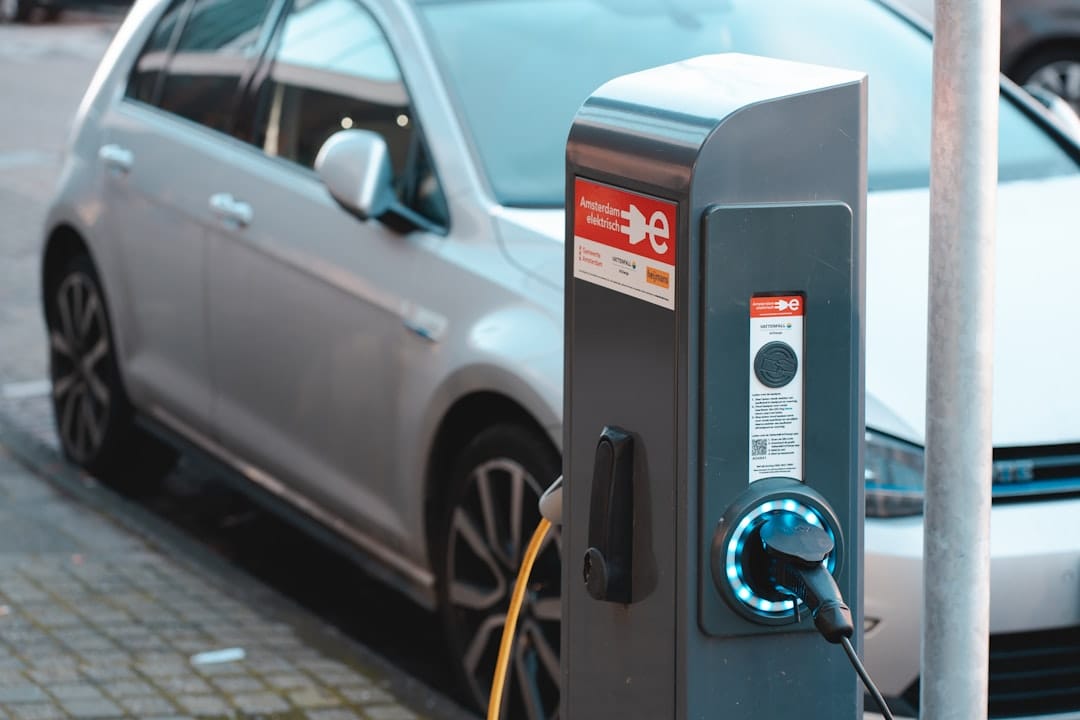
On a humid evening along the North–South Expressway, a sleek new EV glides past, almost silent, its driver barely conscious of the shift away from petrol’s roar. Yet behind that serene moment lies a far more complex story: one of ambition, infrastructure gaps, cultural shifts and the question how effective are EVs in Malaysia really?
As the nation charts a course toward cleaner transport, the promise of electric vehicles shines bright. But the journey is uneven. For every electric car on the road, there remain questions: Can Malaysians afford them? Are charging stations widespread enough? Do the incentives deliver real value? And ultimately, is the shift improving mobility, environment, and equity or simply creating a new divide? This article explores the current effectiveness of EVs in Malaysia, the gains, the constraints, and what it all means for the future of transport in this nation.
Malaysia’s government has laid out a clear vision. Under the Low Carbon Mobility Blueprint (LCMB) 2021‑2030 and the National Energy Transition Roadmap (NETR), EVs are slated to represent 15 per cent of total industry volume (TIV) by 2030, and ultimately 80 per cent by 2050. (mgtc.gov.my)
As of early 2024, EV registrations stood at about 2.28 per cent of vehicle registrations, marking clear progress though still far from the target. (Malay Mail)
In terms of numbers, EV registrations between January and June 2024 grew by 141.8 per cent year-on-year, reaching 10,663 units. (Malay Mail) The Malaysian Automotive Association (MAA) reported that EV sales (battery-electric vehicles) in H1 2025 reached 12,733 units up 91.4 per cent from a year earlier. (Paul Tan's Automotive News)
Meanwhile, infrastructure is expanding as of October 2024 there were 3,354 EV charging stations in Malaysia, with the goal of reaching 10,000 by 2025. (mpc.gov.my). Together, these signals suggest the EV value proposition is building government incentives, increasing choice of models, growing consumer interest. The effectiveness of EV adoption in Malaysia appears to be rising.
To ask whether EVs are effective in Malaysia is to ask multiple sub-questions:
- Do they help reduce emissions and dependence on fossil fuel?
- Do they provide cost savings and practical mobility for users?
- Are they equitable accessible to many, not just the affluent?
- Do they integrate smoothly into existing infrastructure and culture?
Effectiveness, then, is not just “more EVs sold” but “EVs performing well locally, enabling green mobility for a broad segment, and not leaving many behind.”
- Rapid growth and model variety
The sales numbers show clear momentum. For example: in 2024 a total of 28,048 EVs were registered representing a 79 per cent year-on-year rise and about 3.3 per cent market penetration. (MIDA) Popular models include the Chinese-brand BYD, which in H1 2024 alone registered 4,368 units; American brand Tesla followed with 3,079 units. (Malay Mail)
- Government incentives working
Tax breaks, import duty/ excise duty exemptions, road tax waivers, and local assembly incentives have helped to lower cost barriers. For example, fully imported (CBU) EVs enjoy duty exemptions until December 2025; locally assembled (CKD) units enjoy further until December 2027. (Paul Tan's Automotive News)
- Infrastructure development
The ramp-up of charging stations is notable: over 3,000 as of late 2024. More rapid chargers are being installed along highways, shopping malls, and urban hubs. The energy ministry, local utilities and auto industry are collaborating to build the ecosystem. (mpc.gov.my)
- Environmental & strategic gains
A shift to EVs aligns Malaysia with global decarbonisation trends, reduces exposure to volatile oil prices, and helps position the country as part of the regional EV supply-chain ecosystem. The Malaysian Investment Development Authority (MIDA) has described Malaysia as “on track for EV revolution.” (MIDA)
In short: the foundation is becoming more robust, and the early returns are promising. EVs are arguably effective in Malaysia in growth, policy alignment, and environmental strategic positioning.
Despite these gains, several key limitations prevent full effectiveness of EVs in Malaysia and highlight how much work remains.
a) Market share remains low: Even with rapid growth, EVs are still a small part of the vehicle fleet. For instance, in 2023 only about 1.60 per cent of new vehicle registrations were EVs. (Malay Mail) While growth rates are impressive, the base remains small; to reach 15 per cent of TIV by 2030 will require a major acceleration.
b) Charging infrastructure still uneven: While the number of chargers is increasing, many Malaysians still face practical barriers. Reports and anecdotal evidence note that apartments, older condos and rural areas lack convenient chargers. One Reddit user summarized:
“No EV chargers in a flat parking… until the technology advances that I can charge up in 5 minutes … we will not see nationwide adoption of EV in the coming 5-10 years.” (Reddit)
This shows that practical infrastructure still lags, which affects user confidence and day-to-day convenience.
c) Affordability and equity issues: Many EVs currently start at a premium compared to equivalent petrol cars. While incentives help, the effective cost of ownership for many Malaysians remains high. The shift risk being more accessible to higher-income urban buyers first raising questions of equity.
d) Range, charging speed, and user habits: Malaysian driving patterns e.g., long journeys for “balik kampung”, high ambient heat, and older housing without dedicated electric car chargers pose challenges. Rapid chargers are fewer and may have long queues. Until charging experiences approach the convenience of refuelling petrol cars, some will hesitate.
e) Resale value, maintenance, and consumer psychology: Some buyers worry about battery degradation, resale value, support and service networks especially as many EV brands are new in Malaysia. The perception of risk can slow uptake.
f) Dependence on incentives and policy stability: The effectiveness of EVs is tied closely to incentives and policy frameworks. If incentives expire or are scaled back, growth may stall. Indeed, one analysis flagged that without subsidies the industry might see a last-minute spike in purchases followed by slowdown. (en.daibieunhandan.vn)
Effectiveness can also be seen in how drivers experience EVs in Malaysia. Some key observations:
- Owners often report lower running costs: electricity can cost less than petrol per km, fewer moving parts reduce some maintenance.
- Real‐world ranges are sufficient for many urban and suburban users, especially where daily travel is moderate.
- However, for long-distance travel, especially to rural or interstate locations, planning is still required: locating chargers, factoring in charging time, managing comfort in hotter conditions.
- Consumer trust is building as more brands deliver products with established regional support, reliability concerns are gradually easing.
Thus, for certain use-cases (urban commuting, early adopters with stable homes and charging access) EVs are effective and deliver advantages. But for broader mass market use, effectiveness is still partial constrained by infrastructure, cost and behavioural habit.
If Malaysia is to make EVs fully effective across the board by 2030 (the 15 per cent TIV target), then the following will need to align:
- Charging network ubiquity: Many more chargers (both AC and DC fast), widely distributed in cities, suburbs, rural areas and along highways, with overnight and at-home solutions for apartment dwellers.
- Affordable EV models: A range of EVs priced sufficiently low to appeal to middle-income households, not just premium segments. Local assembly/manufacture could help bring costs down.
- Strong ecosystem & service support: Repair, battery replacement, resale markets, second-life battery usage, and consumer confidence built.
- Behavioural shift & awareness: Consumers need to perceive EVs as viable, convenient, cost-effective alternatives to petrol/diesel cars. That includes addressing myths and fears.
- Grid readiness & energy mix: As the number of EVs rises, electricity grid, generation mix and peak-load capabilities must support charging without undermining sustainability (e.g., if electricity is still generated from high-carbon sources).
- Policy consistency & incentive clarity: Incentives must remain clear, stable and long-term so that consumers feel secure investing in EVs.
- Equity and access: Ensure rural areas, lower-income households and less-urban communities are not left behind; otherwise, EV adoption will deepen inequalities.
If these align, the effectiveness of EVs could move from impressive niche growth into mainstream mobility transformation.
What do you think? I’d love to hear your opinion in the comments section.
The electric car is gliding into Malaysia’s roads, quieter and cleaner than its fossil-fuel forebears. For the early adopters, the silent hum is a sign of progress lower emissions, novelty, and a sense of being part of a global shift. Yet for the many Malaysians who shop for practical mobility, budget constraints, charging access, and reliability still matter more than ideology.
The effectiveness of EVs in Malaysia today is really measurable in sales uptick, policy frameworks and infrastructure build-out. But it is also incomplete. The promise is there; the foundation is laid. What remains is the expansion of that promise from luxury or niche to everyday, from urban to rural, from early adopter to mass market.
When a driver in Johor, Kota Kinabalu, Ipoh or even a suburban flat in Selangor can buy an EV that costs no more than a petrol-car, plug in at home overnight, drive interstate without range anxiety, pay a fraction of running costs, and resell confidently that will mark true effectiveness.
Until then, Malaysia’s EV story is one of potential fulfilled in part, constraints acknowledged and next steps still to come. And in that journey lies the hope of a mobility transformation as important for the nation’s climate, economy and fairness as for the silent wheels on the expressway.
AM World (tameer.work88@gmail.com) is a content creator under the Newswav Creator programme, where you get to express yourself, be a citizen journalist, and at the same time monetize your content & reach millions of users on Newswav. Log in to creator.newswav.com and become a Newswav Creator now!
The User Content (as defined on Newswav Terms of Use) above including the views expressed and media (pictures, videos, citations etc) were submitted & posted by the author. Newswav is solely an aggregation platform that hosts the User Content. If you have any questions about the content, copyright or other issues of the work, please contact creator@newswav.com.