
At a cramped construction site quarters on the outskirts of Cyberjaya, a single mattress sits rolled up against a peeling concrete wall. It belonged to Russell, a 26-year-old who arrived from Dhaka with dreams of securing his family’s future, only to find himself caught in a web of bureaucratic freezes, cancelled quotas, and phantom employers. Millions of miles away, his mother continues to face calls from village moneylenders who financed a crushing RM20,000 recruitment fee a sum that purchased not prosperity, but destitution. Russell’s sudden deportation under Malaysia's stringent immigration crackdowns represents more than an individual tragedy; it highlights a systemic fracturing between two nations tied by economic co-dependency.
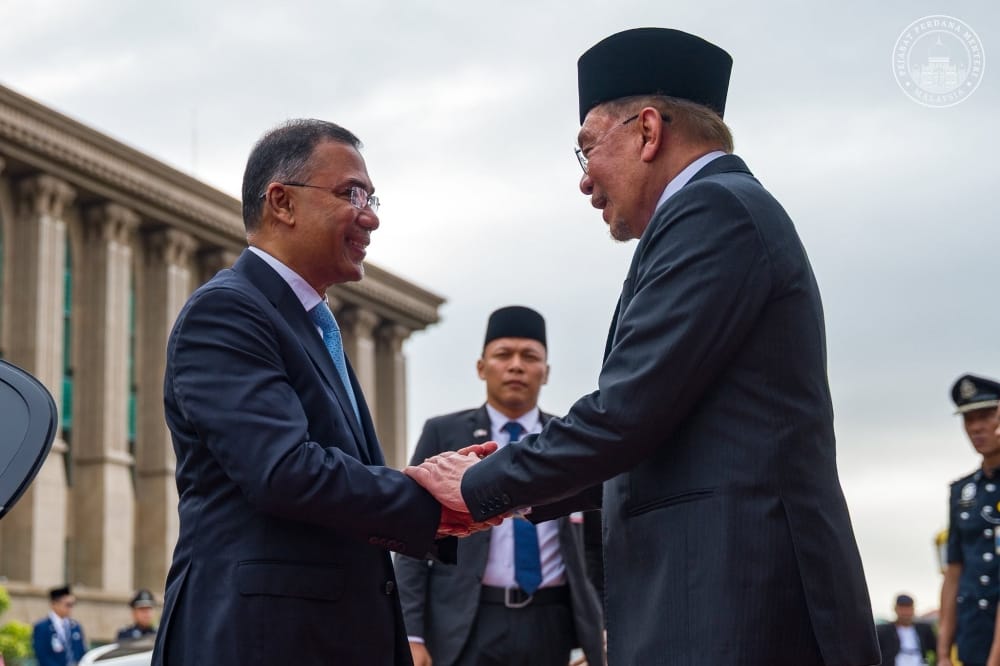
This human friction took center stage at the Prime Minister’s Office in Putrajaya on June 22, 2026. During a high-stakes bilateral summit, newly elected Bangladeshi Prime Minister Tarique Rahman made an urgent, impassioned plea to Malaysian Prime Minister Datuk Seri Anwar Ibrahim to completely reopen the labor market and expedite the recruitment of Bangladeshi workers. For Malaysia, a country balancing native workforce anxieties against severe labor shortages in export-reliant sectors, the request reopens a profound national debate. It forces us to ask tough questions about institutional corruption, economic survival, and the ethical price Malaysia is willing to pay for cheap labor.
The Putrajaya Protocol: Diplomatic Posturing or Genuine Reform?
The meeting in Putrajaya was characterized by an undeniable sense of urgency. Prime Minister Tarique Rahman, fresh from a definitive democratic mandate in Bangladesh’s February 2026 elections, positioned the labor issue as the absolute cornerstone of future bilateral relations. Standing alongside Anwar, Rahman emphasized that the future of labor migration can no longer tolerate the predatory middlemen who have long skimmed billions from vulnerable citizens. Both leaders publicly agreed that future recruitment must be transparent, fair, and affordable, aiming to cut out the highly entrenched networks of third-party agencies that inflate migration costs.
While the rhetoric from the joint press conference sounded highly progressive, analysts view this diplomatic dance with deep skepticism. Over the past decade, bilateral labor agreements between Kuala Lumpur and Dhaka have repeatedly unraveled due to corruption scandals, human trafficking, and severe worker exploitation. Anwar’s administration, while acknowledging that foreign workers remain absolutely critical for Malaysia's economic survival, faces intense domestic pressure. The Malaysian government must balance the structural demands of local businesses against a growing humanitarian crisis that has drawn harsh international scrutiny from global human rights bodies.
The Economic Paradox: Why Malaysia Bleeds Without the Migrant Influx
To understand why Bangladesh is pushing so aggressively, one must look at the structural reality of the Malaysian economy. Malaysia has long operated on an economic model heavily reliant on low-wage, intensive foreign labor to power its plantation, manufacturing, and construction industries. When the Malaysian government implemented a hard stop freeze on all foreign worker entries, industrial federations raised immediate alarms.
The Federation of Malaysian Manufacturers (FMM) has repeatedly argued that sudden and hasty policy shifts severely handicap local production capacities. Without a steady, predictable influx of labor, manufacturers face cancelled job orders and steep financial penalties due to missed delivery schedules. This creates an institutional deadlock:
"The industry finds that policy changes decided hastily without thorough consultation fail to comprehend the operational timelines of global supply chains." Federation of Malaysian Manufacturers (FMM) Statement
This supply-chain vulnerability is particularly problematic as Malaysia aims to aggressively expand its high-tech infrastructure, data centers, and advanced manufacturing capabilities. The country cannot build the future using an unpredictable, disrupted labor pipeline. Yet, continuing the old system means remaining complicit in a framework that treats human beings as disposable commodities.
The Shadow System: Debt Bondage and Institutional Exploitation
The underlying driver of Malaysia’s foreign worker freeze was not an oversupply of labor, but a massive humanitarian crisis. The system has historically allowed bad actors to thrive. Unscrupulous employers routinely bypassed regulations, securing massive worker quotas without having genuine employment opportunities or compliant accommodation ready. This led to thousands of Bangladeshi nationals arriving in Malaysia only to discover that their promised jobs did not exist, leaving them destitute, hidden away in squalid apartments, and vulnerable to arrest.
This dynamic creates a form of modern-day debt bondage. To secure a visa, workers take out astronomical loans in their home villages. When they arrive in Malaysia to find zero income, the financial pressure becomes unmanageable. International labor rights advocates have documented widespread instances of forced labor within lower-tier supply chains, severely damaging Malaysia's reputation as an ethical trading partner. The freeze was a desperate attempt by the Home Ministry and Human Resources Ministry to reset a broken machine. However, as Bangladesh rightfully points out, completely shutting the door merely forces the trade underground, increasing human trafficking risks along the Malacca Strait.
Shifting the Paradigm: From Cheap Labor to Strategic Tech Alliances
What makes the 2026 bilateral negotiations uniquely compelling is that Bangladesh is no longer approaching Malaysia purely as a supplier of muscle. The narrative is shifting toward mutual economic integration. Beyond the immediate labor dispute, both nations have agreed to fast-track negotiations for a comprehensive Free Trade Agreement (FTA) by 2027, aiming to leverage Bangladesh’s position as Malaysia's second-largest trading partner in South Asia.
Furthermore, Dhaka has proposed a forward-thinking bilateral talent cooperation framework. Rather than sending only low-skilled laborers to clear palm oil plantations or mix cement, Bangladesh aims to link its booming information technology and engineering sectors with Malaysia’s world-class semiconductor ecosystem. This strategic pivot could help redefine the socio-cultural perception of the Bangladeshi diaspora in Malaysia. By focusing on mutual recognition of qualifications, joint university degrees, and technical and vocational training (TVET) links, both countries have a unique opportunity to transition their relationship from one of asymmetric exploitation to an equitable, high-value economic alliance.
What do you think? I’d love to hear your opinion in the comments section.
The empty bed in Cyberjaya is not just a regulatory issue; it is a profound reflection of our national character. Every towering skyscraper in Kuala Lumpur, every semiconductor chip exported from Penang, and every plate of food on our tables relies heavily on the back-breaking labor of migrant workers who left everything behind for a chance at a better life. We cannot proudly celebrate our economic growth while turning a blind eye to the systemic exploitation occurring right in our own neighborhoods. Bangladesh’s urgent plea is a direct challenge to Malaysia's conscience, forcing us to decide whether we will continue to profit from a broken, predatory system or take the lead in building a transparent framework that honors human dignity.
Real change requires shifting away from short-term policy fixes and hasty bans. True progress means implementing rigorous institutional accountability, establishing strict, direct government-to-government recruitment pipelines, and heavily punishing the corporate syndicates that view human beings as mere line items. As we navigate our own economic transformation, we must remember that true prosperity can never be built on a foundation of systemic cruelty. We owe it to our international partners, to our economic stability, and to our shared humanity to fix this broken system once and for all.
AM World (tameer.work88@gmail.com) is a content creator under the Newswav Creator programme, where you get to express yourself, be a citizen journalist, and at the same time monetize your content & reach millions of users on Newswav. Log in to creator.newswav.com and become a Newswav Creator now!
The User Content (as defined on Newswav Terms of Use) above including the views expressed and media (pictures, videos, citations etc) were submitted & posted by the author. Newswav is solely an aggregation platform that hosts the User Content. If you have any questions about the content, copyright or other issues of the work, please contact creator@newswav.com.