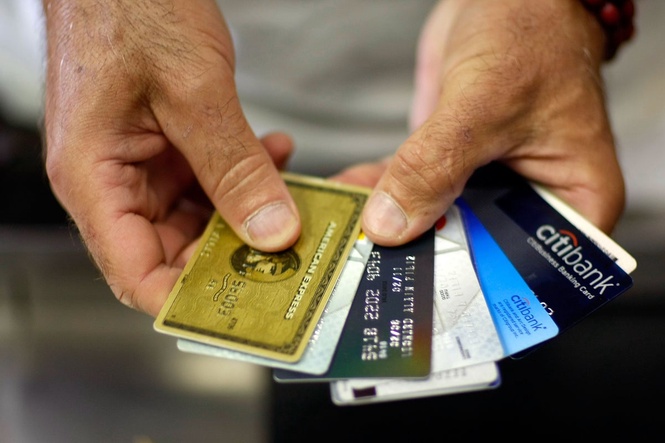
For years, banks encouraged customers to chase sign-up bonuses and travel perks. Now, credit card issuers are closing accounts for some customers and social media creators who push the system too far.
The pushback comes as banks try to curb high rewards costs and stop customers from finding loopholes to accumulate massive point balances without using the cards for normal spending, the Wall Street Journal reports.
The tightening of rules affects everyday enthusiasts, prominent influencers and websites who build online followings by sharing tips. These content creators regularly post videos or run specialized blogs detailing how to maximize benefits.
“The banks have gotten wise to some of our games,” Clint Henderson, managing editor at the rewards-card review platform The Points Guy, told the Journal. Henderson said tactics like purchasing gift cards to maximize points were once encouraged, but issuers now treat the practice as a violation.
Henderson recalled attempting to open a 28th credit card earlier this year — his ninth with Chase — to secure a 200,000-point sign-on bonus worth thousands of dollars. His application was turned down due to insufficient business income.
Though banks have historically welcomed the publicity these advocates generate for premium credit cards — often sponsoring their travel and events — the rising cost of providing rewards has driven a stricter stance.
To stop it, issuers are using artificial intelligence to flag points abuse and manufactured spending, while keeping an eye on sites like Reddit and TikTok where users share tactics.
American Express chief executive Stephen Squeri addressed the trend during an earnings call with analysts, noting that while artificial intelligence may allow people “to game a little more,” the technology will also make it easier to respond. Squeri added that the company can adjust its policies to mitigate misuse, referencing a rule requiring Amex Platinum cardholders to spend $75,000 annually to bring guests into specific lounges for free.
Amex has long used a dedicated rewards integrity team to track abuse, search for losses tied to points leakage and reclaim rewards or close accounts. In a statement, Amex pointed to its “longstanding efforts to protect our programs from misuse and ensure they are used as intended.”
One influencer caught in the enforcement push is Jared Friedman, a 33-year-old New York City resident who posts about travel and rewards to more than 200,000 followers on TikTok and Instagram.
Earlier this year, after a Chase Sapphire website offering early access to World Cup tickets crashed, the bank offered affected cardholders 5,000 courtesy points. Friedman published a video informing his followers that Chase was not verifying whether individuals claiming the points had actually attempted to purchase tickets.
Chase then canceled two of Friedman’s credit cards, citing points abuse. Friedman said he received a letter from Chase claiming his video provided instructions on how to defraud the institution. He was unable to recover his accounts, but he managed to transfer his remaining points elsewhere and later published an apology video.
“I take full responsibility,” Friedman says in the video. “I could have communicated the existence of this opportunity in a way that did not incentivize people to commit fraud or do fraudulent activities or misrepresent anything and for that I sincerely apologize. I did not fully anticipate the unintended consequences of my actions.”

“I was ultimately just trying to help people get some free points just because I know people are struggling and ultimately every little bit counts and this can help people take vacations that they would not be otherwise able to take,” he added.
Other major institutions are introducing similar restrictions. Citi instituted a policy restricting cardholders to one sign-up bonus per lifetime for its Strata cards to prevent users from applying repeatedly for the same perks. Chase maintains a “5/24 rule,” denying new cards to anyone approved for five or more accounts across any issuer within 24 months, as well as limits on its Sapphire card bonuses.
Though credit card agreements give issuers the right to close accounts at any time and seize accumulated rewards, industry experts warn the aggressive enforcement could alienate high-value customers. Several premium cardholders have already canceled their accounts in response to the tightening restrictions, according to the Journal.
The Independent has contacted American Express and Chase for comment.
Read MoreAmex slashes 3,500 jobs and joins cull across finance world
These grocery stores are rolling out a family-sized Thanksgiving meal for under $40