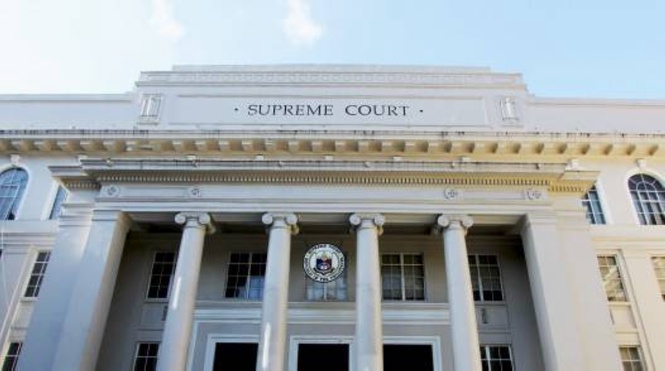
THE Supreme Court has ruled that probate courts can compel banks to explain withdrawals from a deceased person’s accounts.
In a decision penned by Associate Justice Henri Jean Paul Inting, the Court’s Third Division upheld a Regional Trial Court (RTC) order requiring Union Bank of the Philippines (UnionBank) to account for withdrawals from the accounts of the late Ignacio T. Arroyo and submit related email exchanges.
The dispute arose during the settlement of Arroyo’s estate, when administrators Bernardina Arroyo Tantoco and Alicia Rita Arroyo discovered that money had been withdrawn from his UnionBank accounts after his death without the heirs’ knowledge.
The administrators asked the RTC to require the bank to explain the transactions and produce additional records, including email exchanges between bank officers and a certain Atty. Fe.
The RTC granted the request, a ruling subsequently upheld by the Court of Appeals.
UnionBank challenged the orders before the Supreme Court, arguing that the probate court had exceeded its authority.
The bank maintained that the withdrawals were covered by a survivorship agreement and that the funds had been used, among other purposes, to settle Arroyo’s obligations.
It also argued that any attempt to recover the money should be pursued through a separate civil case.
The Supreme Court rejected the bank’s arguments, explaining that although probate courts have limited jurisdiction, they could provisionally determine whether disputed property belongs to a deceased person’s estate.
Under Rule 87 of the Rules of Court, probate courts may also require persons suspected of concealing or taking estate property to answer questions and account for the assets.
In Arroyo’s case, the bank accounts were in his name. The RTC was merely seeking to establish how much money remained in the accounts when he died and whether those funds should be included in the estate.
The Supreme Court also stressed that estate administrators have a duty to identify, account for and protect the deceased’s assets for the benefit of heirs and creditors. Their request for an accounting was therefore part of their responsibility to preserve the estate.
It emphasized that it is the probate court — not the bank — that must determine whether funds covered by a survivorship agreement form part of the deceased’s estate.
It further ruled that UnionBank should not have applied Arroyo’s deposits to his alleged debts on its own, bypassing the estate settlement proceedings.
Creditors must present their claims before the probate court rather than independently taking estate assets to satisfy their obligations.