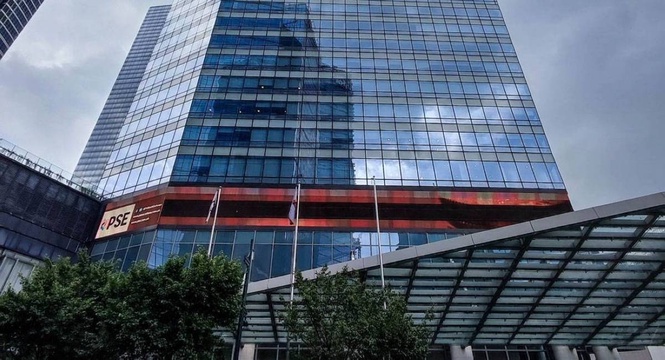
THE stock market could see a rebound when trading resumes on Tuesday as bargain hunters return after the steepest weekly decline so far this year.
The benchmark Philippine Stock Exchange index (PSEi) closed at 5,956.33 last Friday, down 4.52 percent week on week, as investors absorbed the Bangko Sentral ng Pilipinas’ (BSP) latest rate hike and the peso’s fresh record low of P62.265 to the dollar.
Philippine financial markets will be closed today as the country marks National Heroes’ Day.
At Friday’s close, the PSEi was trading at a price-to-earnings ratio of 10.6 times, below its five-year average of 14.4 times and the regional average of 16.2 times, Philstocks Financial Inc. research manager Japhet Tantiangco noted.
“The local market suffered its steepest weekly drop of the year so far last week as confidence towards the Philippine economy weakened further due to growth forecast downgrade by institutions, the BSP’s policy tightening and the further decline of the peso,” he said.
Tantiangco said the market’s relatively low valuation could support bargain hunting in the short term, although the medium-term outlook remained bearish.
The index’s decline came after the BSP raised its key policy rate by another 25 basis points to 5.0 percent on Thursday, its third consecutive hike this year.
The central bank cited persistent inflation risks, including volatile oil prices, the likely impact of a severe El Niño and potential wage adjustments.
That same day, the Asean+3 Macroeconomic Research Office (AMRO) slashed its Philippine economic growth forecasts for 2026 and 2027 to 3.4 percent and 4.8 percent, respectively, from 4.1 percent and 5.5 percent.
The latest revisions fall below the government’s downwardly revised 3.5- to 4.5-percent target for 2026 and the 5.0-6.0 percent for 2027 to 2030.
Investors will also have a key domestic data point to watch on Friday, when the Philippine Statistics Authority releases August inflation figures.
Online brokerage 2TradeAsia.com expects August inflation to potentially exceed 6.0 percent, citing weather-related disruptions and pressures on food and transport.
The BSP has projected August inflation of 5.5-6.5 percent.
2TradeAsia said it expected the central bank to hold off from further interest rate hikes, describing last week’s increase as a preemptive response to potential inflation pressures from El Niño-related food disruptions, volatile oil prices and pending wage increases.
It advised investors to maintain defensive positions while considering selected metals, commodities and speculative stocks, particularly as some shares trade near historic lows.
Tantiangco also said investors should remain cautious even as technical indicators point to the possibility of a short-term rise.
“Overall, the chart is also showing the possibility of a brief rebound before another round of bearish moves,” he said.