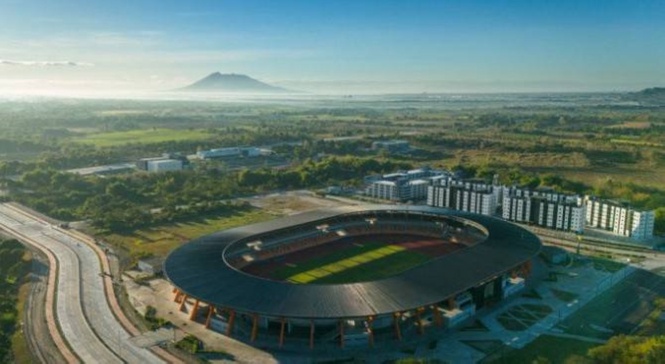
THE Bases Conversion and Development Authority (BCDA) has signed four agreements with Japanese firms to study cooling, transport and slope protection projects at key sites along the Luzon Economic Corridor.
The agreements followed the agency’s Philippine Investment Forum in Osaka and Tokyo, which drew about 200 Japanese business leaders and senior executives.BCDA signed a memorandum of understanding with Daikin for a proposed centralized cooling system in New Clark City. The project would serve multiple buildings as the property expands its industrial, technology, government, sports and urban facilities.The agency also signed a memorandum of cooperation with Zip Infrastructure to develop a framework for a possible joint venture to pilot the Zippar self-driven cable car system in Camp John Hay, Baguio.The plan will cover investment, financing, governance, risk allocation and each party’s responsibilities. Studies began in 2024 and proceeded with feasibility work in 2025 for a possible first-phase pilot line.BCDA subsidiary John Hay Management Corp. signed an agreement with Daisho Co. Ltd. to assess slope stabilization, reinforcement, erosion control and protection measures in parts of Camp John Hay.The study will include site assessments and evaluate Daisho’s Stand Drive and Unit-net technologies, which are designed to reinforce natural slopes while minimizing damage to vegetation.Poro Point Management Corp. signed a separate agreement with Daisho to evaluate slope protection, erosion control and disaster-resilience measures at the Poro Point Freeport Zone in La Union.“This is what we want our investment outreach to lead to — specific conversations around specific projects,” BCDA President and CEO Joshua Bingcang said.He said Japanese technology and expertise could support energy efficiency in New Clark City, resilience in Camp John Hay and Poro Point, and new transport systems.BCDA said the agreements move investment discussions toward technical studies and possible commercial partnerships. The proposed projects support the Luzon Economic Corridor and align with the administration’s Build Better More program and the Philippine Development Plan 2023–2028.All initiatives remain subject to feasibility studies, regulatory approvals and final agreements.