
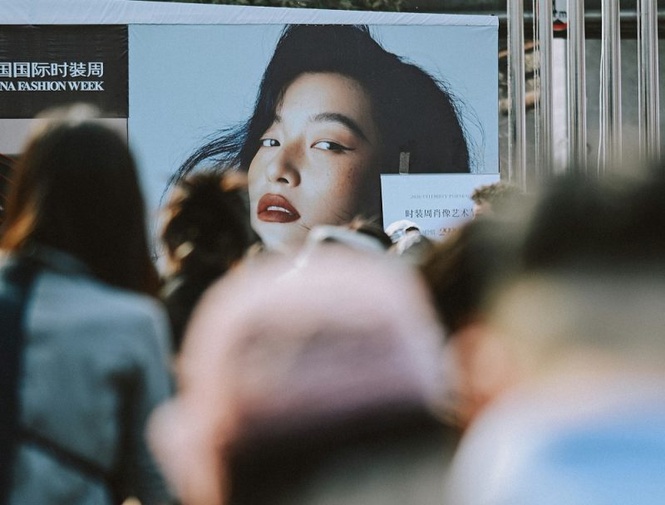
Who are women’s biggest critics if not women themselves?
What would it be like if women were a bit kinder towards each other? Less harsh, more supportive, and more focused on substance above everything else.
Another question that begs to be asked is: Does beauty really lie in the eyes of the beholder? If it does, then why do we allow our beauty standards to be dictated by a market?
A market that can afford influencers. A market large enough to organise year-long campaigns focused on perfect jawlines and wrinkle-free skin. A market that feeds on insecurities and devours the tiniest sliver of confidence a woman has.
So yes, do we truly believe beauty is subjective, or have we become so devoid of personal preference and appreciation that we need paid marketers to tell us what is acceptable and what is not?
Some may argue this is nothing new.
In modern times, beauty standards have long been shaped by industries selling ideas — ideas translated into products, procedures and profits. Taglines pretending to care about women’s happiness and wellbeing while quietly profiting from insecurity and impossible standards.
These standards are sculpted into whatever is most profitable, and women — not all, but many — fall for it every time.
Beauty standards have gone through revolutionary changes, media campaigns and ideological shifts. Yet, after centuries of evolving thought, women are still trapped in systems that judge them by unrealistic ideals.
The pressure to look perfect has become exhausting. One wonders whether women will ever experience the freedom of not having to constantly worry about appearance.
If there is one thing a truly progressive world should promise, it is freedom from constant physical judgement.
The global beauty industry is valued at between US$335 billion and more than US$1 trillion as of 2024 and 2025. The market is growing rapidly at around seven per cent annually, with forecasts expecting core beauty products alone to exceed US$550 billion to US$700 billion by 2030 to 2032.
The industry includes skincare, cosmetics, fragrance and haircare, with skincare accounting for nearly 40 per cent of the market.
Meanwhile, the global cosmetic surgery and procedures market is estimated at roughly US$146 billion in 2024 and projected to exceed US$500 billion by 2034, driven by annual growth of 14.5 per cent.
With nearly 38 million procedures performed annually, the industry is dominated by the United States and Brazil, with eyelid surgery and Botox among the most popular procedures.
Considering the industry’s size, it is unsurprising that places boasting endless beauty shops and procedures involving “stretching, lifting and plumping” have become hugely popular among women.
One such place is South Korea.
On a normal bustling day, walking through the streets of Myeongdong feels like navigating a maze of food stalls, beauty shops and consumer culture — a tourist hotspot in the heart of Seoul.
“Did you go to Myeongdong?” is a common question asked of visitors to Korea, almost like a declaration of loyalty to consumerism and whatever is trending.
Not visiting Myeongdong would almost be considered blasphemous, especially for so-called “beauty enthusiasts” — a term likely unheard of during our mothers’ or grandmothers’ generation.
As mentioned earlier, beauty has always mattered to women, but modern marketing has transformed it into something far more consuming, creating new insecurities and fresh definitions of imperfection for girls as young as 12.
For the uninitiated — or perhaps the fortunate ones protected from the global beauty craze — Myeongdong is filled with products for every imaginable part of the body, from facial creams and lip oils to hair serums and hand treatments.
There seems to be a product for every inch of physical appearance.
Surprisingly, manufacturers have yet to invent a serum for the soul.
Everything revolves around physical attractiveness.
Today, it is not uncommon to walk along Myeongdong and see people with faces wrapped in bandages after cosmetic procedures. Double eyelid surgery, rhinoplasty, facial contouring and breast augmentation have become so normalised that many young women undergo them as early as 18.
Plastic surgery is even given as a birthday or graduation gift.
The normalisation runs so deep that criticising it risks being labelled prudish or old-fashioned.
“What’s wrong with girls wanting to look beautiful?” is often the immediate response, shutting down deeper discussions about why women feel pressured to alter themselves in the first place.
Acceptance becomes normalisation. Normalisation becomes expectation. Expectation fuels consumption.
“The more attractive you are, the more socially acceptable you become.”
Somehow, in a world supposedly championing women’s empowerment, physical enhancement has increasingly been sold as freedom.
Ironically, this mindset feels deeply regressive.
After decades of fighting to move beyond judging women by appearance, society seems to be drifting back towards reducing women to physical attractiveness once again.
Women — long treated as second-class citizens beneath their male counterparts — have long been told that beauty determines success, desirability and worth.
Beauty became associated with princesses, celebrities and luxury. Women who did not fit those ideals were often made to feel lesser.
The double standards surrounding skin colour, body shape and appearance took decades of activism to challenge. Those struggles helped shape modern feminism.
Yet despite all that progress, women are still being subjected to narrow standards of beauty that should have disappeared long ago.
Perhaps changing society’s perception of beauty takes time.
Perhaps true rebellion lies in accepting that there is no singular definition of beauty. That personality matters more than perfection. That a woman’s worth cannot be reduced to flawless skin or symmetrical features.
But hyper-capitalism thrives on insecurity.
The beauty industry grows by commodifying self-doubt. The more inadequate people feel, the more products are sold and the more procedures are performed.
So when is enough truly enough?
Will beauty standards continue shifting endlessly with every new trend, or will people eventually realise that beauty really does lie in the eyes of the beholder?
The views expressed here are the personal opinion of the writer and do not represent that of Twentytwo13.