As national television screens broadcast the seconds of the presentation of the 2026 Budget, in a small coffee shop on the outskirts of Kuala Lumpur, a young mother wiped her chin. His hands trembled not because of the hot coffee, but because of hope and fear mixed in his chest. For him, the figures are not just RM470 billion; It is possible for her child to be able to keep eating, so that school fees do not overturn her small family, so that life is a little more humane.
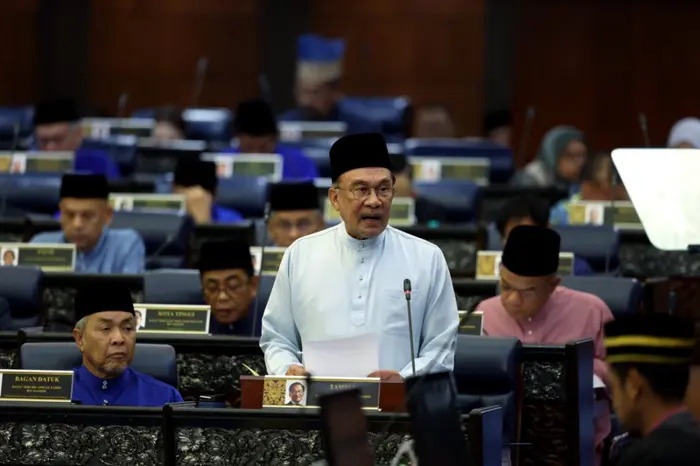
Such is the politics of budget: it is not just a series of numbers, but a narrative of the people's hopes and pressures. In front of Parliament, Prime Minister and Finance Minister Datuk Seri Anwar Ibrahim opened a new chapter on "Fourth MADANI Budget: People's Budget". But to what extent can the promise penetrate the reality of ordinary citizens? This article will explore this in depth, from macro policy angles to grassroots voices, as well as the political risks that come with it.
Anwar said that Budget 2026 is a "moral statement, historical pledge, and agreement between the government and the people." (According to a report by tnsnews) But the real stage is the numbers: a total allocation of RM470 billion, up from RM421 billion the previous year. (The Star) Of that amount, RM338.2 billion is allocated for operating expenses and RM81 billion for public development and investment. (Malay Mail)
A large portion of the operating budget is unavoidable: most of it will be sucked up for civil servants' salaries, compulsory state services, and debt interest payments, all three of which will be a fixed burden that is difficult to touch through progressive policies. Meanwhile, the development budget, which has "slightly increased" +1.8 percent compared to last year, is a critical area: is it enough to revive Malaysia's infrastructure, innovation and transformation going forward? (Malay Mail)
The deficit target is narrowed to 3.4 percent of GDP or the range of 3.4-3.6 percent. (Reuters) The government also expects federal revenue to reach RM343.1 billion, up from RM334.1 billion a year earlier. However, challenges arise from the weakening of Petronas' contribution with dividends expected to fall to between RM20 billion and RM25 billion, compared to RM32 billion previously. (Reuters)
Subsidy reform is a key chapter in Anwar's fiscal strategy. The targeted subsidy scheme that has been implemented for diesel and electricity will be expanded. But the move is not without risks: public backlash against subsidies cuts has forced the government to temper expectations of austerity. Reuters reported that the estimated savings from the fuel reform had been revised to RM2.5 billion to RM4 billion a year after public pressure. (Reuters)
Economists said that Budget 2026 is cautious and disciplined as an effort to maintain a balance between fiscal demands and the demands of the people. An analyst told Free Malaysia Today that the government chose "gradual reform" over a major breakthrough that could spark public outrage. (Free Malaysia Today)
While much of the focus is on the macro aspect, the part that touches the hearts of ordinary people the most is the direct assistance program and welfare policies. The government will expand the Rahmah Cash Contribution (STR) and Rahmah Basic Contribution (SARA) programmes, with a combined allocation of RM15 billion for 9 million recipients. (TNS News) For 22 million people aged 18 and above, RM100 SARA will be given as pre-Ramadan and Chinese New Year assistance. (Malay Mail) The RAHMAH Umbrella Program will also be strengthened with RM1 billion for cheap shopping and access to basic necessities. (TNS News)
More interestingly, the government incentivizes high-achieving university graduates: for those from low- and middle-income families who earn first-class honorary degrees, PTPTN loans will be exempted. In the health sector, the allocation increased to RM46.5 billion (up RM1.2 billion). (Malay Mail)
One of the key highlights in Budget 2026 is that the RM66.2 billion allocation for the Ministry of Education is an increase from the previous RM64.1 billion. (The Star) These upgrades are aimed at the construction of new schools, scholarships, and the strengthening of the technical-vocational system (TVET). (Human Resources Online)
In the campus sector, lecturers who are the founders of spin-offs will have access to research leave or a one-year sabbatical to commercialize research results. (Human Resources Online) The government also intends to facilitate the fixed salary of contract health workers and make their positions permanent. (Human Resources Online)
Anwar paid special attention to the housing sector. A total of RM672 million is allocated for affordable housing, while the stamp duty exemption scheme for first-time homebuyers is extended until 2027. In addition, the government has determined that vehicles with a value above RM300,000 will no longer receive tax-free facilities in the Langkawi and Labuan regions from January 2026. (Malay Mail)
This policy can be seen as a step to maintain fiscal balance while emphasizing that the subsidy and incentive space must be directed to those who really need it.
Urban and rural residents alike feel the pressure of rising prices of basic goods, electricity, and fuel. Previously, #TurunAnwar mass action had shaken the capital in July 2025, when the public showed dissatisfaction with the increase in LPG gas prices, the elimination of subsidies, and the implementation of SST. Criticism of "symmetric populist" type of budgeting is on the rise: can cash aid and incentives withstand a wave of inflationary pressures?
Reform of subsidies, particularly fuel and electricity, faces the risk of public resistance that in some cases has forced revisions to savings targets. As mentioned, the estimated savings from fuel subsidies were revised to RM2.5-4 billion from the initial target of RM8 billion. (Reuters) Anwar once stated that the subsidy ceiling must be improved so that public funds do not go to waste. But the public remembers that the rising cost of living cannot be swept away by rhetoric.
Malaysia cannot escape external storms. The decline in oil prices has a direct impact on Petronas' revenue, so its contribution to the country is weakened. (Reuters) In addition, a 19 percent tariff on U.S. imports on Malaysian exports added to uncertainty in the industrial sector. (Reuters) All of this overshadows Malaysia's projected economic growth of 4-4.5 percent in 2026. (TNS News)
Anwar Ibrahim, since taking on the role of Prime Minister and Finance Minister, has borne the double burden of expectations of change and the risk of failure. If there is a sharp shift in the budget that hurts the people in the future, criticism can lead to the political legitimacy of the government.
Opposition parties have shown signs of resistance, especially after the "Down Anwar" rally and pressure from civil society groups. Economists also say that Anwar's moderate steps are now a "narrow road": too aggressive will trigger a backlash; too safe will be labeled as failing to dare to sacrifice for the sake of reform. (Free Malaysia Today)
Pak Abu, a rice farmer in Kedah, sits cross-legged on the veranda of his wooden house while staring at the yellowing rice fields. Although Budget 2026 promises agricultural subsidies of up to RM2.62 billion and the largest agricultural input support in history, the reality is that in the field the distribution is uneven. Often seeds, fertilizers, and irrigation facilities do not reach smallholder farmers like herself. (TNS News)
"I heard from the radio, there are large subsidies. But in fact, I still pay the market price for some things," he said softly. In his heart, he hopes that the promise in the budget paper is not only for urban areas or large companies.
Siti and Azman, a young couple living in the Selangor area, looked at the television screen showing the budget reading with a ray of hope in their eyes. They are waiting to see if incentives such as "RM100 SARA" or stamp duty exemption can help them buy their first home. But on the other hand, Siti heard reports that food prices and electricity tariffs continued to crawl.
"Cash assistance is great," he said, "but if food keeps going up, it's just like holding the one-wheel brake on a car that's already tilted." She represents many urban families who face the challenge of balancing expectations and reality.
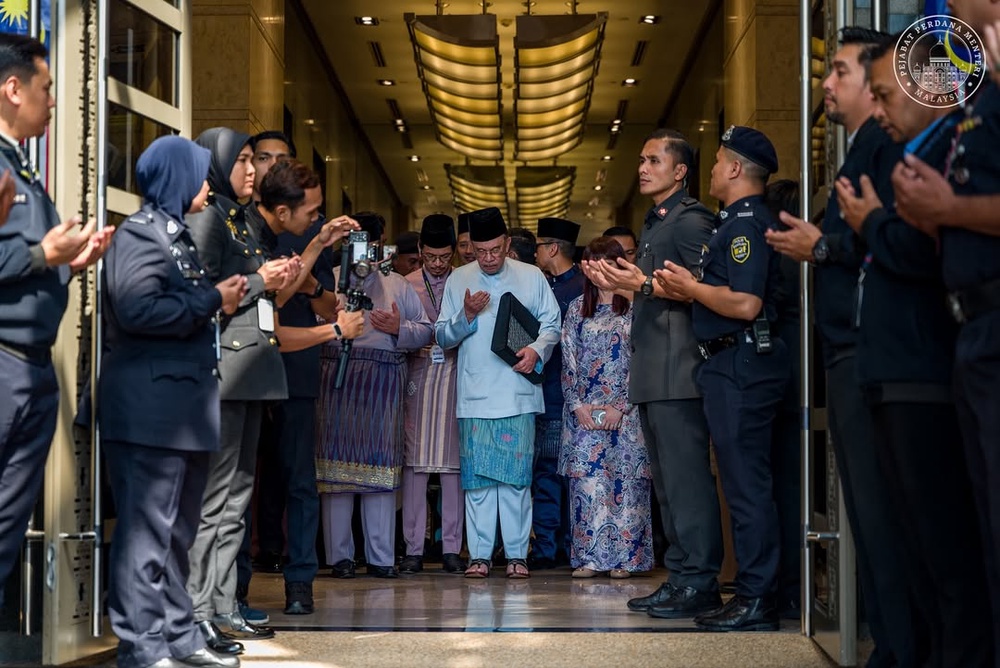
The concept of "MADANI" echoed by the Anwar government describes the vision of an inclusive, fair, and cultured state or "civil society" in its free translation. Budget 2026 is a concrete form of the claim that this government is people oriented. But the big challenge is: is the identity of the "people" only as an object of policy or as an active and empowered subject?
If policies are only paternalistic in cash assistance, directed subsidies without strengthening community capacity (education, access to credit, regional autonomy), then the MADANI narrative can lose its meaning as a social transformation. This budget should be a tool of empowerment, not just compensation.
Budget 2026 allocates support to the high-tech-based sector. For example, GLICs through the GEAR-UP initiative will increase domestic investment to RM30 billion compared to RM25 billion the previous year. (Malay Mail) A RM180 million fund has been set up for the NIMP Industry Development Fund, as well as support for the semiconductor and innovation ecosystem. (Malay Mail)
In addition, the allocation of matching grants of RM35 million for iTEKAD will be expanded. (Bank Negara Malaysia) The government also prioritizes clean energy projects, digital infrastructure, and local automation. All of this shows that Malaysia wants to move towards a resilient and low-carbon economy.
However, the pitfall is local capabilities: do domestic companies have the competitiveness to face MNCs and technology imports? Is the local workforce ready? Otherwise, this budget could widen the gap between the "global winners" and the "local majority".
A slim increase in development allocations and a high fixed expenditure burden indicate that fiscal maneuver room is very limited. The government must ensure that the projection figures do not break halfway due to external events of a global recession, trade war, or a decline in commodity prices.
The success of the budget is not determined by policies on paper, but by implementation on the ground. Is the distribution of subsidies reaching those who really need it? Does the implementing agency have the capacity to screen, evaluate, and adjust policies?
In his speech, Anwar said that the Government Procurement Bill would be submitted to provide transparency and better supervision of public procurement. If this intention is upheld, it could be key to reducing budget leaks and strengthening public trust.
Share how government initiatives or public services have made a difference, and stand a chance to win cash prizes up to RM10,500! Find out how to join here. T&Cs apply.
AM World (tameer.work88@gmail.com) is a content creator under the Newswav Creator programme, where you get to express yourself, be a citizen journalist, and at the same time monetize your content & reach millions of users on Newswav. Log in to creator.newswav.com and become a Newswav Creator now!
The User Content (as defined on Newswav Terms of Use) above including the views expressed and media (pictures, videos, citations etc) were submitted & posted by the author. Newswav is solely an aggregation platform that hosts the User Content. If you have any questions about the content, copyright or other issues of the work, please contact creator@newswav.com.