China says its imports of Taiwanese seafood have surged since Beijing rolled out a package of cross-strait incentives in April, and it is using the numbers to promote a familiar political slogan: that people on both sides of the Taiwan Strait are "one family."
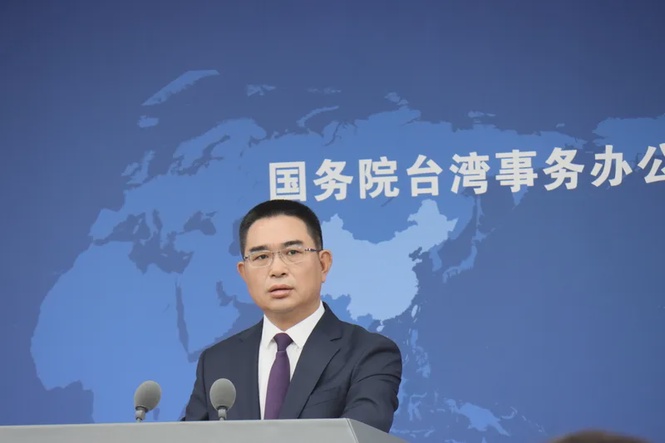
Chen Binhua, spokesperson for China's Taiwan Affairs Office (TAO), told a regular press briefing on October 28 that Fujian province imported 19,100 tonnes of Taiwanese fishery products between April and September, worth 585 million yuan (about NT$2.8 billion or US$82 million). That was up 35.9% from a year earlier.
"We will, as always, uphold the idea that 'people on both sides of the Strait are one family,' and be the first to share development opportunities with our Taiwan compatriots," Chen said.
What Beijing Says The Numbers Show
According to Chen, mainland China's imports of Taiwanese agricultural products rose 18.5% year on year in the first three quarters of 2026, with fishery imports up 35.5% over the same period.
He credited the growth to 10 measures to promote cross-strait exchanges and cooperation that the Chinese Communist Party's Taiwan Work Office announced in April, after Chinese leader Xi Jinping met Cheng Li-wun, chair of Taiwan's main opposition party, the Kuomintang (KMT), in Beijing. Among other things, the measures promised to make it easier for Taiwanese farm and fishery products to enter China and to help them reach buyers through trade fairs and matchmaking events.
Taiwan's government described the measures at the time as political manipulation.
A Ceremony In Xiamen With Taiwan's Opposition On Stage
The briefing followed a ceremony held on October 23 in Xiamen, the Chinese port city facing Taiwan's Kinmen islands, to mark the import of Taiwanese fishery products. About 350 tonnes of Taiwanese grouper, threadfin and other specialty seafood arrived in Xiamen two days before the event.
More than 200 people attended, according to Chen. They included TAO director Song Tao, senior Fujian and Xiamen officials, KMT vice chair Chang Jung-kung, Non-Partisan Solidarity Union chair Lin Ping-kun and Hsieh Lung-yin, chair of the Taiwan Fishermen's Association. A showroom for Taiwanese seafood opened in Xiamen during the event, alongside a cross-strait seafood market and a fishing culture exhibition.
Chen said the event showed that "as long as the KMT and the Communist Party and compatriots on both sides work together," Taiwan's farmers and fishermen could find solutions to their problems and better livelihoods.
Why Seafood Has Become Political
China has long been a key market for Taiwanese seafood, and Beijing has used access to that market as both a reward and a punishment. In 2022, it suspended imports of Taiwanese grouper, citing inspection concerns, a move Taipei saw as economic pressure on the island's south, a stronghold of the ruling Democratic Progressive Party.
The latest messaging continues that pattern of offering economic benefits through channels that bypass President Lai Ching-te's government and run through the opposition. Chen said Beijing would keep implementing the 10 measures so that more Taiwanese farm and fishery products and quality goods reach the Chinese market, letting islanders "share in the dividends of the motherland's development."
"We will continue to help more Taiwanese agricultural and fishery products enter the mainland market, so that compatriots on both sides can gain more real benefits from economic cooperation and integrated development, and live better lives," he said.