China has widened exit controls on its top artificial intelligence talent to cover their spouses and children, requiring official approval even for short trips abroad, in a bid to keep sensitive technical know-how from reaching the United States.
The curbs now reach the immediate families of founders of prominent AI and chip startups and heads of strategically important companies, Bloomberg reported in late September. Government agencies have begun notifying some of those affected and plan to widen the list over time, though how the rule will be enforced remains unclear. China's Ministry of Industry and Information Technology did not respond to Bloomberg's request for comment.
Spouses And Children Now Fall Under Exit Approval
The step shifts Beijing's defenses against technology leakage from the individual to the household. Bloomberg reported on May 26 that senior AI staff at private firms such as Alibaba and DeepSeek already needed approval from authorities before traveling abroad. Adding family members closes what Chinese scholars describe as the biggest obstacle to cross-border mobility: people rarely leave for good without their families.
Several scholars interviewed by Storm Media said the aim is to keep core technicians' hearts at home. They noted that tying family members to a person's movements is a familiar tool Beijing has used to manage other groups of personnel.
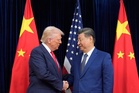
News of the expansion emerged just days after the summit in Washington between President Xi Jinping and President Donald Trump, and it set off lively discussion on Chinese social media. Some people in China's tech community read it as a response to Washington's push to recruit top talent from China.
Manus Deal Showed How Far Beijing Will Go
Beijing's sensitivity to talent and technology flowing out was on display earlier this year. In March, the two co-founders of the AI startup Manus, Xiao Hong and Ji Yichao, were barred from leaving China while regulators reviewed Meta's acquisition of the company. In April, the National Development and Reform Commission, China's top economic planner, prohibited foreign investment in the Manus project "in accordance with laws and regulations," killing a deal reported at about $2 billion. The commission gave no further public explanation.
New State Council Rules Give Border Controls Legal Cover
The tightening coincides with the State Council's new Provisions on Exit and Entry Administration, which took effect on September 15. Under them, Chinese citizens who violate export control or technology import and export rules in ways that could endanger national industrial or technological security can be refused permission to leave by the commerce ministry and other competent departments. Those who engage in unlawful or criminal activities abroad that endanger national security and interests can be barred from leaving for six months to three years from the day they return.
The rules give border controls a clearer legal footing. They also make it easier to apply a national security label to fields Beijing treats as strategic, such as AI and semiconductors.
Controls Could Chill China's Own AI Ecosystem
The contest between Washington and Beijing over AI has turned into a fight over people and knowledge. The United States has used chip export controls and technology blockades to squeeze China's computing power. China has responded by speeding up domestic substitution and homegrown large language models, while adding tighter physical controls to stop talent and know-how from leaving.
The measures may reduce the risk of sensitive knowledge leaking in the short term. Over the longer run they could damage China's AI ecosystem by hampering international academic exchange, raising the administrative and psychological cost of raising money and expanding abroad, and nudging top researchers to keep a low profile or move to more relaxed environments now that their families are tied down too.
For startups, having to seek approval every time a founder's or core team member's relatives travel abroad adds an invisible constraint on creativity. For senior executives at core companies, it further narrows everyday freedom of movement.
Washington Talks Have Not Eased The Tightening
On September 20, officials from the two countries held their first formal dialogue on AI during the eighth round of trade consultations in New York, and China's Commerce Ministry said they agreed to hold the next one before the end of November. Even so, Beijing's controls at home continue to escalate, a sign that stopping outflows and securing the upper hand still take priority over open exchange.
When even a relative's trip abroad needs sign-off, the AI race is no longer only a contest of algorithms and computing power. It is also a struggle over control of people.