
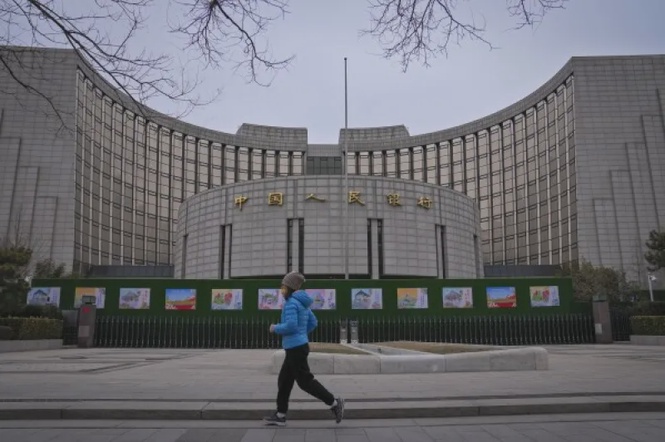
China's central bank said on November 3, 2026, that it will require banks to set aside more of their foreign currency deposits, its first such tightening in nearly five years and a clear sign that Beijing now worries the yuan is strengthening too quickly against the U.S. dollar.
The People's Bank of China (PBOC) will raise the foreign exchange deposit reserve requirement ratio from 4% to 6% starting November 15. The central bank said the move is "aimed at strengthening the management of foreign exchange liquidity in financial institutions," Reuters reported.
Markets got the message. The onshore yuan weakened as much as 0.37% to 6.6728 per dollar on November 3, heading for its sharpest one-day drop in six months, according to Reuters. A day earlier it had closed at 6.6458, one of its strongest levels in years. The currency has gained more than 5% against the dollar this year.
How the Reserve Requirement Locks Up Dollars
When Chinese banks take in deposits in dollars or other foreign currencies, they must park a set share of that money with the central bank. Raising the ratio forces banks to hand over more, leaving fewer dollars available to lend or sell in the market.
China's banks held nearly US$1.2 trillion in foreign currency deposits at the end of June, Caixin reported, meaning the 2 percentage point increase could pull about US$24 billion out of circulation. Ming Ming, chief economist at CITIC Securities, estimated that US$20 billion to US$25 billion would be frozen, according to Xinhua.
The tool has been used in both directions. In December 2021, the PBOC raised the ratio from 7% to 9% to cool an earlier yuan rally. In September 2023, with the currency under pressure to weaken, it cut the ratio from 6% to 4% to release more dollars into the market. This week's reversal shows how far the worry has shifted, from a falling yuan to one rising too fast.
Exporters Are Feeding a Self-Reinforcing Rally
The yuan's climb is being driven largely by China's export machine. When exporters expect the yuan to keep rising, they convert their dollar earnings sooner to avoid losing money on the exchange rate later. That rush adds to the supply of dollars and the demand for yuan, pushing the currency up further and encouraging even more companies to convert.
The scale is large. Chinese banks recorded a foreign exchange settlement surplus of US$56.2 billion in September alone and about US$394.1 billion in the first nine months of the year, according to official data cited in Chinese media. China's State Administration of Foreign Exchange has acknowledged continued large net inflows from trade in goods.
"The PBOC is responding to strong market-driven yuan appreciation," Marco Sun, chief financial market analyst at MUFG Bank (China), told Reuters. Wen Bin, chief economist at China Minsheng Bank, said the move should help break a "self-fulfilling cycle" in expectations, according to Xinhua.
Not everyone thinks it will be enough. Zhaopeng Xing, senior China strategist at ANZ, told Reuters the hike was likely to "carry greater symbolic significance" for the market and would not be enough to ease the oversupply of dollars.
A Strong Yuan Squeezes China's Low-Margin Factories
A rising yuan makes Chinese goods more expensive once priced in dollars. That hurts most in sectors that compete mainly on price, such as textiles, furniture, home appliances, and basic machinery, where profit margins are already thin. Exporters that keep quoting in dollars also see their yuan revenue shrink, while their wages, rent, and raw materials are still paid in yuan.
That creates an awkward bind for Beijing. Strong exports bring in more dollars and push the yuan higher, but a faster-rising yuan erodes the very price advantage that keeps those exports flowing.
Weak Demand at Home Raises the Stakes
The timing matters because China's domestic economy is still not strong enough to take over from exports. Residential land sales across 300 cities rose 89% year on year in October, but data from the China Index Academy showed the average premium paid over reserve prices fell to just 1.5%, a multi-year monthly low. Most plots sold at their minimum price, suggesting local governments are pushing supply rather than developers regaining confidence.
With consumption and property still soft, exports remain one of the main supports for growth. By tightening dollar liquidity instead of intervening directly in the currency market, the PBOC is trying to shift expectations without slamming the brakes. Its stated goal is an exchange rate that moves in both directions, neither collapsing on capital flight nor surging on export dollars.
What a Rising Yuan Means for Taiwan and Asia
For Taiwan and other Asian economies whose manufacturers compete with Chinese factories in global markets, the pace of the yuan's rise is closely watched. A stronger yuan can make Chinese goods pricier abroad, while Beijing's efforts to slow its gains signal that China intends to protect the price competitiveness of its exporters.