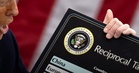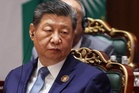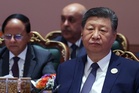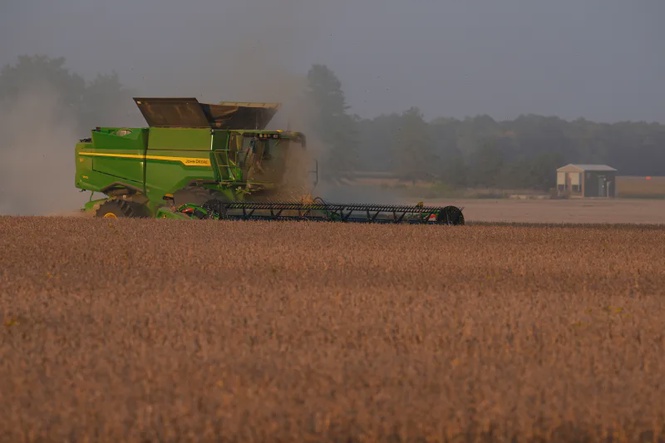
With Chinese leader Xi Jinping set to travel to Washington later this month for a summit with President Trump, Beijing has suddenly stepped up its buying of American farm goods and energy. State owned grain traders ordered at least a million tons of American soybeans last week, and on September 14 China Gas Holdings signed a twenty year contract with the American liquefied natural gas exporter Venture Global to take 500,000 tons of LNG a year starting in 2030. Coming days before Xi lands in Washington, the timing of both deals makes it hard to read them as pure market activity.
A Soybean Order Timed To Perfection
China's state grain reserve operator Sinograin and trading giant COFCO bought roughly a million tons of American soybeans last week, a sign that the world's largest oilseed importer is speeding up its purchases just as its leader prepares to fly to the United States. The buying spree pushes China's soybean purchases from the US this marketing year to nearly 13 million tons, already more than half of the 25 million tons a year Washington says Beijing committed to buying through 2028. US Department of Agriculture data confirm several hundred thousand more tons have been sold to Chinese buyers in recent weeks.
The purchases trace back to a trade truce Beijing and Washington struck last year, under which China pledged to buy 25 million tons of American soybeans annually and at least $17 billion worth of other US farm products, a figure the White House said in May would be prorated for 2026. That commitment nearly collapsed early in Trump's second term, when reciprocal tariffs all but froze agricultural trade between the two countries. One Asia based trader told reporters that Sinograin's buying "clearly picked up in the past few days," describing it as activity timed to Xi's trip. Tight soybean stocks in Brazil and narrowing processing margins there have also made American beans more price competitive, but few doubt that whether China buys American soybeans has long been more about diplomacy than about dinner tables.
A Twenty Year Gas Contract That Buys Time, Not Barrels
The natural gas deal is arguably the more revealing of the two. China Gas Holdings' new contract with Venture Global does not start delivering fuel until 2030, and it raises Venture Global's total long term commitment to the Chinese buyer to 2.5 million tons of LNG a year, rather than reflecting any surge in Chinese demand today. Beijing halted imports of American LNG in March 2025 in response to US tariffs on energy products and still applies a 15 percent tariff to it. China's overall LNG imports fell to 68.43 million tons in 2025, their lowest level in three years.
Locking in supply years in advance is not unreasonable on its own, especially with global LNG prices swinging on tensions between the United States and Iran that have clouded Qatari export flows. But with tariffs still in place and private Chinese importers still wary of the added cost, it is telling that a state owned company moved first. The signal being sent looks considerably more political than commercial.
Goodwill On Trade Does Not Mean Concessions On Taiwan
The bigger warning in all this buying is what it does not promise. A thaw in trade friction over soybeans and gas gives Washington no reason to ease up on arms sales to Taiwan, semiconductor export controls, or its broader posture on the Taiwan Strait. If anything, Beijing may be hoping that visible compliance on trade buys it room to extract concessions from Washington elsewhere, or at least to project an image of a stable US China relationship that dulls international urgency around supporting Taiwan.
The deeper structural rivalries between the two countries, over artificial intelligence, financial ties including sanctions on Iran, and security across the Taiwan Strait, have not gone anywhere. Soybeans and gas can be purchased; technology restrictions and geopolitical red lines cannot be bought back the same way. Should China keep up large scale purchases of American farm goods after the summit, and if new energy, aviation or industrial deals follow, that would suggest Beijing has settled on buying American goods as a deliberate tool for keeping the broader economic relationship stable. For now, on the eve of the Trump Xi summit, Beijing's big orders look like both a good faith payment and a bargaining chip, placed on the table just before the two leaders sit down.
YP