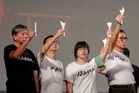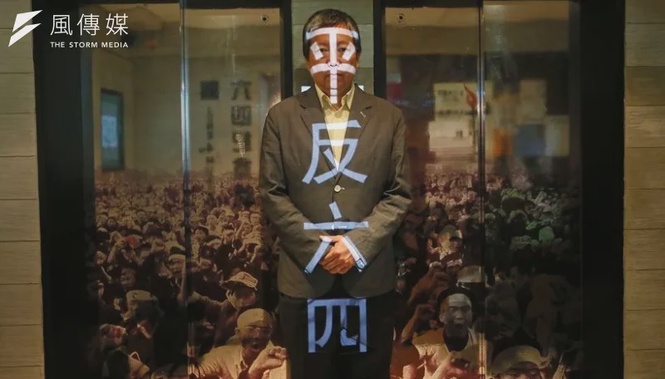
Hong Kong's High Court delivered a landmark verdict on August 21, convicting the disbanded Hong Kong Alliance in Support of Patriotic Democratic Movements of China (香港市民支援愛國民主運動聯合會, 支聯會), along with its former chairman Lee Cheuk-yan (李卓人) and former vice chairwoman Chow Hang-tung 鄒幸彤, of inciting subversion of state power. A co-defendant, former vice chairman Albert Ho (何俊仁), had already pleaded guilty to the same charge earlier in the proceedings. Three judges designated to hear national security cases reached their verdict after a trial that ran roughly 22 to 24 days, and adjourned the case until August 28 to hear mitigation pleas. The charge carries a maximum sentence of 10 years.
The case marks the first incitement to subvert state power prosecution to be tried in Hong Kong's High Court. Prosecutors alleged that between July 1, 2020 and September 8, 2021, the four defendants incited others to organize, plan, carry out or take part in illegal acts aimed at subverting state power, meaning overthrowing or undermining the fundamental system established by China's constitution, or overthrowing central government organs. At the center of the dispute was a single phrase from the Alliance's nearly three decade old five point charter: its call to "end one party dictatorship. (結束一黨專政)"
Taiwan's Mainland Affairs Council issued a statement the same day, saying the Alliance had spent decades peacefully commemorating the June 4 crackdown and advocating for democracy and freedom, only to see those ideals prosecuted as incitement to subvert under the National Security Law. The council noted the proceedings had dragged on for nearly five years, with defendants held in custody for long stretches, and said the case has deepened international concern over the erosion of human rights and rule of law in Hong Kong. Hong Kong's government pushed back in its own statement, saying the court had ruled strictly according to law and evidence, free of any interference or political consideration, and arguing that exempting people or organizations from legal consequences because of their background would amount to granting them a special privilege that runs contrary to the rule of law. As of publication, neither Beijing's Hong Kong and Macao Affairs Office nor the Chinese foreign ministry's commissioner's office in Hong Kong had responded to the ruling.
Ending One Party Rule Becomes The Case's Core Issue
The Hong Kong Alliance was founded in the aftermath of the June 4, 1989 crackdown and spent more than three decades organizing candlelight vigils, marches and exhibitions at Victoria Park, becoming the most prominent vehicle for keeping the memory of that crackdown alive in Hong Kong. It remained one of the few local groups still openly calling to "vindicate the 1989 movement and end one party dictatorship," making it one of the most recognizable civic political organizations in post handover Hong Kong.
In their written verdict, the judges found that the defendants had long harbored hostility toward the Chinese Communist Party and the central government it leads, and had committed to a path of confrontation without compromise. Even after the National Security Law took effect on June 30, 2020, the court found, they refused to pull back from the brink and instead held their ground, seeking to stoke hostility and division in order to erode public trust in the party and thereby undermine the country's fundamental system.
The court rejected the defense's argument that "end one party dictatorship" was not aimed at the party's leadership, ruling instead that the phrase's natural and reasonable effect was to end the party's constitutionally enshrined leading role, since China's constitution establishes that leadership as part of the nation's fundamental system. The judges held that even without any call to violence, an act intended to subvert state power still qualifies as an "other unlawful means" under the law. Lee and Chow's defense had countered that the slogan's real target was dictatorship by any single party in general, not a call to illegally overthrow Communist Party leadership specifically, and both denied the charge on that basis.
Hong Kong Chief Executive John Lee issued his own statement shortly after the verdict, saying the Alliance had long planted seeds of hatred toward the party and the central government within Hong Kong society, using various means to stir public disgust and hatred and incite the public to subvert state power. He said the defendants had endangered national security over a long period, calling their conspiracy "plain for all to see" and insisting it "must be punished." He reiterated that incitement to subvert is an extremely serious offense and that the government would enforce the law without exception, adding that no organization or individual would be allowed to attempt to overthrow the party's leadership or undermine the nation's fundamental system and its socialist framework.
Judges Say Defendants Refused To Turn Back After The Security Law Took Effect
The three national security judges wrote in their verdict that the defendants understood, after the National Security Law took effect, that their program's call to "end one party dictatorship" raised constitutional problems, yet they did not abandon that position. The court further found that the defendants had deliberately drawn a parallel between the June 4 crackdown and the 2019 anti extradition bill protests in order to stoke public hostility toward the Communist Party and encourage others to keep up their resistance, with the ultimate aim of undermining the country's fundamental system.
That reasoning points to the case's central legal logic: judges did not simply weigh whether the defendants had uttered a particular slogan, but stitched together years of the Alliance's organizational activity, its political platform, its June 4 commemorations and its public statements to determine, as a whole, whether the group's conduct amounted to incitement to subvert. From the trial of media tycoon Jimmy Lai to this case, the political sensitivity of Hong Kong's judicial proceedings has become tightly bound up in the national security framework. Defense lawyers repeatedly questioned whether the charges were drawn too broadly, or whether they reached back to speech made before the National Security Law existed, but the court ultimately accepted prosecutors' expansive reading of what counts as an "unlawful means." Under that framework, a political organization's history and public advocacy can themselves become key evidence in establishing incitement.
One Defendant Pleaded Guilty While Two Chose To Fight The Charges
The Hong Kong Alliance announced its own dissolution back in September 2021, but disbanding an organization does not erase the criminal liability tied to its past conduct. The charges against the Alliance and its three former chair and vice chairs covered actions between 2020 and September 2021, and the court ultimately found that Lee, Chow and Ho had functioned as the Alliance's "directing mind," allowing their individual conduct to be attributed to the organization as a whole.
When the trial opened in January this year, Ho entered a guilty plea in court, while Lee, Chow and the legal team representing the now dissolved Alliance chose to contest the charges. Ho's mitigation and sentencing were postponed until the full trial concluded, while Lee and Chow continued to fight the case and were ultimately convicted. The differing choices reflect the divergent paths available to Hong Kong political figures under the National Security Law: pleading guilty avoids the risk of a full trial, while denying the charges means directly challenging, in open court, how prosecutors characterize a group's political platform and organizational activity. Chow had earlier sought to call a Taiwanese sociologist as an expert witness to explain the political and social movement context behind the "end one party dictatorship" platform, but the court denied that request. China's Taiwan Affairs Office, whose portfolio touches on Hong Kong and Macao matters affecting Taiwan, has likewise offered no comment on the verdict.
From Candlelight Vigils To The Security Law Hong Kong's Political Vocabulary Has Changed
For more than three decades, phrases like "June 4," "democracy" and "end one party dictatorship" were standard demands within Hong Kong's civil society and pro democracy political movements. Those same historical slogans have now been reexamined under the National Security Law and have ended up as central evidence in a criminal case, a shift that suggests the boundaries of acceptable political speech in Hong Kong are increasingly defined by national security law rather than by longstanding political convention.
During the morning hearing, Lee Cheuk-yan made a heart shaped gesture toward his family after hearing the verdict, while Chow Hang-tung's expression remained calm. Their wives and supporters voiced anger outside the courthouse, saying the outcome was one they had expected. The case now moves to the mitigation and sentencing phase, where the most serious cases can draw sentences of five to ten years in prison. Whatever sentence is ultimately handed down, the verdict itself has placed a heavier legal punctuation mark on the public expression of June 4 memory in Hong Kong.
YP