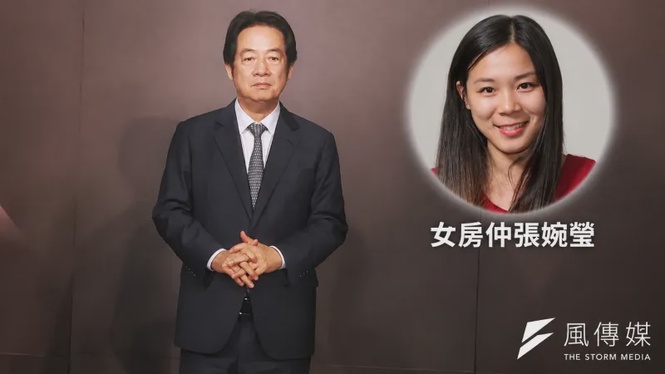
Wanying "Heather" Zhang, a California real estate agent accused of secretly surveilling Taiwan President Lai Ching-te's family in the United States for Beijing, also described a China trip for a major social media influencer to a Chinese government contact, according to court papers. The FBI has blacked out the influencer's name, but the detail adds a possible propaganda angle to a case that has so far centered on surveillance.
The FBI arrested Zhang, 34, of Irvine, California, on October 4 at Los Angeles International Airport as she prepared to fly to China, and the Justice Department detailed the charges on October 5. She is charged with acting as an unregistered agent of the Chinese government, and she is presumed innocent until proven guilty.
Complaint Traces A Path From Changsha To Seattle
The court filings lay out the alleged chain of events in detail. Zhang was introduced to the work through a former classmate from Beijing's University of International Relations, then made several trips to China to meet people described as officials, including at a private room in Changsha and a hotel in Hangzhou. She accepted the assignment after a June 2025 visit to China.
On August 29, 2025, Zhang and a companion flew from Orange County's John Wayne Airport to Las Vegas and stayed for three days. On September 1, they flew on to the Pacific Northwest, rented a car, and staked out the area around the home of Lai Ting-yu, the president's eldest son. Prosecutors say she sent a photo of her boarding pass to her Chinese contacts, and later asked her companion to share photos by AirDrop and then delete the records.
Text messages cited in the case show how the surveillance unfolded. "Saw him. Young male. It's that young one," Zhang allegedly wrote to a Chinese handler, and when asked to join a voice call she replied, "I am videorecording." She also passed along the license plate numbers of two cars parked outside the home. According to CBS News, neighbor security footage appears to show her filming Lai Ting-yu, his wife, and their child as they arrived home.
An FBI counterintelligence agent wrote in the complaint that holding the addresses and images of a leader's close relatives could prove useful to Beijing in a potential conflict. FBI Director Kash Patel described the case as an "espionage operation" and warned that "America is no longer a safe place" for such activity.
Taipei Calls The Case Transnational Repression
Taiwan's response was swift. Presidential Office spokesperson Karen Kuo called the case a textbook example of transnational repression and said such conduct should not be tolerated in the civilized world. The Mainland Affairs Council, which handles Taiwan's cross-strait policy, said Chinese transnational repression against Taiwanese has now reached at least 126 people in 140 instances, and that the aim goes beyond the president's relatives to chilling speech among all Taiwanese. Taiwan's Foreign Ministry has also pledged closer intelligence sharing with Washington, Storm Media previously reported.
China's Foreign Ministry said it was not aware of the situation and opposed hyping what it called smears about Chinese spies. Inside China, the case has circulated only in muted ways, with no detailed official account, while some overseas Chinese see it as a new step in Beijing's transnational repression in the United States.
Redacted Influencer Raises New Questions About Beijing's Reach
Most attention has gone to the surveillance of the president's family, but the court papers contain another thread. According to the filing, Zhang described to a Chinese government contact a seven-day China itinerary for a major social media influencer, said she would handle the first stop, and added that the contact was welcome to get involved as well. The FBI redacted the name, and the public record does not identify the person.
This reporter reads the passage as a sign of a possible effort to cultivate foreign influencers as part of Beijing's overseas messaging, though the available details do not show whether the trip went ahead or whether the influencer knew of the exchange.
Washington Steps Up Cases Against Unregistered Agents
The Zhang case is the latest in a run of U.S. prosecutions of people accused of working for China without registering. Under 18 U.S.C. § 951, acting in the United States on behalf of a foreign government without prior notice to the attorney general is a crime punishable by up to 10 years in prison, a law that works alongside the Foreign Agents Registration Act.
Recent cases span political influence, propaganda, overseas police stations, and the monitoring of dissidents. Former Arcadia, California, Mayor Eileen Wang admitted in May to acting as a Chinese agent, including running pro-Beijing websites and pushing official propaganda at Chinese officials' direction. Her former fiancé, Yaoning "Mike" Sun, was sentenced to four years in prison and had reported to Chinese officials on the movements of then-Taiwan President Tsai Ing-wen during her Los Angeles stopover. In New York, a jury convicted Lu Jianwang in May of acting as an unregistered agent in the case of a covert Chinese "police station" in Manhattan's Chinatown, and Queens scholar Wang Shujun was convicted of reporting on pro-democracy activists to China's Ministry of State Security.
Beijing, according to these cases, has leaned on Chinese community networks, real estate, media, local politics, and academic roles as cover, taken instructions over encrypted apps such as WeChat, and avoided U.S. registration requirements. The Justice Department's national security division has recently issued a rare public reminder of the civil and criminal liability that unregistered agents face.
Two Elections Raise The Political Stakes
The timing is notable for both capitals. Taiwan's local elections are set for November 28, the second nationwide vote since President Lai took office and widely seen as a preview of the 2028 presidential race.
U.S. midterm elections follow on November 3, a midway check on President Donald Trump's second term. All 435 House seats, 35 Senate seats, including special elections in Florida and Ohio, and a number of governorships are on the ballot. Republicans hold narrow majorities in both chambers, and polls suggest Democrats have a better chance of winning the House while the Senate is tight. With Trump's approval rating low and the economy, prices, and foreign policy dominating voters' concerns, foreign influence and national security have also returned to the debate.
For Beijing, whether Taiwanese politicians and their families count as intelligence targets is one question; for Washington, whether a foreign government crossed legal red lines on American soil is another. Disclosure of the Zhang case now gives Republicans a talking point for a tougher China line and stronger counterintelligence enforcement, while Democrats may question whether the administration's China policy has been consistent since the U.S.-China summit. Whichever party prevails, cases like this are likely to feed congressional debate over foreign agent enforcement and China policy.