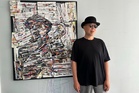
A Chinese court has sentenced US-based artist Gao Zhen to three years in prison for sculptures he made more than a decade ago depicting Mao Zedong kneeling in repentance — a verdict that human rights advocates say weaponizes retroactive law against political art.
The Sanhe City People's Court in Hebei Province handed down the maximum sentence on August 25 under China's law protecting the "reputation and honor of heroes and martyrs." Gao, 70, had already spent nearly two years in pretrial detention, leaving roughly one additional year to serve. His wife, Zhao Yaliang, told reporters she was "outraged" and "devastated," and confirmed Gao would appeal.
A Career Built on Political Provocation
Gao Zhen and his brother Gao Qiang have worked for decades as the "Gao Brothers," producing sculptures, paintings and installations that confront China's most sensitive historical subjects. Their best-known works include Mao's Guilt — a life-sized bronze of Mao kneeling with hands clasped as if in repentance — the Miss Mao series, and The Execution of Christ, in which Mao-faced soldiers aim rifles at Jesus. For years, the work circulated through underground exhibitions, private collections and international venues. Gao Zhen relocated to New York in 2022 and became a US permanent resident.
Detained on a Family Visit, Tried Behind Closed Doors
In August 2024, Gao returned to China with his wife and seven-year-old son — a US citizen — to visit family. He was detained at his Beijing studio. Police seized 118 artworks. His wife and son remain in China under an exit ban.
A one-day closed trial was held in March 2026. Family members, American diplomats and EU representatives were all turned away. Only two of Gao's brothers were permitted to attend the August 25 sentencing. The court ruled that his works "defamed heroic figures and damaged the public interest."
Art Made Before the Law Existed
The sculptures at the center of the case were created between 2005 and 2009. China's Law on the Protection of Heroes and Martyrs did not take effect until 2018, and was tightened further in 2021. Prosecutors justified applying it to Gao's earlier work by arguing that images of the sculptures had continued to circulate online — treating digital persistence as a continuing offense.
Human Rights Watch researcher Shane Yi was direct: "The court has now sentenced him to three years for work made in 2005, under a law that did not exist at the time. The only outcome consistent with human rights is his immediate and unconditional release."
China's Expanding War on Historical Dissent
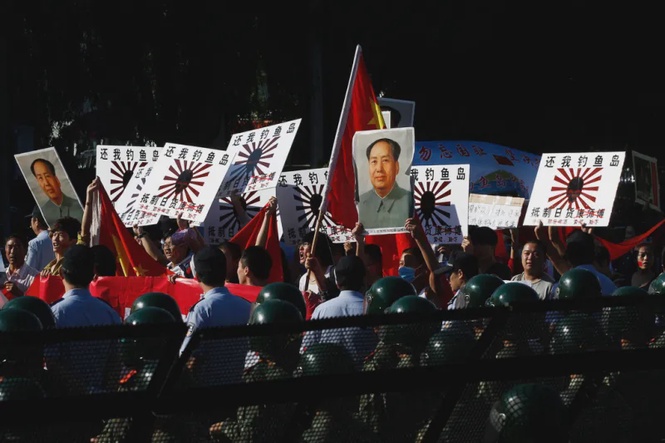
The Gao Zhen case fits within a rapidly widening crackdown on what Chinese authorities call "historical nihilism." On August 20 — five days before the verdict — the official China Social Sciences Daily devoted its front page to two articles targeting online content creators who spread fabricated historical claims, including assertions that the Tang Dynasty never existed. The pieces framed such content as "a new mutation of historical nihilism" and a threat to ideological security.
The scope of enforcement has expanded well beyond revolutionary history. Authorities are now policing accounts of ancient Chinese history and scrutinizing the algorithms that amplify unconventional content. For artists, the message is unambiguous: any work that questions a figure deemed a "hero or martyr" carries criminal exposure, regardless of when it was made or where the creator lives.
Defiant Despite Deteriorating Health
Family members say Gao's health has declined in custody — he has suffered heatstroke, malnutrition, and back and knee problems, and has been restricted from receiving books and letters. Even so, he has continued to create, tearing paper into sheets to sketch portraits of his family and writing poetry from his cell: "Once I tamed dragons — now I sit in jail / No regrets, I play the villain's game with a laugh."
Before the verdict, his brother Gao Qiang wrote on Facebook: "Whatever the court decides, history will eventually answer a larger question — whether an artist can be imprisoned for confronting the past through art."