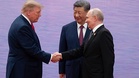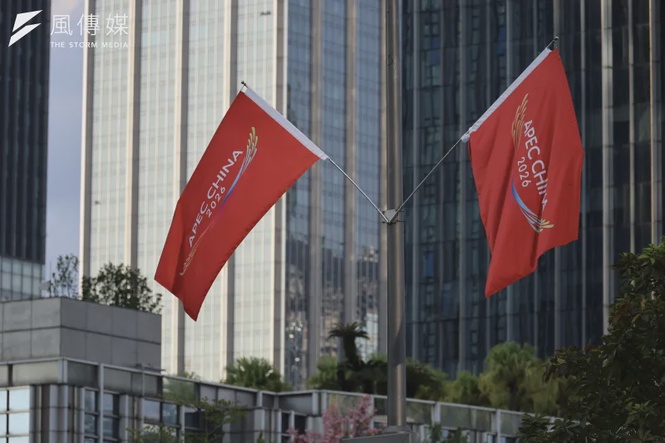
On November 19, on the sidelines of the Asia-Pacific Economic Cooperation (APEC) leaders' meeting in Shenzhen, US President Donald Trump, Chinese President Xi Jinping and Russian President Vladimir Putin are expected to hold the first formal three-way meeting between the leaders of their countries.
According to Trump's schedule released to the White House press pool, he will hold bilateral talks with Xi on November 19 and fly back to the White House the same day. The White House and the Kremlin have both confirmed the three-way meeting. Beijing has been far more cautious, offering only signals that it is in communication with the other parties.
The three leaders may appear to share a table, but each has his own calculation. The real cause for concern is not whatever piece of paper they might sign. It is whether the United States, China and Russia are gradually building a set of international rules that leaves small and midsize countries outside the room.
The Ghost Of Yalta Returns From Crimea To Shenzhen
In February 1945, Franklin Roosevelt, Winston Churchill and Joseph Stalin met at Yalta in Crimea and, as the victors of World War II, settled the postwar order in Europe and Asia. The Soviet Union won a sphere of influence over Eastern Europe. China, which was not properly consulted, was forced to accept Outer Mongolia's independence and Soviet privileges in Manchuria. The closed-door deal among the "Big Three" became shorthand for great powers trading away the interests of smaller nations.
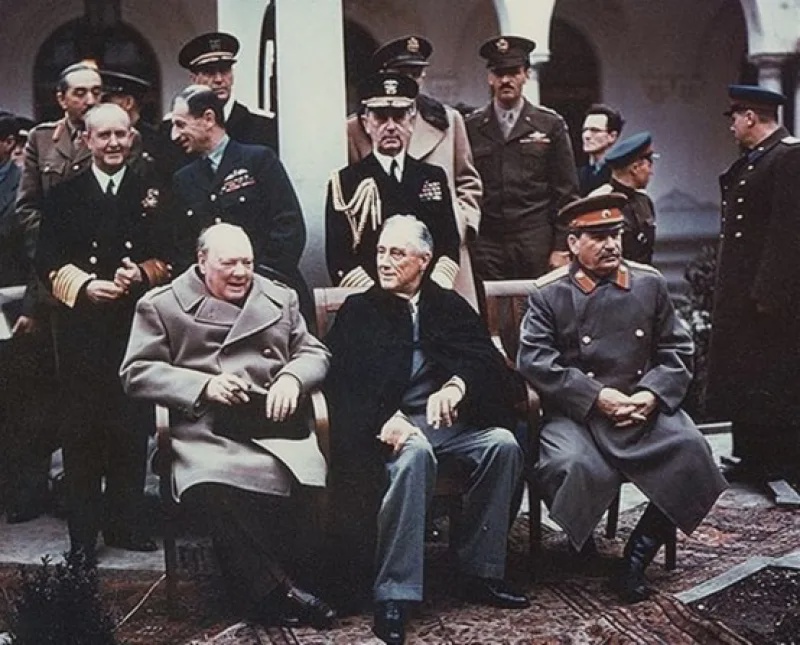
Now the ghost of Yalta has been summoned again. Russia has pushed hard for the three-way meeting. Putin floated the idea in a phone call with Trump, and Kremlin spokesman Dmitry Peskov confirmed it will take place in Shenzhen on November 19. Some Russian figures openly call it "Yalta 2.0," hoping it will confirm Russia's status as a great power and win it favorable terms on Ukraine. Ukrainian President Volodymyr Zelensky has said plainly that he does not want this to become a second or third Yalta that redraws spheres of influence.
The White House says the talks will focus on cutting the world's nuclear arsenals and preventing proliferation, along with the situation around Iran. New START, the nuclear arms treaty between the United States and Russia, expired in February 2026, leaving the world's two largest nuclear powers without treaty limits for the first time.
US officials have said they do not expect any substantive agreement and see the meeting as more of a starting point for dialogue. Washington would rather keep Ukraine off the formal agenda, while Beijing has consistently described the war as a European matter and does not want to be drawn into a direct mediating role.
Trump Wants A Legacy, Putin Wants Great Power Status
For Trump, Shenzhen is first of all a political stage. With his Republican Party bruised by losses in the recent midterm elections and pressure mounting at home, a diplomatic breakthrough would be politically valuable. If direct talks with Xi and Putin can move nuclear arms control forward, or produce some diplomatic progress on the Iran war, Trump can show voters that he still has the leadership to shape world events.
The expiry of New START in February removed a mechanism that had restrained the world's two largest nuclear arsenals for half a century. Trump wants to bring China into a new arms control framework and use that as the opening for three-way dialogue. But an invitation that looks like a contribution to global security is not necessarily one Beijing wants to accept.
Russia has been under Western sanctions and diplomatic pressure since its full-scale invasion of Ukraine in 2022. For Moscow, simply sitting at the same table as the US president and China's leader is a political asset. More importantly, Putin hopes to use Trump's appetite for deal-making to find a way to end the war in Ukraine on terms that suit Russia.
For the Kremlin, the Shenzhen meeting serves at least two purposes. It puts Russia back on an equal footing with the United States and China, and it tests whether Washington might accept a political settlement on Ukraine based on the current line of control and spheres of influence.
Russian nationalist thinker Alexander Dugin has gone further, treating the meeting as a symbol of a multipolar world order and proof that the direction of the world is still decided by great powers such as the United States, China and Russia.
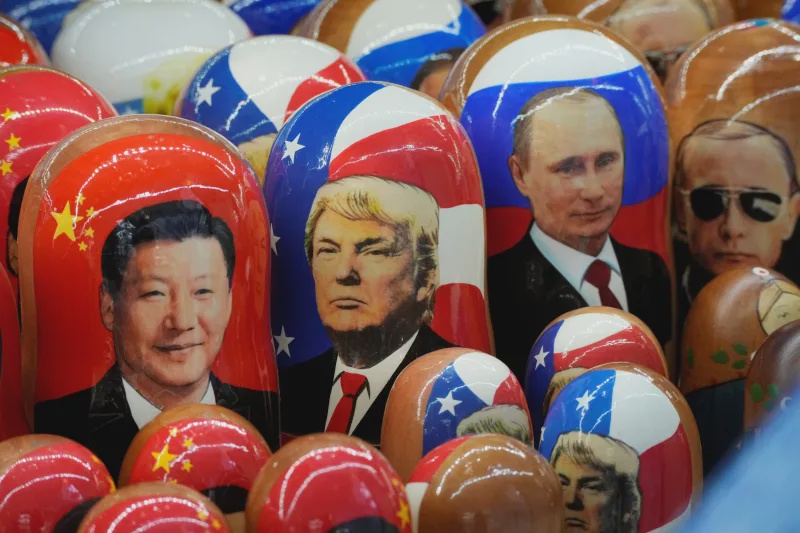
Why A New Yalta May Not Suit Beijing
Shenzhen is China's home ground, and Xi is the host. Yet from Beijing's strategic point of view, the three-way meeting is not necessarily a diplomatic showcase that fully serves Chinese interests.
The United States and Russia each have more than 5,000 nuclear warheads, while China has about 500. China has been expanding its arsenal, but the gap remains wide. Trump's proposed framework covering all three countries is presented as a contribution to global security, but in practice it could push China to take on the same transparency and reduction obligations as the United States and Russia before it is ready.
China's nuclear strategy stresses maintaining a minimum deterrent. When the US and Russian arsenals are far larger than China's, asking all three to accept the same limits does not fit Beijing's idea of strategic balance.
Beijing and Moscow have deepened cooperation in energy, trade and military technology in recent years, and their relationship is often described as a tight strategic partnership. That does not mean China is willing to shoulder the costs of Russia's war without conditions.
China has also worked hard to present itself to Europe and the Global South as a champion of multilateralism and a guardian of the international order. If Xi sat down with Trump and Putin in Shenzhen to discuss what to do about Ukraine without Ukraine's government in the room, it would contradict Beijing's long-standing claim to respect national sovereignty and territorial integrity.
In 1945, when the United States, Britain and the Soviet Union decided the postwar order, China was not at the table. Today China is the world's second-largest economy and a major military power, and Xi naturally wants to help write international rules as an equal, or even as the leader. But if the Shenzhen meeting turns into a political deal between Trump and Putin struck on Chinese soil, Beijing could end up merely providing the stage for the other two.
The United States wants to keep its global leadership, China wants a bigger voice in shaping international institutions, and Russia wants to break out of Western sanctions and containment. All three want to change parts of the current order, but they have no shared answer on what a new one should look like.
Taiwan's Real Risk Is Being Left Off The Agenda
Governments that are not taking part, such as Ukraine and Taiwan, are uneasy that the big powers might privately reach agreements that affect their fate.
For Taiwan in particular, any major shift in US-China relations could affect US arms sales to Taiwan, military cooperation, regional deterrence and security policy in the Taiwan Strait.
Yet the three powers' goals overlap very little, and their common interests are limited. The original Yalta rested on a shared victory in World War II and on the power to divide the world into clear spheres of influence. Today's United States, China and Russia have no common enemy and lack the coercive power to carve up the globe. The interests of smaller players such as Taiwan, Ukraine, Europe and Japan are no longer pieces the great powers can move at will.
You've read it. Now join the conversation — follow us on X, Facebook and IG. Editor: Penny Wang