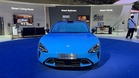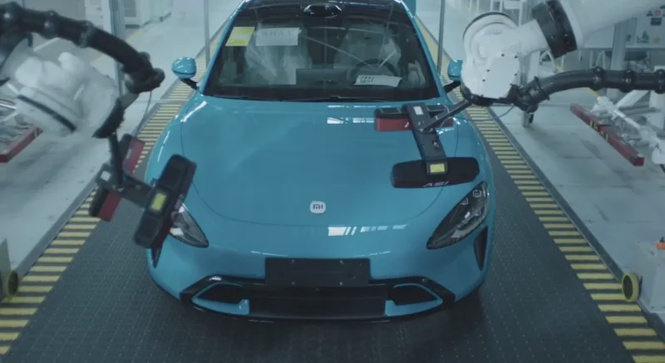
Xiaomi is staking its first stop in global expansion on Europe. The catch is that just as Xiaomi prepares to drive its SU7 and YU7 electric vehicles into Germany and the wider European market, the United States is accelerating construction of what amounts to a wall against Chinese cars.
Under the spotlight at Berlin's IFA tech show, Xiaomi Auto vice president Yu Liguo confirmed Thursday that the company will enter the European market in 2027, and that it has already signed cooperation memoranda with eight major German dealer groups. This is not just talk. Between a research and development center in Munich, the poaching of a former Tesla Europe delivery chief, the launch of a global website and social media presence, and now a push into dealer networks, Xiaomi has laid out both a timeline and concrete steps for what it calls its first stop abroad.
On the same day, Swedish EV brand Polestar, majority owned by China's Geely Holding Group, announced it was cutting its full-year delivery growth forecast, citing Washington's crackdown on China-linked electric vehicles, which has effectively forced Polestar out of the U.S. market. So while Xiaomi takes its first step into Europe, Chinese-connected EV brands are simultaneously running into a policy wall in America.
Xiaomi Isn't Just Selling Cars It's Exporting An Ecosystem
Xiaomi Auto launched an international website and overseas social media accounts in late August that explicitly flagged a 2027 entry into Europe and began seeking European dealers and channel partners. By September 3, the company had gone further, signing memoranda with its first batch of eight German dealer groups, a sign that its European push has moved from a brand announcement into actual channel-building.
Cars differ from phones in one crucial way: they cannot simply be sold through an e-commerce website. Repairs, parts, warranties, insurance, certification, charging infrastructure, resale value and consumer trust all require a full local service system to back them up.
What Xiaomi is really building, then, is not simply a plan to ship SU7 sedans to Europe but an automotive version of its broader globalization playbook: hook consumers first with product and price, then lock them into an ecosystem built from phones, connected devices, smart-home hardware and software services.
Tariffs And New Rules Raise The Price Of Entry
Europe is arguably the toughest arena in the world for a new automaker to enter, with the strictest regulations, the most demanding consumers and the deepest-rooted legacy manufacturers. Xiaomi plans to launch first in Germany, expand to France and Italy, and only consider right-hand-drive markets around 2028, putting it on a direct collision course with Porsche, BMW, Mercedes-Benz and Tesla on their own turf. The Munich R&D center and partnerships with long-established German dealer groups such as Ernst Dello, Emil Frey Germany and Hahn Automobile suggest Xiaomi has no interest in copying Tesla's direct-sales model, opting instead to align itself with local players in exchange for a ready-made service network and a head start on trust.
Since late 2024, the European Union has applied a base tariff plus an anti-subsidy duty on Chinese-made EVs, pushing the effective rate for some brands close to or above 30 percent. Because Xiaomi had not yet begun exporting during the EU's investigation period, it has no dedicated rate of its own yet, but the market widely expects one to land somewhere between 25 and 35 percent.
Based on the SU7's roughly 219,900 yuan starting price in China, its European price tag could land somewhere between 43,000 and 55,000 euros, putting it in direct competition with the Tesla Model Y and several homegrown European EVs. New requirements such as battery passports and advanced driver-assistance certification are also set to take effect around 2027, raising the bar for supply chain transparency and technical compliance.
Washington's Shadow Looms Over Europe's Hesitation
An alliance of U.S. automakers has recently urged Congress to move quickly on legislation that would bar Chinese vehicles from the American market outright, citing concerns ranging from subsidized dumping to the national security risks posed by connected vehicle hardware and software. Polestar, dragged into that fight by its ties to Geely, has already been forced to exit the U.S. market and cut its delivery outlook. That de-risking pressure has not been fully replicated in Europe, but it is feeding a steady rise in protectionist sentiment within the EU. By announcing its European push now, Xiaomi is effectively choosing, in the middle of that geopolitical squeeze, a harder path that also carries a potentially bigger payoff.
If Chinese automakers enter Europe at scale, drawing on China's fully built-out battery, component and manufacturing supply chains to undercut on price, Europe's legacy carmakers will come under enormous pressure.
A High Stakes Bet On Winning European Trust
Xiaomi's phone business rose quickly worldwide on the strength of value pricing and a broader device ecosystem. Whether its car business can repeat that formula will hinge less on raw hardware performance, the SU7 Ultra has already set repeated lap records at the Nürburgring, than on whether its "phone, car and home" ecosystem can genuinely take root with European customers.
Xiaomi's choice of a dealer-based model over a pure direct-sales approach reflects a practical reality: European consumers expect a far higher standard of after-sales service than their Chinese counterparts, and brand trust takes time to build. The backing of eight German dealer groups gives Xiaomi fast access to storefronts and repair networks, but it may also dilute the company's control over the end-to-end customer experience.
Xiaomi is hardly alone in chasing a share of the European market. BYD has already established a foothold there, and Geely's other brands along with SAIC are pushing in as well. What sets Xiaomi apart is the brand recognition of its consumer electronics business and the ecosystem story built around it. Founder Lei Jun's repeated insistence that the company is not exporting a car but "building a car for Europe" is a deliberate attempt to shed the stereotype of cheap, mass-produced Chinese EVs.
Europe in 2027 will look nothing like the Europe of 2021. Pushback from established automakers, rising policy barriers and spillover geopolitical risk all combine to make this expansion a high-stakes wager for Xiaomi.