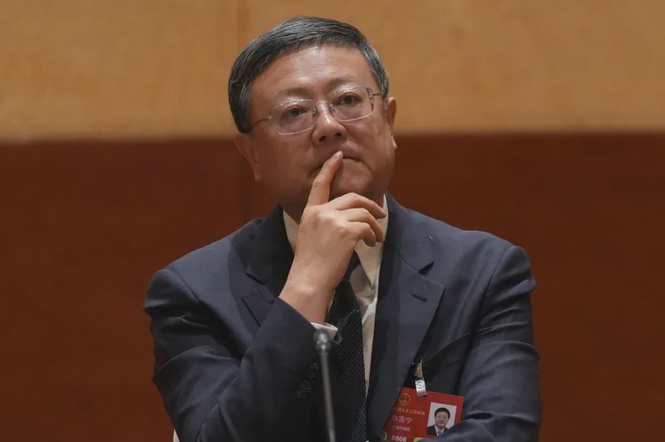
Chen Jining, the Communist Party secretary of Shanghai and a member of China's ruling Politburo, is under investigation for "suspected serious violations of discipline and law," the state-run Xinhua News Agency announced on the evening of November 24, 2026.
Chen is the fourth of the 24 Politburo members chosen at the party's 20th National Congress in 2022 to come under investigation. With his fall, Chinese leader Xi Jinping's anti-corruption drive, which has already gutted the top ranks of the military, has reached the party boss of China's financial capital.
The case is being handled by the Central Commission for Discipline Inspection (CCDI), the party's internal watchdog, together with the National Supervisory Commission. Xinhua's brief notice gave no details of the alleged wrongdoing. Shanghai's senior party leadership met the same day to endorse the decision and pledge support for the central leadership, according to Caixin.
The wording Beijing uses for such cases signals that a formal disciplinary review is under way. It is widely read as a euphemism for corruption, but it is not a court finding, and no charges have been announced.
The announcement comes about a month after the party's Fifth Plenum in October and roughly a year before the 21st Party Congress in 2027, where Xi is widely expected to seek a fourth term as party chief.
Chen Kept A Full Public Schedule Days Before The Probe
There was little public warning. On November 19, five days before the announcement, Chen visited the Shanghai headquarters of state-owned China COSCO Shipping, according to Shanghai government releases, and chaired a meeting on building the city into an international shipping center.
That pattern is familiar in Chinese elite politics, where an official's fate is often decided behind closed doors. Senior cadres have routinely chaired meetings, hosted events, and spoken on major policy right up until the moment their investigation is made public.
Xi's Purge Spreads From The Military To Shanghai
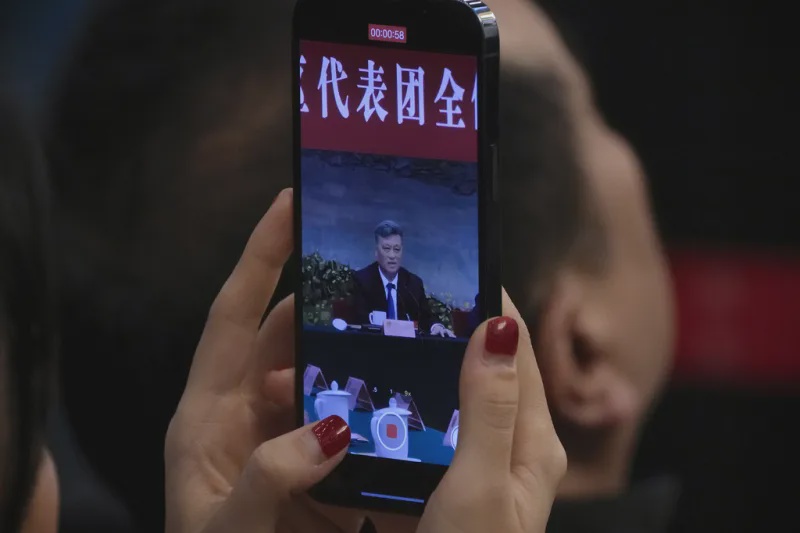
The three Politburo members investigated before Chen came from very different corners of the system. He Weidong and Zhang Youxia were both vice chairmen of the Central Military Commission, which commands the People's Liberation Army, and their removal shook the military's leadership. Ma Xingrui, an aerospace engineer turned official, had run Guangdong province, the tech hub of Shenzhen, and later Xinjiang before joining the Politburo.
Anti-corruption campaigns have been one of the most powerful tools in Xi's hands since he took power in 2012. Early targets included former security czar Zhou Yongkang and former military chiefs Guo Boxiong and Xu Caihou. More recent waves have swept through the Rocket Force, the defense industry, and the top of the Central Military Commission.
Chen's case pushes that campaign deeper into the civilian leadership. When investigations keep reaching the Politburo itself, Storm Media's analysis suggests, the question is no longer only whether individual officials took bribes. It is whether the party's own system for selecting, supervising, and checking its most senior cadres is working, and the turmoil could unsettle trust within the ranks, political security, and Xi's plans for succession.
Shanghai's Top Job Has Long Been A Launchpad
Few regional posts in China carry as much weight. Shanghai's party secretary oversees personnel appointments, state-owned enterprise reform, and major economic policy in the country's commercial hub, and the job has served as a springboard to the very top.
Jiang Zemin went from Shanghai to become party general secretary. Xi himself briefly held the post in 2007 before his elevation to the Politburo Standing Committee. Han Zheng and Li Qiang, Chen's predecessor and now China's premier, also used it as a stepping stone into the party's highest body. When Chen took over the city in 2022, some observers counted him among the next generation of leaders to watch.
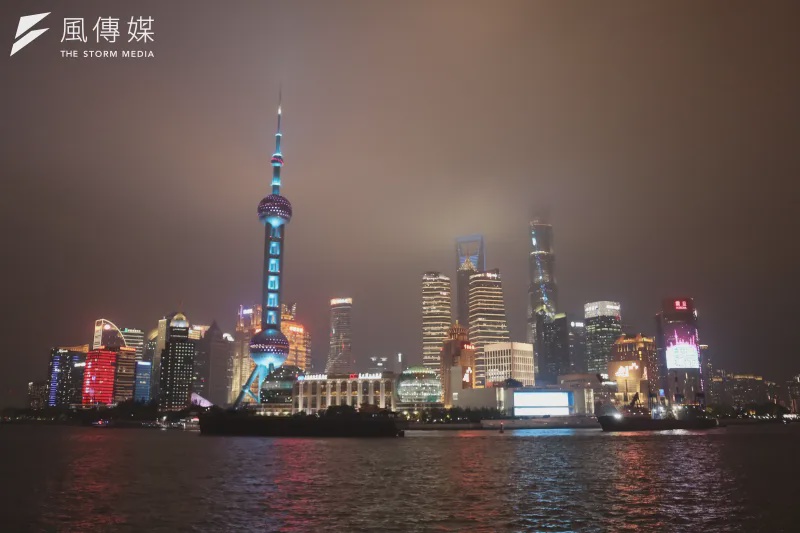
His downfall also revives memories of 2006, when then Shanghai party chief Chen Liangyu, also a Politburo member, was removed over the misuse of the city's social security fund. He was later jailed for 18 years. The case rocked Chinese politics because Shanghai had long been a power base for allies of Jiang Zemin.
The political circumstances of the two cases differ and should not be equated. But 20 years apart, both show that Shanghai's party secretary is never just a city manager. The post sits where central political power, the allocation of economic resources, and the execution of national policy meet.
A Tsinghua Technocrat's Fast Rise Through Beijing
Born in 1964 in Lishu county, Jilin province, Chen did not climb the usual ladder of grassroots party posts. He earned a doctorate in engineering from Imperial College London, then returned to teach at Tsinghua University in Beijing, where he headed the department of environmental science and engineering, became vice president, and in 2012 was named the university's president.
In 2015 he moved into the central government as minister of environmental protection, a key voice in China's pollution policy at the time. He became acting mayor of Beijing in 2017 and was formally elected mayor the following year. After the 20th Party Congress in October 2022, he joined the Politburo and replaced Li Qiang in Shanghai.
From campus to ministry to the capital and then to Shanghai, his career was close to a model of how the party has promoted technically trained officials.
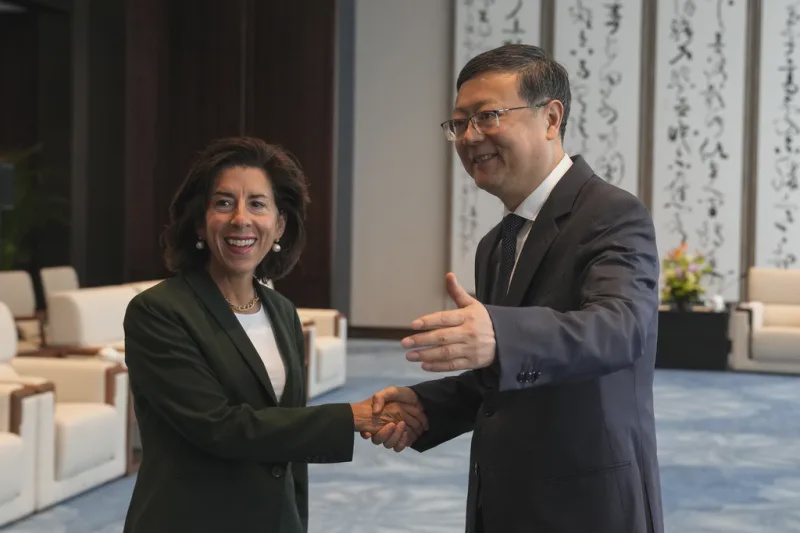
Chen Pressed Reunification With Taiwan's Opposition Leader
Chen was also one of Beijing's faces for cross-Strait outreach. On April 8, 2026, he hosted Cheng Li-wun, chair of Taiwan's main opposition Kuomintang (KMT), when her delegation stopped in Shanghai during a visit to China.
"Compatriots on both sides of the Strait are all Chinese. We are one family, bound by blood that is thicker than water," Chen told her, calling for joint efforts to "advance national reunification." He described Shanghai as one of the most active cities for cross-Strait exchange, saying nearly 40,000 Taiwanese live there, including 5,559 students.

Cheng, for her part, pointed to the annual Shanghai-Taipei City Forum, which has been held 16 times, and said she hoped to widen exchanges between Shanghai and Taiwan. The sudden removal of the official who hosted her is a reminder of how quickly Beijing's interlocutors for Taiwan can disappear.
Investors Will Watch Shanghai's Policy Continuity
Beyond politics, the probe lands on China's most important financial center and the main base for foreign companies operating in the country. It comes as the Chinese economy contends with a prolonged property slump, strained local government finances, weak domestic demand, and rising geopolitical risk.
Shanghai carries much of the burden of keeping foreign investors on side, keeping financial markets running smoothly, upgrading industry, and expanding international economic ties. During his tenure, Chen repeatedly championed the city's ambitions as a global center for finance, shipping, and scientific innovation, and pushed for closer links with international markets.
The sudden investigation of the city's top official is likely to draw closer scrutiny of political and policy stability in Shanghai. Markets will be watching who is named to replace him, whether his signature policies survive, and whether the inquiry spreads to state-owned enterprises or major economic projects linked to his administration.
For the party's top leadership, the toppling of yet another Politburo member is more than a continuation of the anti-graft campaign. It may set off chain reactions in cadre loyalty, political security, and the succession lineup that Xi is expected to unveil in 2027.
You've read it. Now join the conversation — follow us on X, Facebook and IG. Editor: Penny Wang