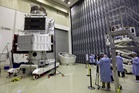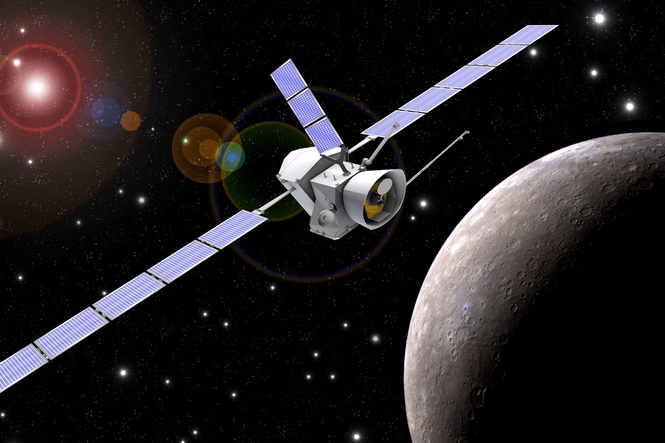
The BepiColombo probe is “safe” in Mercury’s orbit and "on track" to complete its mission despite encountering a concerning issue over the weekend, the European Space Agency announced on Monday.
The joint European-Japanese venture successfully reached orbit around the solar system’s smallest and innermost planet following an eight-year transit from Earth, ESA verified on Saturday.
Officials revealed the following day that the spacecraft's positioning thrusters had fired for a shorter duration than planned, leading to concerns that the mission was in jeopardy.
Reassuring the public in a statement issued on Monday, the space agency confirmed: "BepiColombo is safe and in a stable orbit around Mercury."
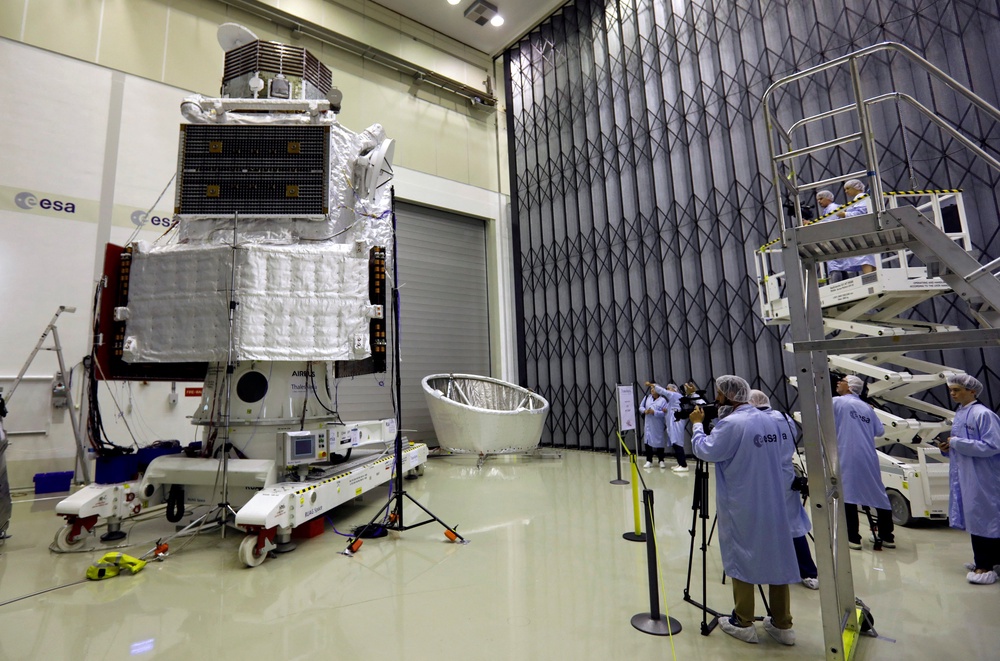
The robotic mission combines ESA's Mercury Planetary Orbiter and the Japan Aerospace Exploration Agency's (JAXA) Mercury Magnetospheric Orbiter. Built for distinct scientific investigations, the two components are scheduled to uncouple in the coming weeks.
ESA reaffirmed on Monday that the mission stays "on track for the separation of its two science orbiters" on 9 December, maintaining its original timetable.
Engineers at the European Space Operations Centre, alongside prime contractor Airbus and partner organisations, investigated the premature engine shutdown, which "has been traced to a software glitch."
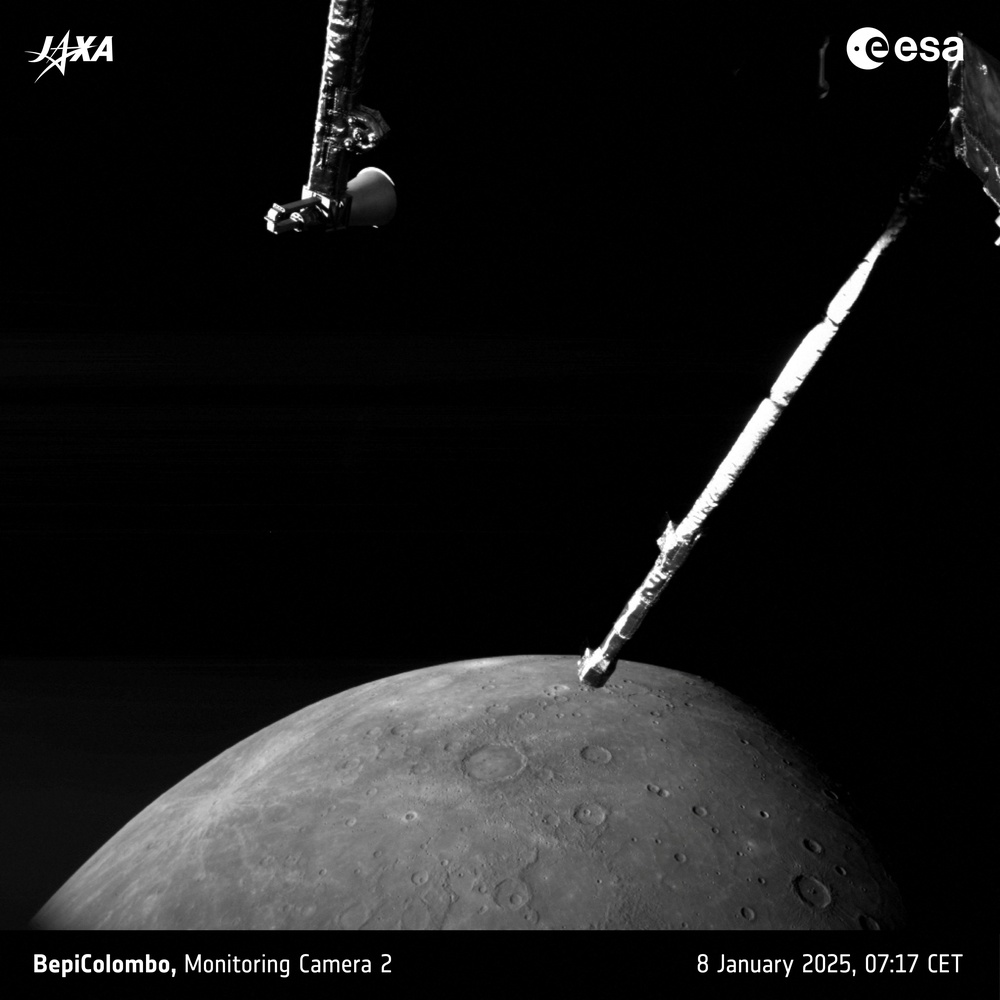
The thrusters initially ignited as scheduled while BepiColombo swept 635 kilometres (395 miles) above the surface of Mercury.
Intended to burn for 37 minutes to decelerate the probe into position, the manoeuvre was "autonomously interrupted and the spacecraft had entered safe mode, a protective state designed to keep the spacecraft safe by ceasing all non-essential activities when it encounters unexpected conditions," according to ESA.
Because of the early shutdown, controllers calculated that the spacecraft accomplished roughly 77 per cent of its intended velocity change. Further engine firings are planned over the coming months to modify BepiColombo's trajectory around the planet.
Routine scientific operations are slated to commence in April. The mission control team operates out of Darmstadt, Germany.
Barely larger than Earth's moon, Mercury remains the least explored of the inner solar system's four planets. BepiColombo is only the third craft to visit it and just the second ever to enter its orbit.
Scientists hope the mission, which launched in 2018, will resolve long-standing questions about Mercury, including why it possesses a magnetic field, how ice survives inside polar craters on a sun-scorched world, and what causes the strange surface depressions known as "hollows".
Read MoreAnother planet could be hiding in our solar system. Here’s what it looks like
Spacecraft arrive at Mercury after eight years – but there’s a glitch
NASA’s Voyager 1 crosses historic light-day distance from Earth
Scientists want to send ‘swarms’ of robots to search for life on Mars
Satellites now outnumber stars in the night sky
Giant dying star seen swallowing its companion in a first-of-its-kind cosmic merger